The Zone of Interest by Martin Amis
My rating: 4 of 5 stars
I read that Johnathan Glazer is adapting this book as a film so I immediately picked this book up being a fan of Under the skin and Sexy Beast.
It helps that I have read some Martin Amis too.
The subject matter is bleak but it is a subject I keep coming back to; which is the banality of evil and the complicity involved in such atrocities.
View all my reviews
Genetic Automatica Wellcome Collection London trip
Larry Achiampong and David Blandy 8 June -11 February 2024
‘Genetic Automata’ is an ongoing body of video works by artists Larry Achiampong and David Blandy exploring race and identity in an age of avatars, videogames and DNA ancestry. The four films in the series investigate where deeply ingrained ideas about race come from and the role that science has played in shaping these perceptions. The exhibition premieres ‘_GOD_MODE_’, the newest film in the series, commissioned by Wellcome Collection, Black Cultural Archives and Wellcome Connecting Science.
https://wellcomecollection.org/exhibitions/ZAW0PxQAACcG-pX8 and here is a pdf of the exhibition plan https://wellcomecollection.cdn.prismic.io/wellcomecollection/8f466a20-62dd-4d47-ab66-7a0c0473ce92_WellcomeCollection-GeneticAutomata-VisualStory.pdf
On 24th of October 2023 I boarded the train from Sheffield train station en route to London St Pancras. With me were 22 fellow students of Fine Art ready to traverse round the busy London streets with the sole reason of visiting the galleries.
The first port of call is the Wellcome Collection on Euston Rd and is the exhibition from Larry Achiampong and David Blandy entitled Genetic Automata.
I am familiar with these two artists as they both conducted a talk during my undergraduate degree.
Larry Achiampong is a working-class Black man of Ghanian heritage from east London and Blandy from west London. Together they collaborate on art that explores their friendship, love of popular culture and shared interest in the postcolonial condition.
In Genetic Automatica we are asked the question of what is the role of science in shaping how we think about race.
A four-part series of video installations explores understandings of race and identity in the age of avatars, videogames and DNA ancestry.
Genetic Automata explores scientific racism: the false belief there are innate differences and abilities between races.
The human genome was decoded in 2003 which proves that there is no biological basis for race but systemic racism is so embedded in society that ideas about racial difference persist.
The first room I walked in was the Legacies of Eugenics with an array of cultural artifacts used to measure and categorise people.
Eugenics movement was started by Francis Galton at University College London in the early 1900s. “Eugenics” comes form the Ancient Greek for “good in birth”.
Galton coined the term to refer to his idea that selective breeding could improve humans.
Eugenicists created a hierarchy of people based on race, character and health.
They aimed ultimately to rid society of those they deemed unfit by encouraging only those they considered to have desirable traits to have children.
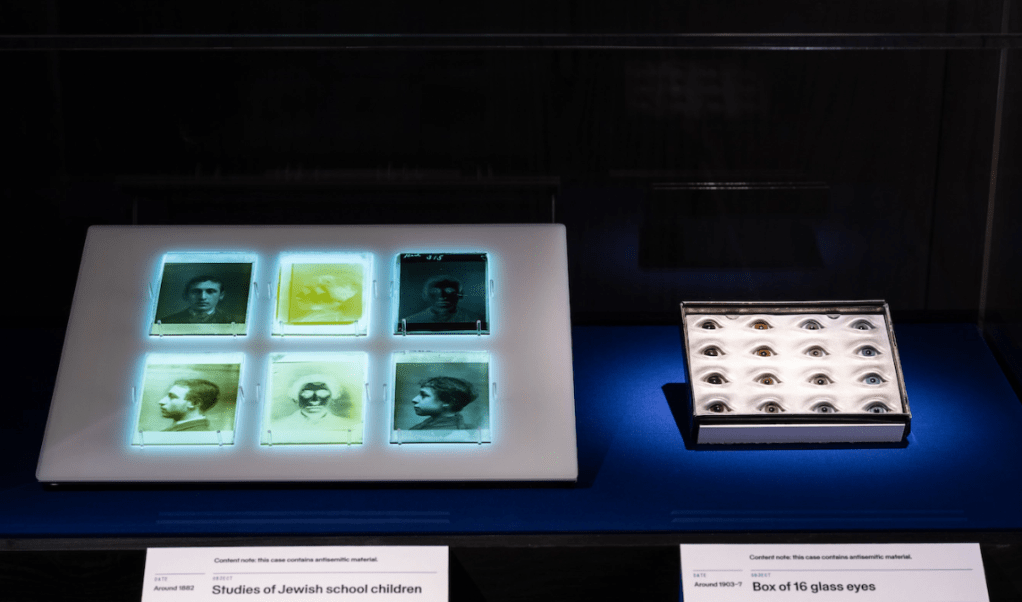
These photographs and glass eyes were used to study small groups of Jewish schoolchildren living in the East End of London in the 1920s and measure their eugenic worth. Conclusions based on these studies’ racist assumptions were presented as “objective science” to support eugenic beliefs. They fueled antisemitic immigration policies.
Other items on display are head callipers amongst other artifacts used to determine the intelligence of a race from physical characteristics.
Phrenology is the false belief that skull shape determines personality and intellect. Phrenologist Robert Noel collected these busts to analyse the difference between criminals’ and intellectuals’ heads.
This room is very interesting and presents you with unsettling evidence of the bigotry that has been the basis for the worst atrocities of the 20th century.
I am reading the Zone of interest by Martin Amis at the time of the exhibition which delves into the banality and complicity of evil when racial superiority is inferred.
Although it wasn’t mentioned in this exhibition Churchill was an advocate of Eugenics https://winstonchurchill.org/publications/finest-hour-extras/churchill-and-eugenics-1/
Films
The first of the films is ‘_GOD_MODE_’ : 11 minutes 41 seconds 2023
‘_GOD_MODE_’ considers the roots and implications of scientific racism. It explores how eugenic practices have left traces across society today, from education to medicine and politics.
This film was situated next to the Legacies of Eugenics room.
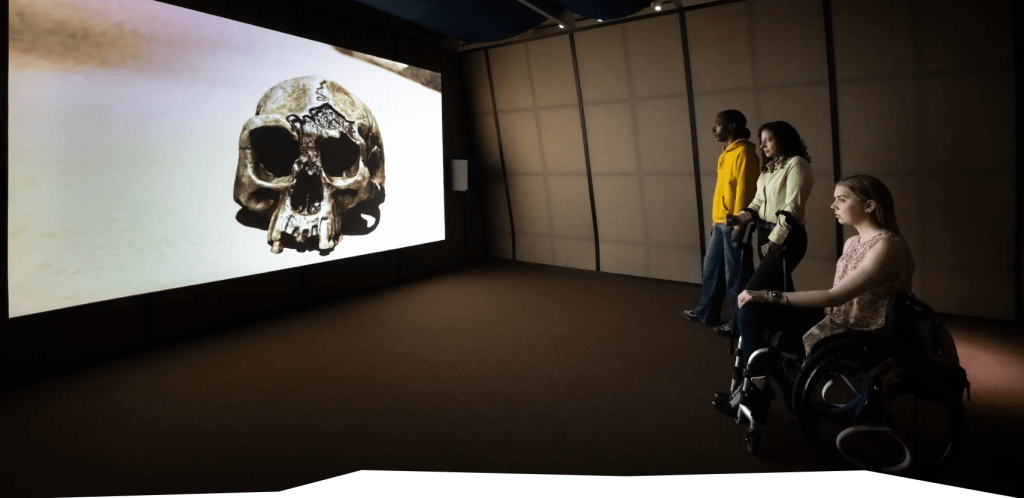
A Lament For Power
2020
13 minutes, 15 seconds
The second film in the ‘Genetic Automata’ series questions the ethics behind advances in biological science and medicine.
It is told from the fictionalised viewpoint of Henrietta Lacks, a Black American woman whose cancer cells were taken without her or her family’s knowledge in 1951. Her cells became known anonymously as HeLa cells. They are considered to be immortal because they can replicate endlessly. Lacks’ cells have been used in some of the world’s most significant biomedical developments, including the polio and COVID-19 vaccines and decoding the human genome.
Dust to Data
2021
15 minutes, 25 seconds
The third instalment of the series examines the tangled histories of archaeology, colonialism and eugenics.
A Terrible Fiction
2019
11 minutes 51 seconds
The initial chapter in Larry Achiampong and David Blandy’s ‘Genetic Automata’ series investigates classification, categorisation and ordering of the natural world.
It highlights John Edmonstone, a formerly enslaved Black man living in Edinburgh, who taught taxidermy to Charles Darwin. Edmonstone gave Darwin the skills to preserve and study chaffinches from the Galapagos. This enabled Darwin to formulate the theory of natural selection. Edmonstone’s significance remains largely unacknowledged.
Each video was installed and exhibited in a separate room. I really enjoyed this exhibition and how it was presented.
I feel it complimented the other exhibition of being human.
I wish I had more time to really digest all the information presented but unfortunately we were on a tight schedule with our itinerary.
I love all the references to popular culture such as Metal Gear Solid, Resident Evil and the nod to their influences such as comics like Maus written by Art Spiegelman about the holocaust using mice and rats as an analogy for human behaviour.
Book review
Verse, Chorus, Monster! by Graham Coxon
My rating: 4 of 5 stars
Blur were massive in the 90s and I never took to them as I was into American Grunge and metal.
The whole Britpop scene annoyed me at the time which is a shame as I missed out especially with bands like Pulp and Oasis at the helm.
Over the years I have warmed to Blur and Damon’s side project Gorillaz.
I saw Blur at Wolverhampton Civic Hall warm up gig in 2023 and it was tremendous.
Graham Coxon is an affable guy and a bit self-deprecating for some but it’s those creative odds that pull Blur into different directions.
Graham attended Art School and chose music which I find interesting and I love how Coxon rejected the 90s hedonism and the laddish culture to take the band into a lo-fi direction on their self-titled album.
I found the book interesting throughout especially Coxon’s battle with addiction.
View all my reviews
Experiences of being a mature student
My name is Russell Jones and I am here to tell you about my experiences of being a mature student at Sheffield Hallam University.
In the UK adult learners are classed as mature students from the age of 21+ at the beginning of undergraduate studies and aged 25+ at the beginning of postgraduate studies.
I was in my forties when I studied for my degree. I started my journey by studying for an Access to Higher Education Diploma (Art and Design) at Hillsborough College in September 2018. I am Sheffield born and bred and Hillsborough College was just a bus route away.
There had been a substantial gap in my education; I had received my GCSEs back in 1994 from Meadow Head School and I didn’t do well. I got three Cs above and that was in English language/Literature and History. My favourite subject Art I received a bad grade and it did affect my confidence.
As a child I was quite introverted, often awkward and quiet. I had speech therapy at a young age and the teachers thought I was deaf as I wouldn’t respond to them when they asked for my attention. I was even held back in the infants as I struggled so much.
I loved to draw and I loved comic books and in secondary school thanks to a great teacher I started to flourish and learnt how to read and write.
I was lucky then to get the results I did for my GCSEs considering but I still felt disappointed.
I worked in various job roles from store assistant, call-centre worker, steward, bar staff and driver.
Some jobs I liked and some I didn’t; however I still felt something was missing from my life and by chance I saw a sign in a café advertising for lessons in pastel pencils £8 an hour from a local private tutor. This was in 2011 and by 2012 I had drawn my first picture I was proud of which was a tiger; which took months to complete section by section.

I was so ecstatic by the result and yes I had some help from my tutor with some parts but I was extremely proud of myself.
My tutor whom I am extremely grateful to taught me patience and how to build up a picture through layers and to truly observe colour.
After a couple of years of attending these classes and selling my artwork I had the confidence to enquire about University.
I was advised to attend an Access course as it would prepare me for University and the subsequent workload including working part-time alongside my studies.
As you can imagine there was some trepidation about becoming a mature student and barriers that can present themselves.
The first is a situational barrier which is addressing the stigma around how we perceive mature students in a learning environment.
The second is institutional barriers where opportunities aren’t presented either through some kind of systemic racism or other bias.
The third which is dispositional barriers which is how we perceive ourselves and perhaps incorporate other peoples negative attitudes to applying for opportunities.
I have to say I didn’t encounter any barriers to my learning at all by being mature, I was there to learn and I was confident in my abilities.
In fact I found learning a lot easier as I wanted to be there and I knew my skills were increasing exponentially which was exciting for me.
I made friends easily with a lot of interests in common not just art but music, films and culture etc.
(however I did feel old when the majority of the students who were so young had never heard of Monty Python or Trainspotting).
I actually surprised myself in how much I enjoyed essay writing which I based on the attitudes of comics and how they change and reflect over time.
After an exhibition and getting my results which were distinctions I was so pleased because academically this was the best I have ever performed and I felt like I found my niche in life.
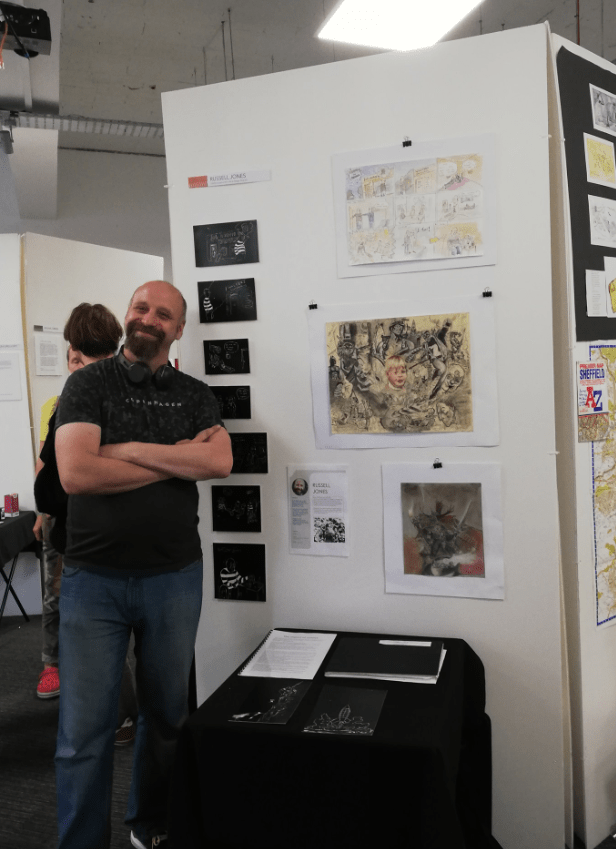
Exhibition Hillsborough College 2019
I decided to study in Fine Art BA (Honours) at Sheffield Hallam for three years. I found this course had more mature students then the Access course which I admit made me feel more at ease.
I found Fine Art to be a really diverse and inclusive group of people who are innovative and push the envelope when it comes to creativity and I was inspired by everybody. I have made a network of friends and colleagues who I still connect with via social media or in person at exhibitions. In the first year the whole class spent a weekend in Glasgow and Edinburgh to visit the art museums.
Then in the second year a global pandemic came out of nowhere and brought the world literally to a halt with everybody isolating and using their laptop to communicate to the world. I ensured this didn’t affect my degree and adapted to the digital world where I was involved in a virtual exhibition. I bought an ipad Pro and a next gen pencil which I have never looked back since and incorporated digital art into my process.
I graduated in 2022 with a 2:1 which I am extremely proud of and it has opened so many doors and opportunities for me now alongside a confidence in my own abilities that wasn’t there before.
I am writing this as a student ambassador because I want to encourage anybody who has any learning difficulties, insecurities of being a mature student to have the courage to apply.
Sheffield Hallam has a lot of support for groups of people who may be marginalised or feel like they need help into making that step into higher education.
SHU Progress provides support for applicants whose personal circumstances might mean that there are barriers to going to university.
The scheme provides additional support in the year of application and throughout the application process, including your transition to becoming a university student.
https://www.shu.ac.uk/study-here/apply/shu-progress
SHU Progress is generally available to all undergraduate applicants with a Home fee status. We also support applicants from a refugee or asylum seeking background who are in the UK applying for undergraduate or postgraduate courses.
To join the scheme, you must meet one or more of the criteria below:
- You are a care leaver
You have spent three or more months in local authority care while at school, from Year 10 onwards. You will also be 25 or younger when you start your course. - You are estranged from your parents
You are estranged from your immediate family, being estranged from someone means you’re no longer in contact or on friendly terms with them. - You are care experienced
You have had experience of care in the past, but do not fall into one of the above categories (care leaver, or estranged). - You are a carer
You care for a family member or friend which could be due to illness, disability, mental health condition or addiction. You may or may not be in receipt of carers allowance. Please note parental responsibilities do not automatically mean you have caring responsibilities, unless you are providing care for somebody with additional needs. - You have a disability
You have a disability which affects your everyday life. This could include learning difficulties like dyslexia and dyspraxia, mental health issues, or ongoing medical conditions. - You have experienced circumstances which have affected or interrupted your L3 studies
You have experienced a serious, recent event which was outside your control and has significantly affected or interrupted your level three studies (i.e. had a negative impact upon your ability to prepare for or take a level three assessment). - You are experiencing financial difficulty or hardship
You come from a household with an annual income of less than £25,000, or you are experiencing financial hardship which affects your choice of places to study. - You are unable to move away from your home area to go to university
You have circumstances that mean you need to be able to study close to home, these could include cultural reasons or family commitments. - You are a mature student
You are aged 21 or over and are returning to learning after a break. We can also support mature students wanting to return for postgraduate studies. - You are homeless or risk of homelessness
You may be homeless/risk of homelessness if you:- are sleeping rough
- are staying in a hostel or night shelter
- are staying with friends or family on a temporary basis
- are forced to live apart from your family or someone you would normally live with because your accommodation isn’t suitable
- live in unsuitable housing
- don’t have rights to stay where you are
- You are from a refugee or asylum seeking background
You are unable to remain in your home country due to trauma or persecution and cannot return for safety reasons. - You are from a military family
You are from an armed forces family and your parents/carers served in the armed forces during the first 25 years of your life. - You are a military veteran or service leaver
You have experience of serving in the armed forces. - You are from a Black British Background
Sheffield Hallam is working hard to increase the number of Black British students studying at our university and therefore we encourage Black British* people applying to the university to join our SHU Progress Scheme. To be eligible to take part in the scheme you will be:- a Black British person (either African descent, Black African-Caribbean, or another Black background or a Black British person with dual heritage).
- paying ‘Home’ (UK student) fees.
There is no age restriction, and the scheme applies to all full-time undergraduate subjects.
Good luck to anybody who uses Shu-progress to achieve their dreams there is always support. If I can do it so can you…

The beginning…
A Cry for Compassion: Twin Peaks, Season Three


Analysis by David Johnson
“The Good Dale is in the Lodge, and He Can’t Leave”
In 2006, near Washington, D.C., I went to a reading and discussion David Lynch was giving around his first book, “Catching the Big Fish.” The reading itself was extremely, comically short—just one or two brief sentences. But the Q and A session was lengthy, and Lynch was generous with answers.
Even though Twin Peaks was–in Lynch’s own words–“dead as a doornail” at the time, I had one question burning in my mind. It was a question that had stayed with me ever since the Season Two finale aired in June of ’91, and the series ended with one of the most shocking television cliffhangers of all time. It lingered through the feature film Twin Peaks: Fire Walk With Me, and haunted me for years:
“Does Coop ever make it out of the Black…
View original post 15,254 more words
Exposure

1 “A best friend”
A bright flash enveloped my view, the photo capture permanent unlike the disposable nature of the camera that took it. I stood there like I knew I had nothing more to add, to that my new best friend stood beside me, and I couldn’t help wondering why I was of any interest to anyone but those who knew and had to put up with me.
Something clicked, and not like I hadn’t with those I loved.
That click was the button press of the shutter, a moment in time frozen in pose, a memory collected in the tangibility of a glossy 7×5 print that would later develop. The brightness resembled the moment an inkling of the illuminated future set a course in motion, maybe I had found someone that didn’t see me as something other than what I was, for what I was worth I had…
View original post 10,066 more words
Working at Gunstones
My first proper job was @ Gunstones back in the late nineties. Gunstones is a bakery and the dept I worked on supplied sarnies to marks and Spencers.
I remember my first day walking to the oppressive factory looming over me like a bad dream. It looked a bit like Auschwitz but at least there you could hear the odd child’s voice or see a bird flying in the sky.
One bonus was that the smell of fresh bread baking was far more pleasant than the smell of burning bodies. Also, I wasn’t worked to death you could if you want to opt out of overtime.
We were given our new uniform and hair nets and wellies that didn’t fit and would cause someone like me to moan incessantly about workers’ rights.
The walls were white and there were no windows. Everyone looked the same. It was freezing no matter whether it was summer or not. I worked 10 and a half hour shifts.
Boredom was a foe to be vanquished which I felt I lost on a daily basis. I clock watched more than the terminally ill on their death bed.
Luckily I got a lift from a neighbour in his Mini but he would smoke and have his window wound down I used to freeze before I started work. We got there twenty minutes before shift as we liked to get a good spot on the conveyor belt line.
Me and my neighbour liked to start buttering it was pretty easy and you could do it half asleep which at 7 in the morning suited me fine. You would have an hour on each section of the belt. Twenty people made one sandwich. Each person played a role. After buttering you would move further down the belt.
For example if we were making cheese and ham sandwiches the next part would be throwing cheese on like some mad croupier who had gone postal.
not as easy as it sounds those slices of cheese would stick together and if you didn’t keep up you pulled the line and the belt stopped halting production.
You didn’t want to do this as the scorn of your fellow workers would be daunting to say the least. I remember an old lady looking at me with disgust because I couldn’t put tomatoes on fast enough. She looked at me like a racist would look at a black person in a swimming pool.
Ham was easy and lots of fun. You had to “fluff” the meat (no that’s not a reference to porn) make it look nice get some air in there. Then you would spend an hour closing these baps making sure the meat wasn’t sticking out like a pelvic prolapse.
The sandwiches went to a magic machine where some bloke who was paid more to tend the machine felt he had meaning to his life would look smug if he could get the machine to work fast without chewing up the sandwiches.
I was so tired but you had to keep sane by playing games and at 11 every day me and my neighbour would sing Bohemian Rhapsody at the top of our voices. Boredom and insanity gave me new confidence in public singing.
I worked twice here both 6-month stints and to be fair met some interesting people one of whom got me into Hunter S Thompson, Joseph Heller and J D Salinger.
There were even worse monotonous jobs than what I’ve mentioned. I used to get cramp from putting cold chicken onto a sarnie for an hour and a half. Destalking tomatoes wasn’t fun and I’m happy I never had to debone the salmon.
I also was victim of a prank when I asked our female chargehand if we had any Canisten cream.
All in all good times “Arbeit Macht Frei” indeed.
Yalumba wine tasting at Mitchell’s 09/06/2022 by Russell Jones
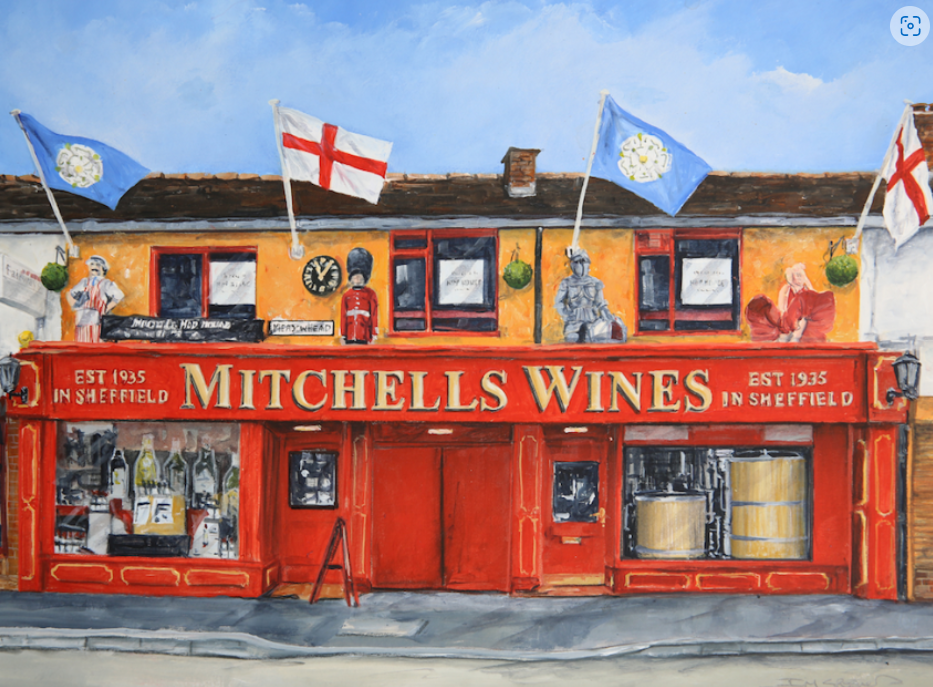
Thursday night and it is quite a balmy night and there is a tasting at Mitchell’s of Yalumba wines hosted by Paul Webster Market Manager for the U.K. and Europe for Yalumba wines.
A number of Mitchell’s staff are present as we are actively encouraged to attend and gain product knowledge which is beneficial to ourselves and customers.
Before I begin I will introduce you to the history of Yalumba wines the following text is taken verbatim from their official site https://www.yalumba.com/ which I encourage you to peruse:
The Yalumba story started with Samuel Smith venturing across the seas from England to a small town called Angaston in South Australia. He founded Yalumba in 1849, planting the first vine under moonlight with his son, Sidney. His bold, pioneering spirit has passed through the generations, influencing each of Yalumba’s proprietors throughout the years; Sidney Smith, Walter Smith, and Wyndham Hill-Smith, all the way through to our fifth generations proprietor today, Robert Hill-Smith.
Robert led Yalumba into the modern era by cementing our reputation as an internationally-focused and innovative business within the Australian wine industry. He pioneered Viognier in Australia, established Australia’s First Families of Wine and launched Yalumba’s most prestigious wine — The Caley Cabernet Sauvignon & Shiraz, honouring his great uncle Fred Caley Smith. Robert’s family carries on the legacy set in place by Samuel Smith, continuing to experiment and showcase the best the Barossa has to offer.
The wines we will be sampling tonight are:
- Jansz Sparkling
- Pewsey Vale Eden Valley Riesling
- Y series Chardonnay
- Eden Valley Viognier
- Barossa Bush Vine Grenache
- The Cigar Cabernet Sauvignon
- The Signature Cabernet Sauvignon & Shiraz
- Yalumba Antique Muscat
Jansz Sparkling
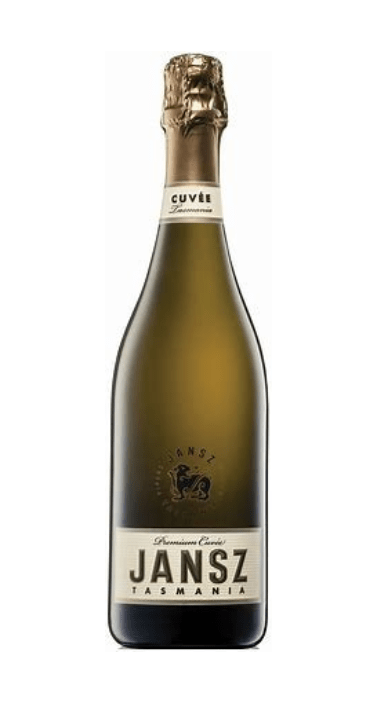
The first drink of the night is a Jansz Premium Cuvée Non Vintage Sparkling from Tasmania, Australia.
A Chardonnay and Pinot Noir blend with two years cellaring and as much time as possible on its lees before hand creates a wine with structure.
Tasmania is an island state of Australia and is located to the south of Australia’s mainland.
Tasmania has a relatively cool temperate climate compared to the rest of Australia, spared from the hot summers of the mainland and experiencing four distinct seasons.
These are ideal conditions for producing low yield but highly concentrated flavours in the wine.
Jansz is named after the Dutch explorer Abel Janszoon Tasman, who first sighted the island we now call Tasmania in 1642. When Jansz established their vineyard in 1975, they originally named it after Tasman’s ship – the Heemskerk. In 1997 the business was purchased by the Hill-Smith family (of Yalumba fame), and Jansz are now one of the most highly regarded sparkling wine houses in Australia.
Time to sample the wine and honeysuckle and citrus scents are immediately apparent with slight aromas of nougat, roasted nuts and a sniff of strawberry from the Pinot Noir. Delicate fruits and creaminess wash through the mouth leaving a lingering finish of citrus and nougat.
A.B.V. at 12.5 % in a 70 cl bottle retailing at £17.99 this is a lovely drink for the summertime which is totally refreshing.
Pewsey Vale Eden Valley Riesling
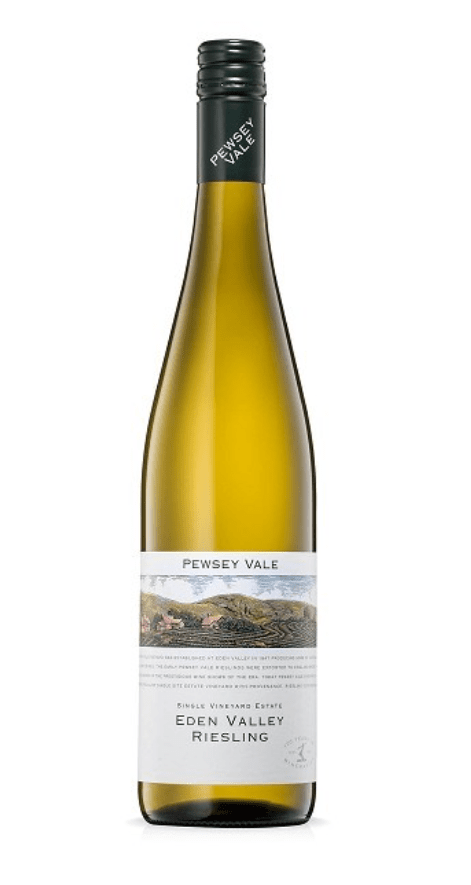
Taken from the official site https://www.pewseyvale.com.au/the-original/
In 1839, shortly after his arrival from England, Joseph Gilbert started building a fine homestead in Eden Valley and planted the region’s first grapevines in 1847…
Like so many vineyards in the 1920s and 30s, Pewsey Vale fell into disuse but, thankfully, its potential was rediscovered.
In 1961, pastoralist Geoffrey Angas Parsons became aware his property had once incorporated the region’s earliest vineyard and shared his discovery with good friend, and vigneron Wyndham Hill-Smith. Several wine companies were considering potential vineyard sites with cooler ripening conditions than found on the Barossa Valley floor and Hill-Smith needed no further persuasion – work soon began on re-establishing Pewsey Vale Vineyard.
With an altitude varying between 485 and 500 metres, Pewsey Vale Vineyard sits 250 metres above the Barossa Valley floor. This means cooler temperatures and a long ripening period that extends well into autumn, perfect for the characteristic Rieslings we know and love. A vineyard that deals exclusively in riesling.
Intense aromas of lime and lemon, fresh toast and lime marmalade. Citrus dominant, the palate displays hints of honey, sage oil and marmalade, finishing with a crushed stone minerality. Vibrant and fresh, but with richness and intensity from its 10 years in bottle.
Enjoy with five-spiced glazed duck breast, seared scallops, and lemon butter sauce, or roasted cauliflower salad.
This was definitely one of my favourites of the evening and I loved the freshness of the drink and thought it would be ideal for a summer tipple.
12. 5% ABV in a 75cl bottle with retail price of £16.39 an ideal introduction to the night from a vineyard that deals exclusively with Riesling.
Y Series Chardonnay
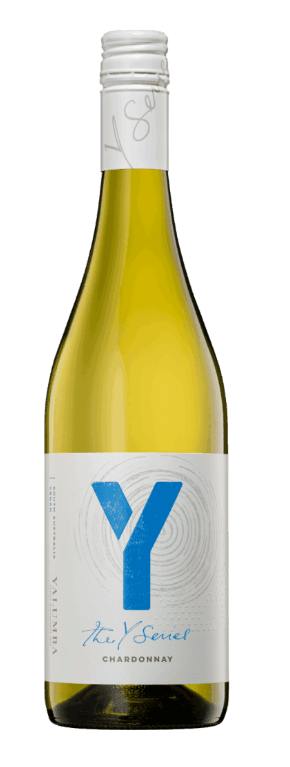
A refreshing, lip smacking Chardonnay with minimal winemaker intervention and no oak influence, this Chardonnay is pure and fresh, with subtle complexity from the 100% wild yeast fermentation.
The palate is long and creamy with flavours reminiscent of grapefruit and barbecued green mango.
There is spicy lemon myrtle and a savoury edge with flinty notes from the wild fermentation. A refreshing, lip-smacking acidity that gives this wine a lovely length with a savoury, textural finish.
Best enjoyed with pan-fried haloumi with lemon and parsley, or chickpea, zucchini and carrot fritters with a green mango salsa.
All the information supplied here is available from Yalumba official site
https://www.yalumba.com/shop/wines/y-series-chardonnay
Eden Valley Viognier
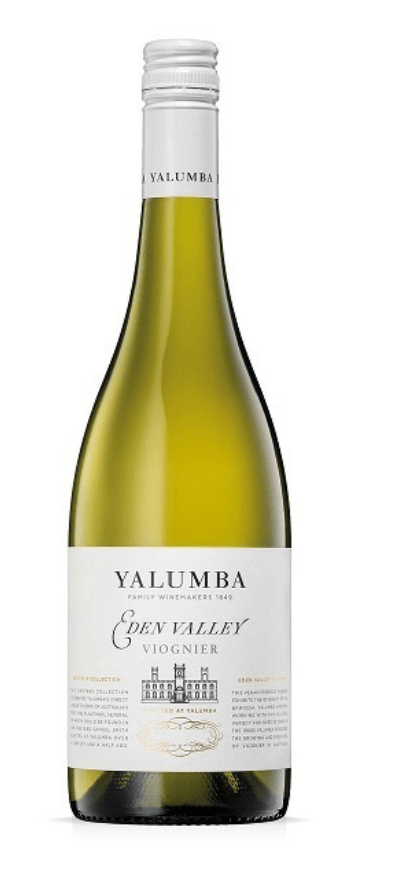
The Yalumba Nursery sourced, propagated and grew these exotic vines before their growers planted them high in the Eden Valley.
The grapes for this wine come from six different Eden Valley vineyards, and artfully blended together to create the final wine.
Viognier is a versatile wine that pairs beautifully with diverse cuisines including Asian and Middle-Eastern dishes. Recommended pairing for this wine is with Moroccan tagine and spiced cous cous according to the official Yalumba site.
Pure aromas reminiscent of fresh apricots, ginger, saffron and fresh white flowers. The palate is long and silky with stone fruit flavours, finishing with an alluring freshness.
This wine will continue to grow and develop in the bottle, firstly showing enhanced apricots and spice, then honey flavours and toast complexity.
Barrel fermented in old barriques this is indeed a tasty Viognier which you can find in Mitchell’s stores retailing at £15.99 with a 13.5% ABV.
Barossa Bush Vine Grenache

Scattered across the Barossa valley floor, a number of special old, bush vine Grenache vineyards contribute to this wine. A range of terroir, including climate and soil types, can be found at each site, helping to make this individual and intriguing style of Grenache.
A wine that opens with bright red fruits and spices with hints of violets and roses and also a savoury complexity. Shows richness and ripeness with textured layers of red and blueberry fruits and youthful tannins.
Katie an employee of Mitchell’s who was attending this tasting stated: “That this red is a better version of Pinot Noir.”
This wine is closest you can get to a Pinot Noir.
It is a food friendly wine and recommended with roast pork or miso roasted eggplant.
I am not a red wine drinker per se but I was suitably impressed by this and yes it does remind me of Pinot Noir which is a red wine that I am drawn towards maybe for its fruitiness. This wine retails at £14.99 at Mitchell’s.
The Cigar Cabernet Sauvignon
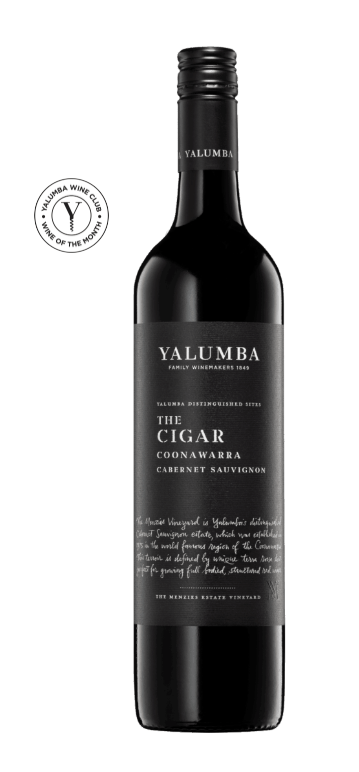
The Cigar Cabernet Sauvignon is named after the unique cigar-shaped strip of rich terra rossa soil that defines the famous Coonawarra wine region. It is a contemporary medium to full bodied wine with rich fruit characters and soft round tannins; matured for 16 months in new and older French oak.
The Menzies Estate Vineyard lies in the heart of Coonawarra on the famous terra rossa soil over limestone. This valuable patch of land is the holy grail of all Cabernet purists; with soil vivid red in colour, it is perfect for growing exceptional full-bodied red wines.
Yalumba The Cigar Cabernet Sauvignon is crimson red with an aroma that fills the senses. There are floral high tones of violets and lavender underscored by bass notes of cherries and dark chocolate.
The wine is bright with fresh red fruits such as cherries and currants sweeping the palate followed by the melted chocolate texture of the soft tannins. The finish lingers pleasantly. Try with a plate of charcuterie or antipasto.
14% ABV retailing at £23.50 for a 75cl bottle this is delicious and was a big hit with the tasting crowd.

A classic Australian blend of Cabernet Sauvignon and Shiraz, the first vintage release of The Signature was in 1962. Since then, this outstanding wine has acknowledged more than 57 Signatories; people who have enhanced the traditions and culture of Yalumba.
A medium to full bodied wine with a long, flowing tannin profile. A very refined Signature.
A refined and complex palate that is delightfully fresh with seamlessly integrated oak. Generous red berry fruit is wrapped in finely honed tannins.
The Cabernet Sauvignon was sourced from four vineyards in the Barossa Valley. The Shiraz comes from vineyards of varying age, with the oldest planted in 1945.
Matured for 21 months in 33% new French barriques, American and Hungarian hogsheads, balance in older French, Hungarian and American barriques and hogsheads.
Retailing at £37.50 with an ABV of 14.5 % a very satisfying full-bodied wine.
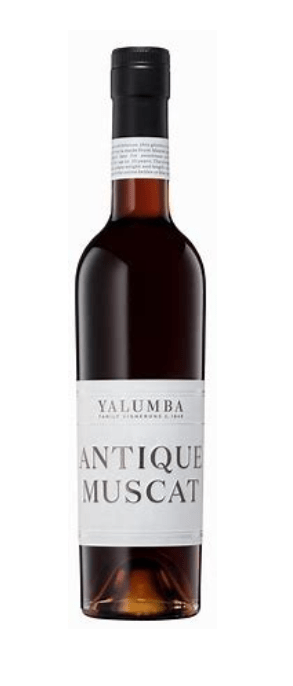
Last but not least carrying on their tradition of fortified winemaking, Yalumba’s Antique Muscat is a fine dessert wine that highlights the rich, raisin and luscious style of Rutherglen Muscat. This is an indulgent and seamless wine.
Fermentation is arrested by fortification with neutral grape spirit to retain the sweetness in the wine. The wine is matured in small oak barrels and after many years of maturation, a selection of older and younger wines are judiciously blended to produce this complex and balanced wine.
The bottle size is 37.5 cl with an ABV of 17.5 % and retailing at Mitchell’s for £19.99.
I found this to lovely and sweet and reminiscent of the taste of xmas pudding which would make this an ideal tipple for serving at Christmas time.
In conclusion a fantastic night hosted by Paul Webster where I learnt a lot about this particular brand of winemakers and hopefully this knowledge will be utilised within the store when customers are present.
I hope this has been of service and look forward to your custom.
Batman pic

Batman tutorial I helped Joanne Nash she had never used pastels before.
The erasure of Mona Lisa
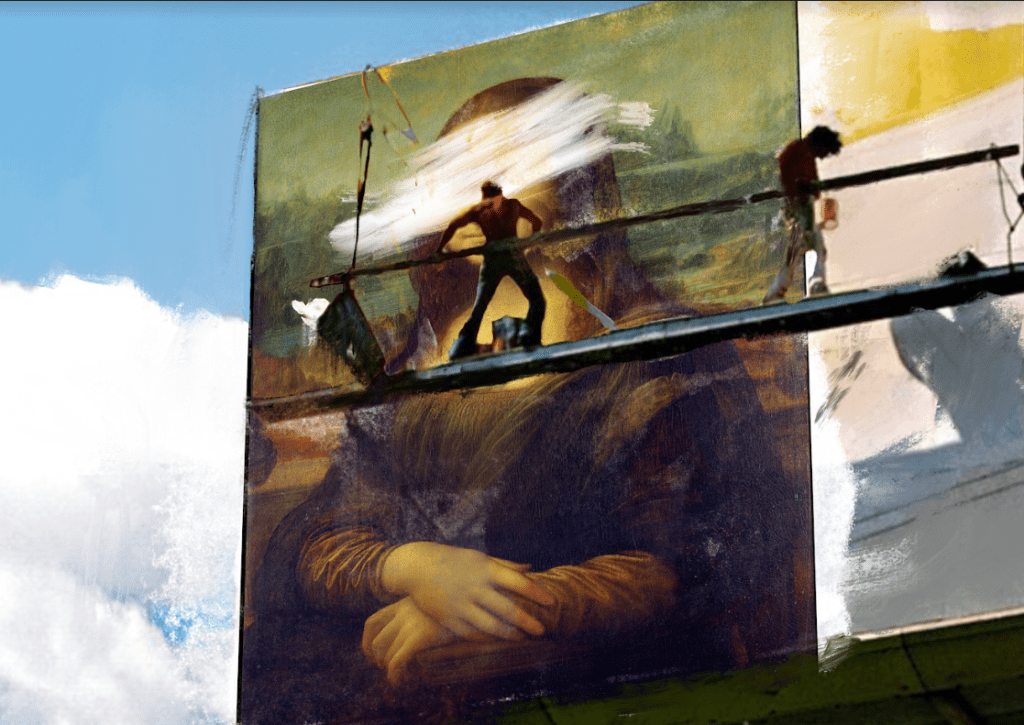
 Rusty'sArtWerk