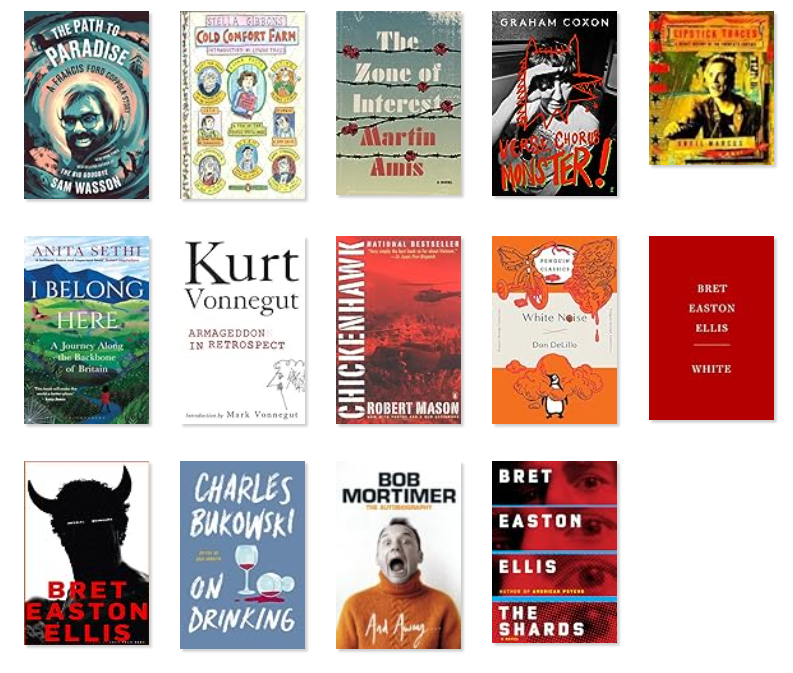
Films seen this year at the cinema 2023
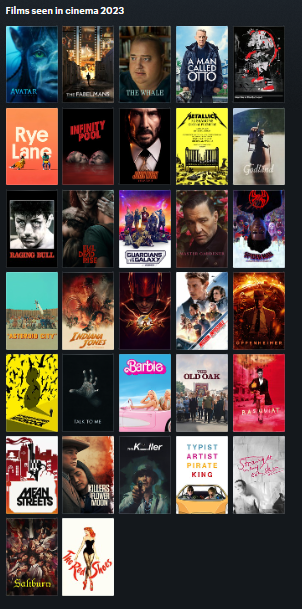
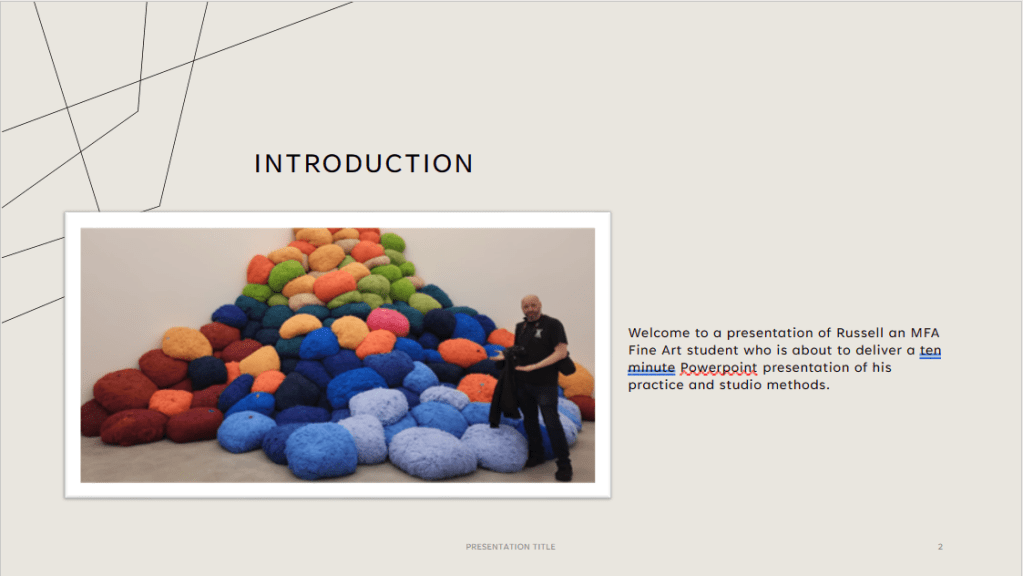
Presentation studio methods 7/12/2023



28/11/2023
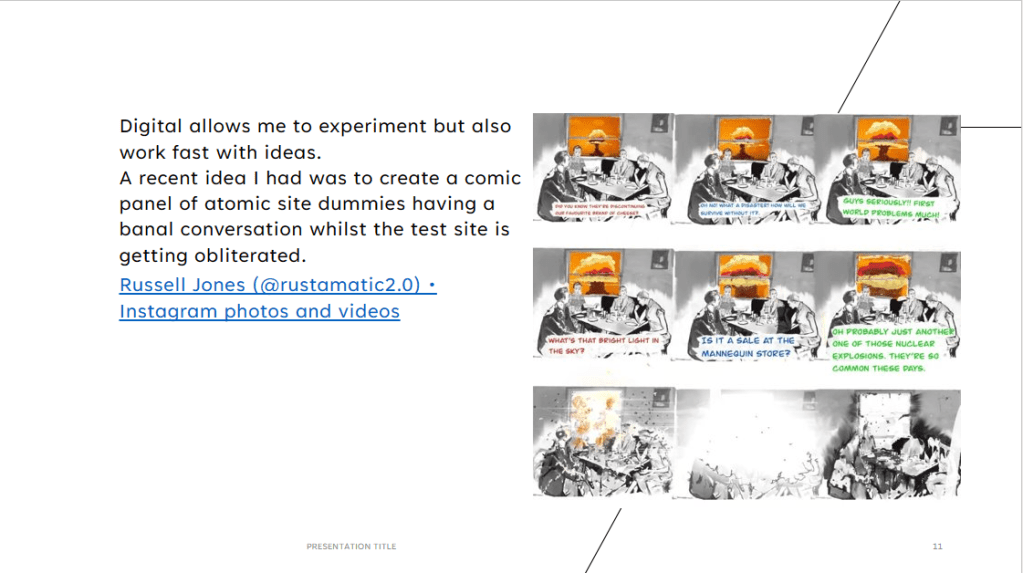
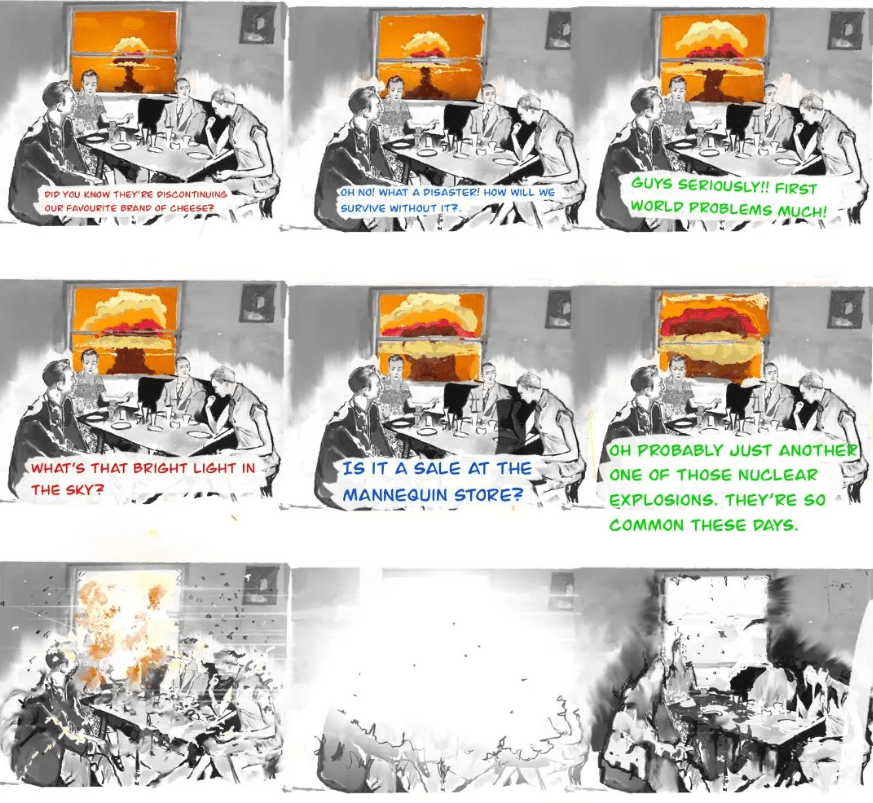
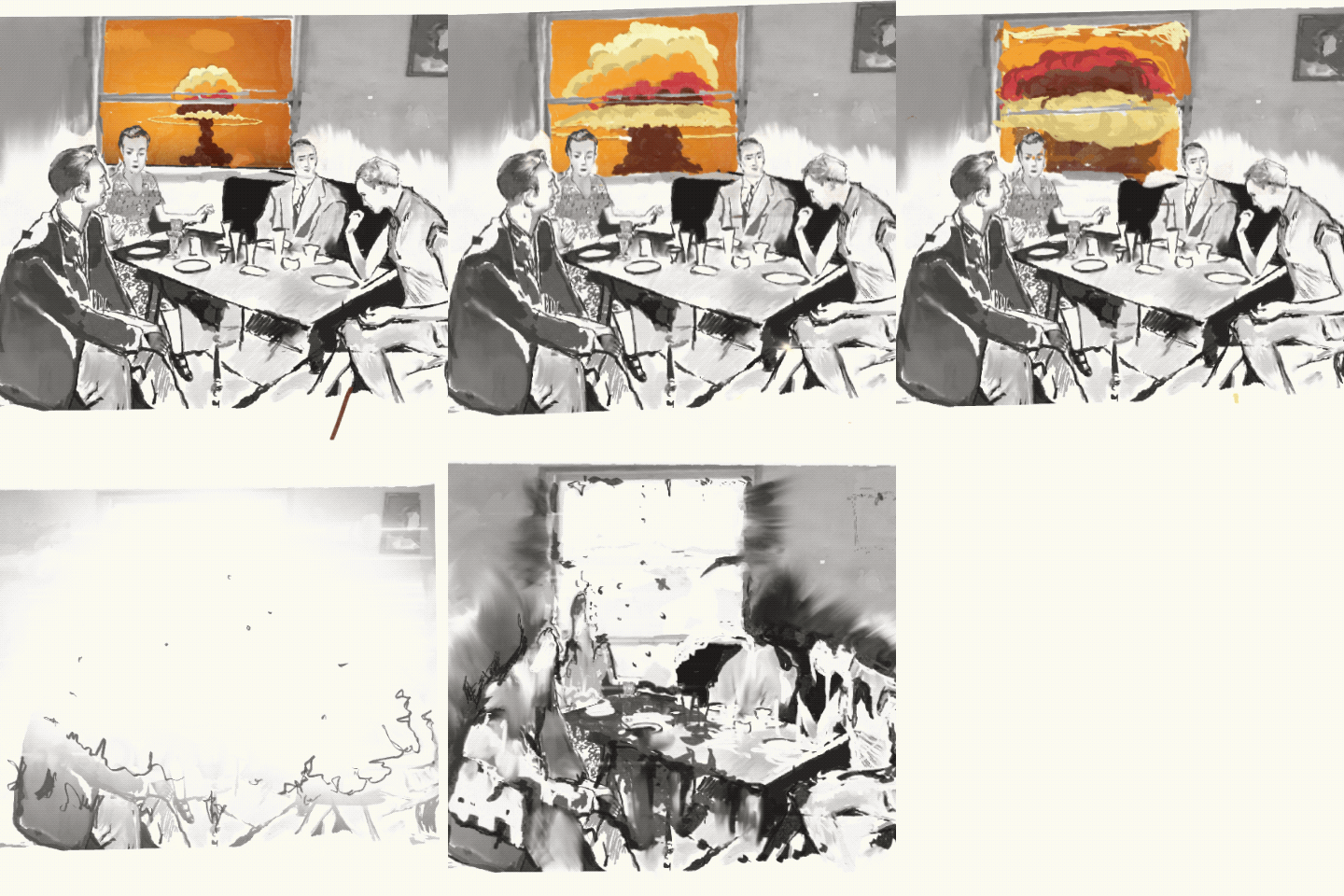
Today I have finished working on a piece entitled “The Nuclear Family”.
My idea was to create a cartoon using the same panel and a nuclear explosion in the background gradually making its way to the foreground and obliterating everything.
I used a banal conversation as dialogue.
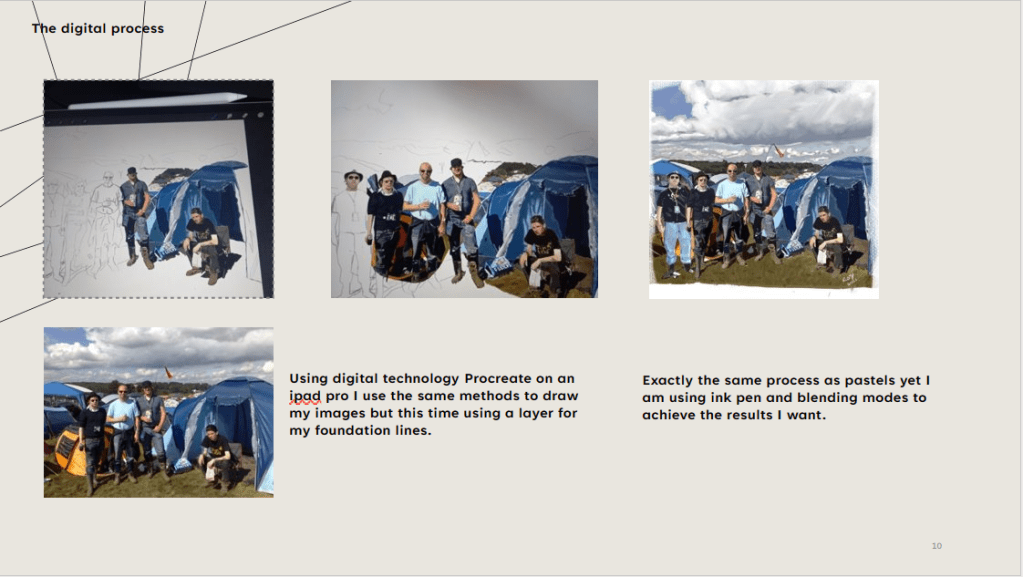
Using Procreate on my ipad pro with brushes, layers and text.
As you can see from the time lapse video I enjoyed experimenting with different brushes and effects to get what I wanted.
I then animated as a gif and pleased with the result as I can now branch off into animation.
Yelena Popova 8/11/2023
Yelena Popova (born in USSR) lives and works in Nottingham, where she has a studio at Primary. She received an MA in Painting from the Royal College of Art in 2011. Since then, Yelena has enjoyed a range of adventures: working with commercial galleries, art institutions, artist- run spaces, residencies, teaching, public commissions, auctions and Insta-hustle. Recent exhibitions include Made Ground, Cample Line, Scotland 2023; Matter as Actor, Lisson Gallery, London 2023; The Scholar Stones Project, Holden Gallery, Manchester, 2020; and Slow Painting curated by Martin Herbert for Hayward Gallery Touring 2019. Her work has been acquired into the Arts Council Collection and Government Art Collection and numerous private collections.
https://www.yelenapopova.co.uk/
Yelena talks about her Final show at RCA July 2011. Presented her own practice instead of the product and present what happens in the studio.
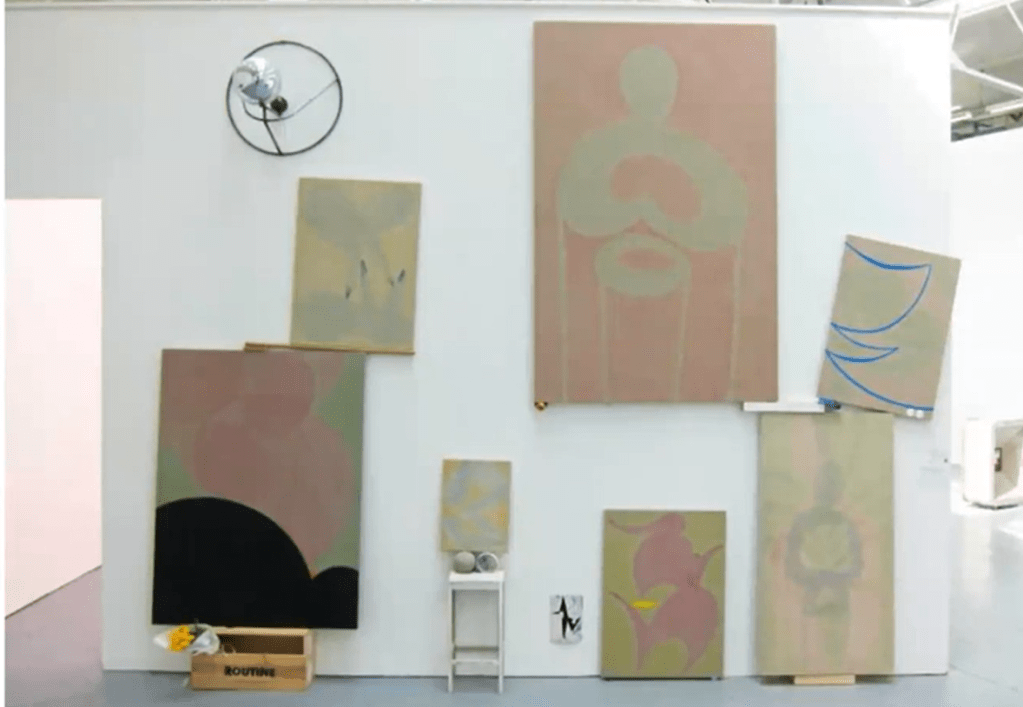
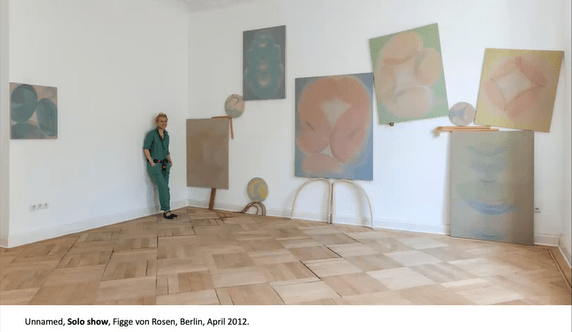
I recognise Yelena’s work and I am impressed by it especially the installation and the use of gravity literally gives weight to the work.
Yelena talks about elevator pitches. An elevator pitch, elevator speech, lift speech or elevator statement is a short description of an idea, product, or company that explains the concept in a way such that any listener can understand it in a short period of time. This description typically explains who the thing is for, what it does, why it is needed, and how it will get done. When, explaining an individual person, the description generally explains one’s skills and goals, and why they would be a productive and beneficial person to have on a team or within a company or project. An elevator pitch does not have to include all of these components, but it usually does at least explain what the idea, product, company, or person is and their value.
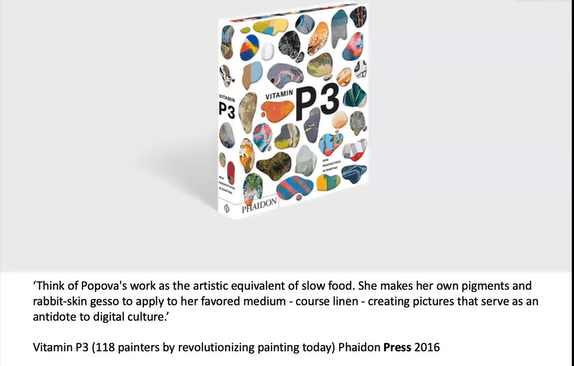
Yelena talks about the positives of being in a residency and usually it’s an open call for applications or by invitations.
Yelena talks about her work entitled Her Name is Prometheus, the show is comprised of sculpture, paintings, etchings, and tapestry developed during a residency at The Art House in Wakefield.
https://www.thegalleryguide.co.uk/exhibitions/yelena-popova-her-name-prometheus
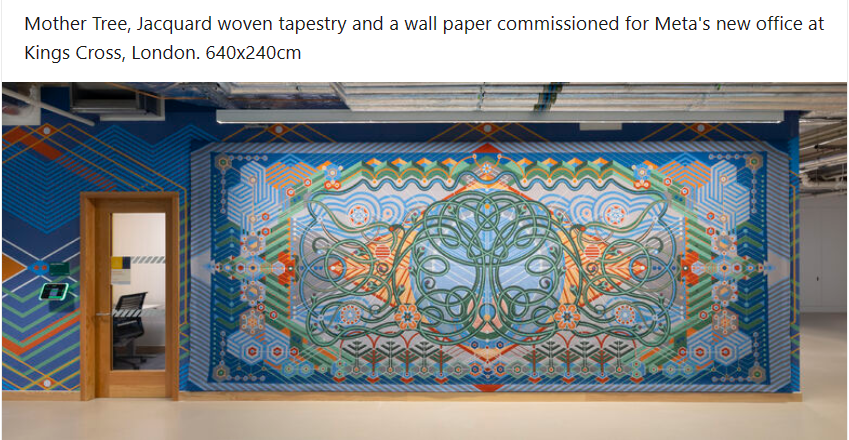
Yelena talks in great detail about artist-led spaces, galleries and institutions and relationships within these different approaches to art practices.
Yelena ends the talk with her contact details and then offers questions to the audience.
Ashokkumar D Mistry 01.11.23
Ashokkumar Mistry is a Neurodivergent multidisciplinary artist, writer, researcher, activist and curator based in Leicester. He is co-founder of the Disability in British Art research group and is an associate of DASH Arts’ Future Curators Programme. Recent works include the peripatetic intervention Don’t Stare, commissioned by Project Artworks for Tate Liverpool and to be shown at IKON Gallery Birmingham and Beyond Relentless Acceleration, a durational, participatory intervention commissioned by DASH Arts for We Are Invisible We Are Visible at Nottingham Contemporary. His latest collaboration with artist and writer Sonia Boué explores Neurodivergent approaches to making (to be presented at John Hansard Gallery, Southampton 2024). He will deliver the Edward Rushton Social Justice Lecture as part of DaDaFest 2023.
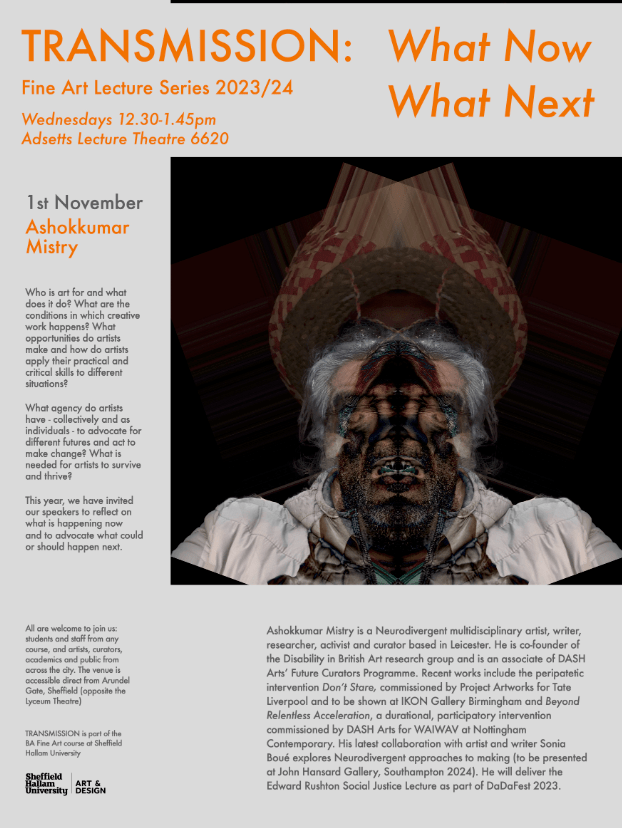
Ashokkummar Mistry is introduced by Joanne Lee who is a neurodivergent multidisciplinary artist based in Leicester who has been creating for 25 years.
Ashokkumar talks about ambition. What is ambition? Is ambition the same and where does it come from?
If we can understand ourselves and our human condition then we can make it easier to achieve our goals.
Ashokkumar hates injustice and feels like he can be against the world and that he can be awkward in the art world and has even been diverted from art exhibitions.
Ashokummar goes off into different tangents when it comes to making work and fighting against the orthodoxy of the art world.
Ashokummar talks about navigating through a world where people are labeled and how he liked punk music for instance and how difficult that is as an Asian man.
Ashokummar talks about his illegible his written work and how ashamed he felt which is an issue that I can relate to as I struggled with my handwriting not the spelling or the substance but how illegible it is.
The art world indoctrinates artists and compartmentalises them and then artists will mask and indoctrinate themselves and conform to other peoples’ perceptions and assumptions.
Our biographic labelling dictates how other people perceive us but not your own perception.
Understanding disability or a difference that isn’t catered for and is a subject that isn’t explored in the human experience.
Disability art and disabled artists are two separate entities and just because an artist is disabled (which is a term that is becoming outdated; disabled toilets are now referred to as accessible toilets) doesn’t mean that they will be an artist who focuses on their condition.
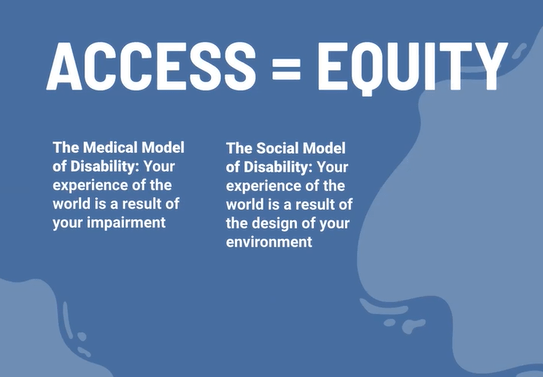
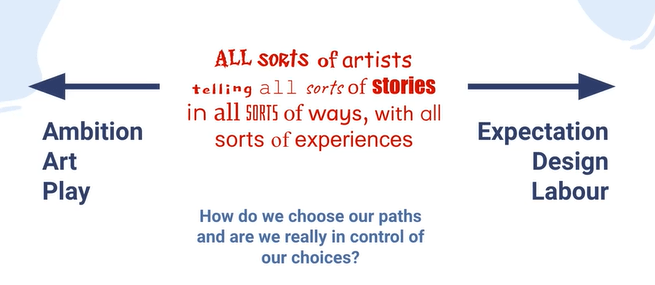
Activism is a huge component of Ashokummar’s practice and is a huge part of his self.
Some artists cited are Sonia Boue, Dolly Sen, Colin Hambrook and Rachel Gadsden.
I really enjoyed this talk and as an artist I feel we all have our own battles and internal struggles we can use in our artwork.
I myself was a slow learner and had to have speech therapy as a child, I have never been diagnosed with neurodivergency or autism but a lot of my friends think that I am on the spectrum.
I do think differently and can be both introvert and extrovert. Being an artist lets me exploit those traits and yes I do believe exploit is the right word to use.
I have in the past dealt with anxiety, depression and intrusive thoughts and art allows me to deal with those issues directly and assert some control which is something not easily attainable when dealing with mental health issues.
This talk affirmed a lot of observations I made about myself and the art world and found it inspiring and informative.
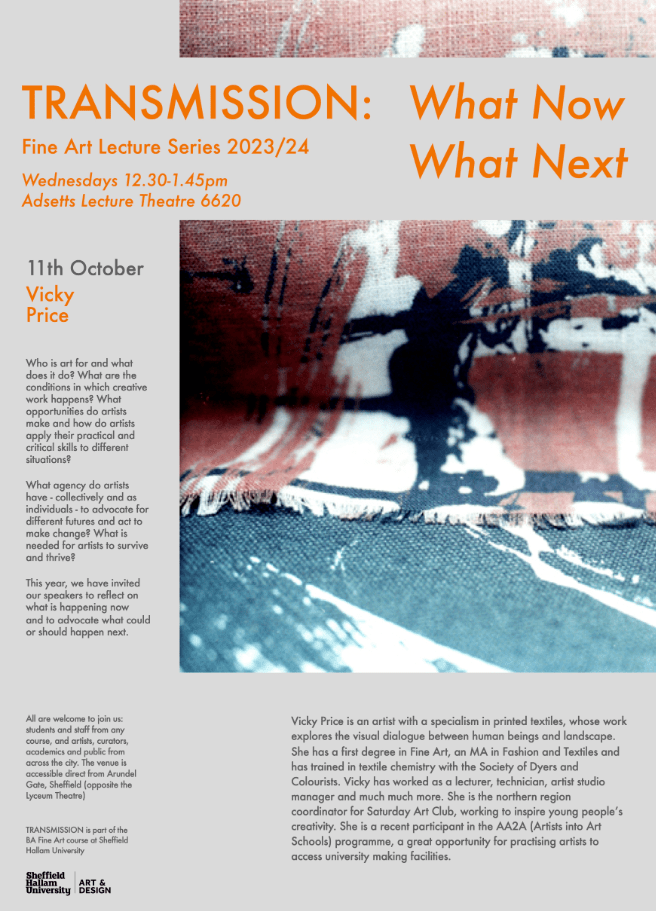
Vicky Price 11/10/2023
Vicky Price is an artist with a specialism in printed textiles, whose work explores the visual dialogue between human beings and landscape. She has a first degree in Fine Art, an MA in Fashion and Textiles and has trained in textile chemistry with the Society of Dyers and Colourists. Vicky has worked as a lecturer, technician, artist studio manager and much much more. She is the northern region coordinator for Saturday Art Club, working to inspire young people’s creativity. She is a recent participant in the AA2A (Artists into Art Schools) programme, a great opportunity for practising artists to access university making facilities. https://vickyprice.com/ @studiovickyprice
Vicky kindly shared a fantastic list of useful resources:
Jo introduces Vicky as an alumni from Sheffield and that she graduated in 1999.
Jo introduces the concept of the presentation’s themes and of how the artist is to thrive and not just survive.
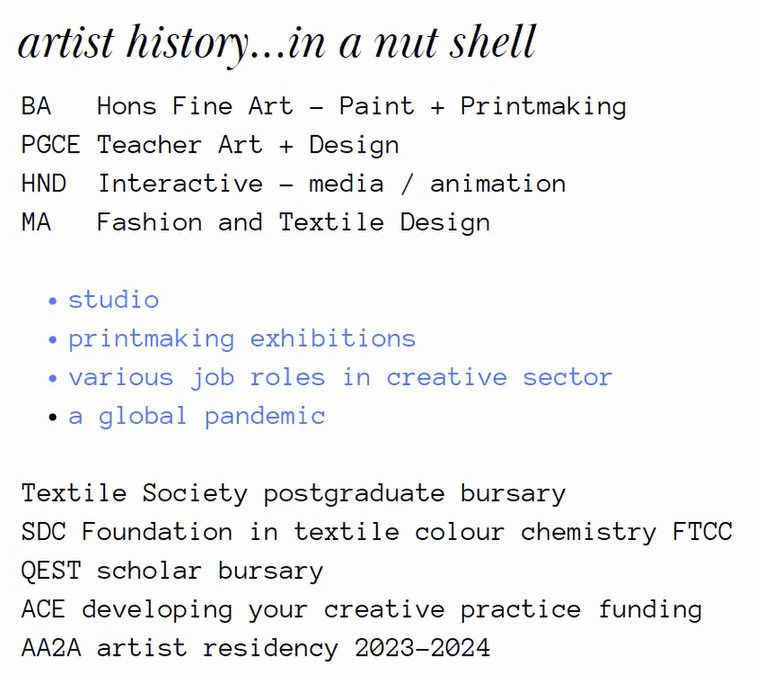
Vicky goes into detail regarding her history in art.
Born in North Yorkshire, she spent many years as an outdoor kid, training and competing in high-level cross-country running, gig rowing and team sports, until she attended art college in 1991. After studying fine art printmaking in Sheffield 1997, she left for a travelling life in Europe. She continued to keep sketchbooks and enjoyed a transient existence, accompanied by friends, dogs, a collection of mountain bikes and a kayak – with many interesting stories to recall.
During this time, she absorbed changing localities, developing a cross-fertilisation of ideas around culture, heritage and architecture and geological surroundings, with further spatial influences of natural gorges and valleys. She was influenced by the enormity of human endeavour to carve dwellings from the rock face of Siurana, a tiny town located in a high region of Tarragona Province and the gestural works of Antoni Tàpies in Barcelona, that searches for traces of human gesture.
Since 2016 she has produced large-scale print works for research, projects and clients, using screen print for immediacy and the flexibility to adapt between surfaces and printed colour. She has developed co-created works with other makers and artists in upholstery and fashion, showcasing exhibits at The National Centre for Craft. In 2018 she was awarded a UK Textile Society Postgraduate Bursary for her eco-print developments using recovered large-format digital inks and landfill silk. Vicky continues to develop her project ‘drawing in a three-dimensional world’ through Arts Council England funding and a QEST scholarship.
She is most productive when drawing and the textile print intertwines with science-like processes as a means to re-rendering textile design, working with ancient process technologies and investigating how these can be revived as a new promotion of eco-sustainable developments. Through print she uses physical making and movement, Vicky endeavours with rigour and play to create the next best innovation in new surface design and material matter. With a constant search for pre-consumer waste textiles – often destined for landfill, Vicky’s over-arching aim is to hand-print onto waste fabrics to produce beautiful prints, that look digital but are skillfully hand manufactured.
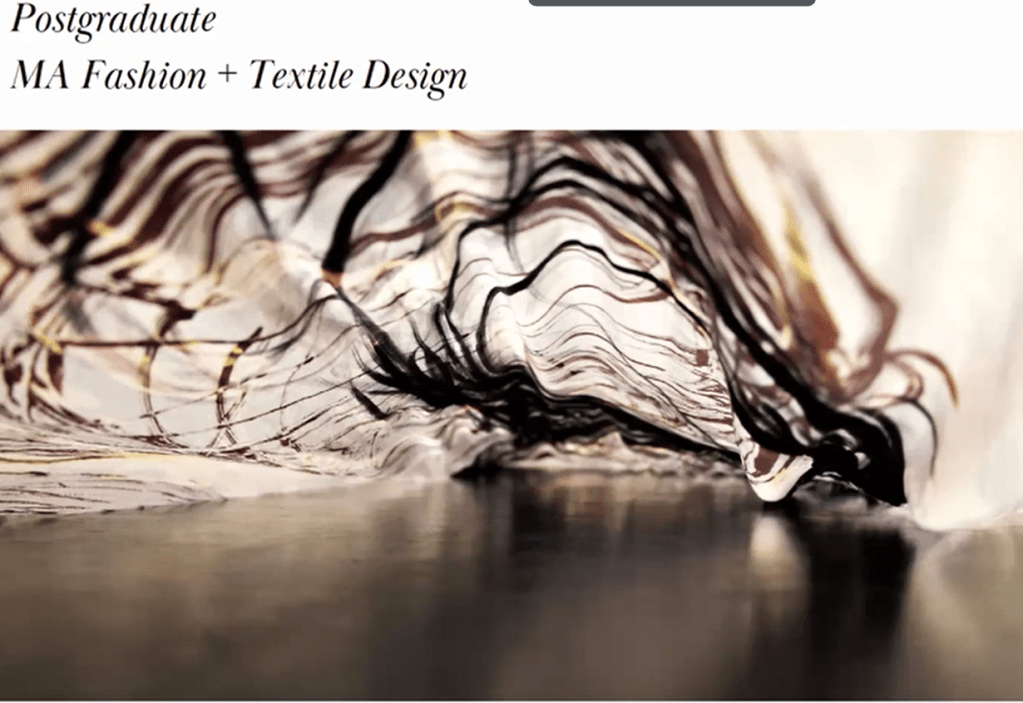
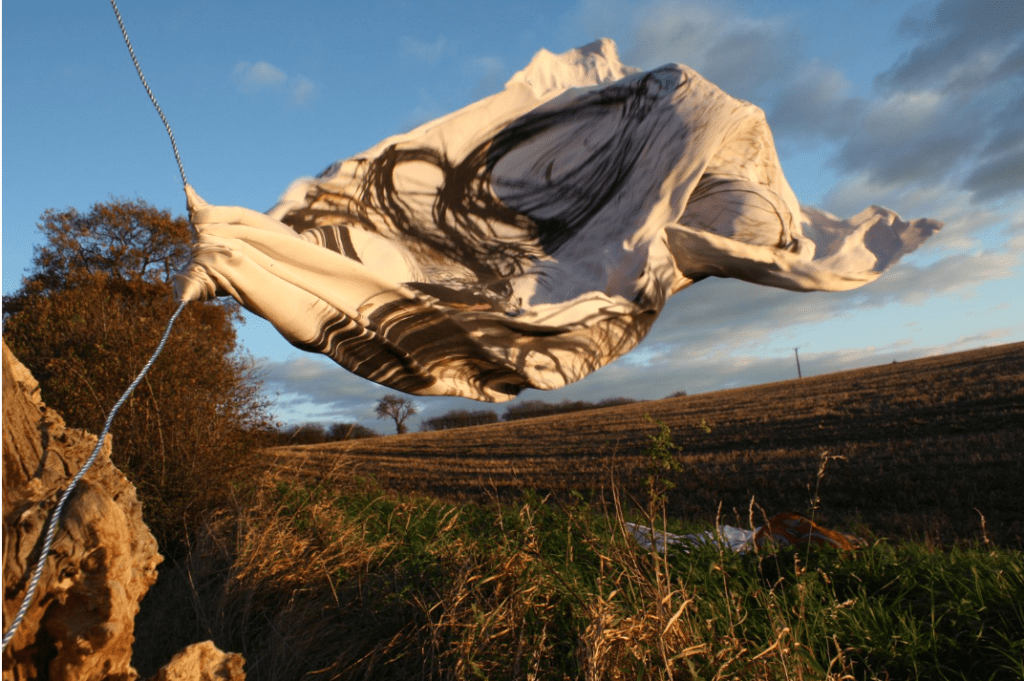
Flow / silk
Inspired by automatic drawing, this is a collection of purely waste product installations, using Satin Silk KD515 and Fuji Silk Natural that was damaged or end roll, destined for landfill. The dye is applied using drawing bottles in repetitive physical movements, similar to a human Spirograph. One-off pieces are intended as sustainable research into re-use, used in installations and developed into the series of Flow images, released in the landscape in high wind.
The Wasteland Collection / Research
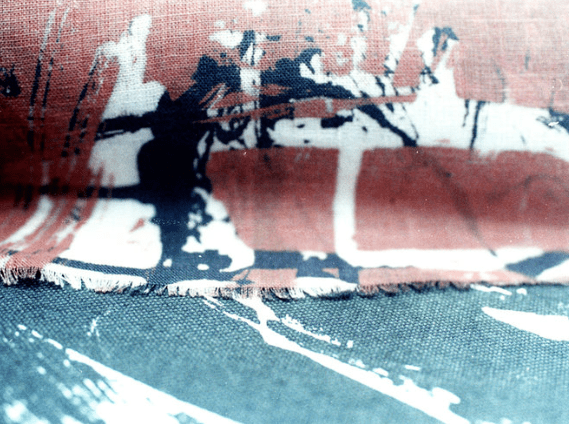
An eclectic innovation of hand screen-printed imagery on silks, cottons and linens, based on the concept of drawing in a three-dimensional world. The collection developed initially on a disused jet engine testing site, using waste digital inkjet ink on end rolls of coated fabrics, sourced as unfit for purpose and due for landfill. Bringing her large scale works back into the studio, Vicky continues to re-work the images with found minerals, iron ore, red oxide and metal powders.
Vicky then finishes her “Then” section empthasising the timeline split into education, personal projects and work highlighting that personal projects is more heavily weighted.
Vicky is now engaged in regaling the “now” section.
The pandemic affected Vicky as she was furloughed, no access to a studio.
2022 – 2023 Stone lithography with master lithographer Serena Smith at Leicester Print Workshop.

Driving on the M62 towards Rochdale, look north to the surrounding moorland and you will see a track, sometimes called the yellow brick road, winding its way up the moor.
Vicky explores the Cotton Famine Road, a reminder of the harsh times cotton millworkers had to endure during the Cotton Famine. The road provides a unique link to the American Civil War, at a time when the Rochdale Pioneer Movement influenced social thinking and Rochdale millworkers supported the struggle against slavery. The poor of Rochdale laid about a third of a million stone setts by hand into the fabric of the moor, which we believe is of international importance and worthy of recognition! The road features in BBC Black and British: A Forgotten History, where David Olusoga, the Honorary President of our Neighbourhood Forum, explores the enduring relationship between Britain and people whose origins lie in Africa. The known history of the area also predates the Cotton Famine with evidence of bronze age settlements, cairns and links to Whalley Abbey and the 13th century wool trade.
Vicky has created a frottage drawing of the Cotton Famine Road.
Vicky offers advice on how to plan for the future:
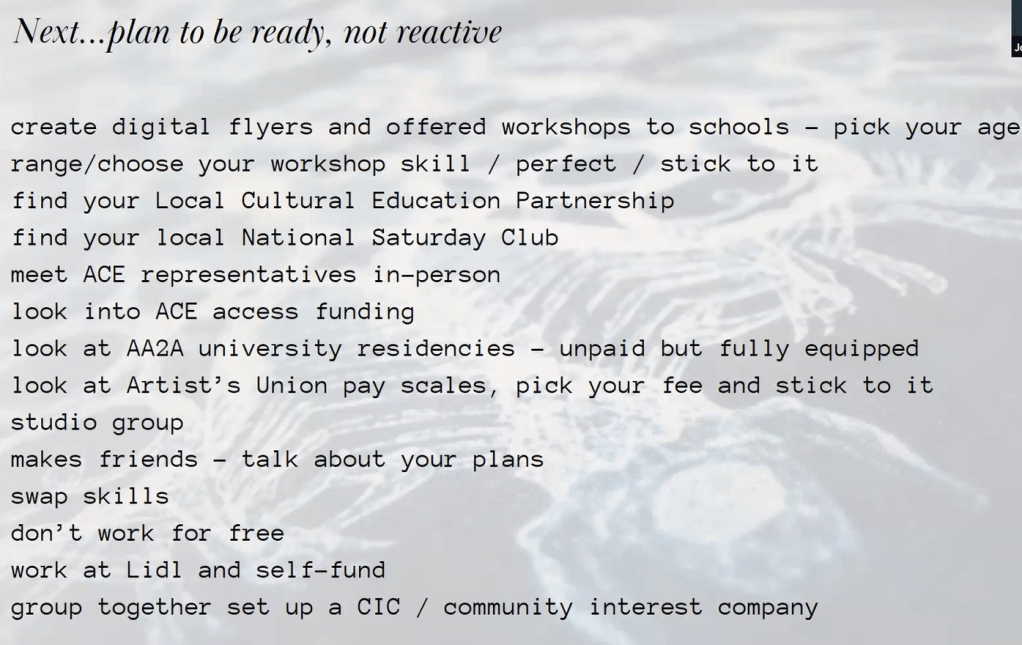
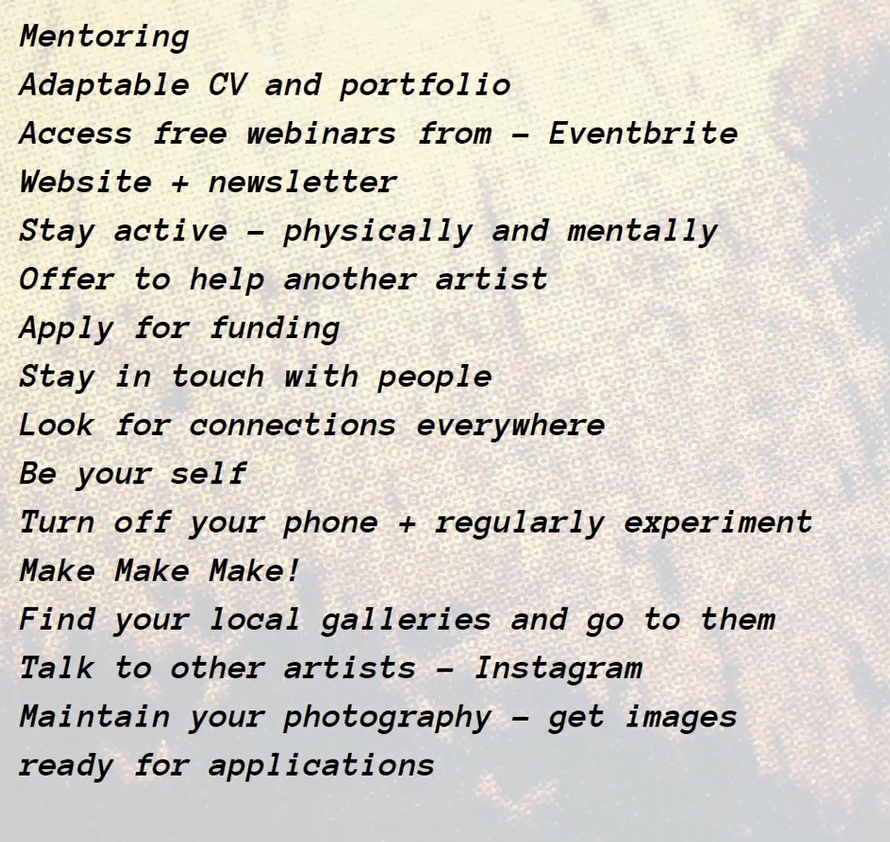

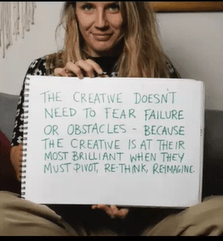
An enjoyable talk from a versatile artist who adapts to their landscape primarily the pandemic and lack of funding.
Being Human Wellcome Collection
London Trip 24/10/2023
As part of the london trip to the Wellcome Collection Being Human complimented genetic Automata.
Being Human explores what it means to be human in the 21st century. It reflects our hopes and fears about new forms of medical knowledge, and our changing relationships with ourselves, each other and the world. https://wellcomecollection.org/exhibitions/XNFfsxAAANwqbNWD
Featuring 50 artworks and objects, the gallery is divided into four sections: Genetics, Minds & Bodies, Infection, and Environmental Breakdown. Discover a refugee astronaut carrying their belongings to an unknown destination, sniff a perfumed bronze sculpture that smells of breast milk, listen to an epidemic jukebox, and watch a fast-food outlet slowly flood.
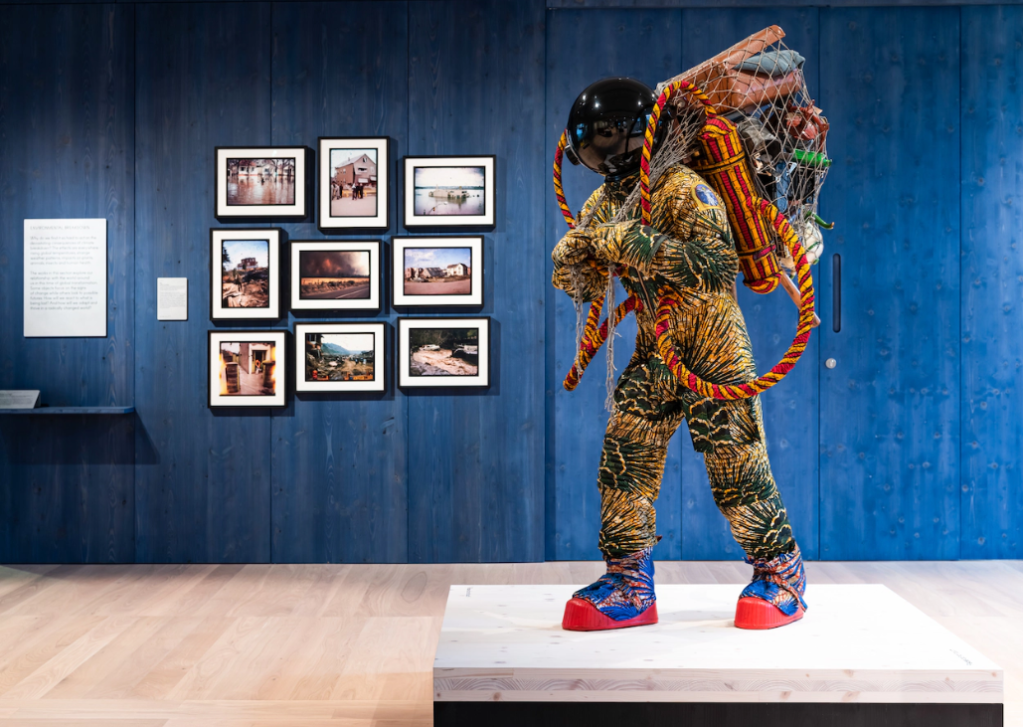
Yinka Shonibare’s ‘Refugee Astronaut’ encourages us to ask questions: who are they? Why have they had to leave earth in such a hurry? If you look closely at the possessions on their back you can find books, photographs and intriguing objects: a telescope, a camera, even a frying pan.

This interactive jukebox is loaded with songs from around the world relating to illness and epidemics. You can listen to hits like ‘Let’s Talk about PrEP’ (PrEP is pre-exposure prophylaxis for HIV) and ‘Ebola in Town’. Each track lights up and designers Kin worked with Bethan Laura Wood to include a rotating glass sculpture.
This is a wonderful idea and I have posted the lovely song by Slayer-Epidemic.

Look closely at this pillbox and collecting tin and you might be surprised. The tin’s supposed charity is ‘Help the Normals’. In tiny letters, it explains ‘Give generously – they won’t’. The ‘Dignity’ pillboxes also feature thought-provoking instructions. Dolly Sen created these objects as a protest that encourages us to shift our perspectives on disability.
I love these and they reflect a truth by using humour.
Another highlight for me was the transparent woman (anatomical figure). You press the buttons on this 1980s anatomical model to see different organs light up around the body. The aim is to teach anatomy, but such figures can also reinforce ideas about what is ‘normal’. There is no scope in a single model to represent differences – this is a generic ‘woman’ rather than an individual.
overall an interesting and varied exhibition that explored the fragility of humanity whether that is physical or bacterial.
This is explored in various mediums including video installations, sculptures, drawings and conceptual art.
4 October 2023 Mark Titmarsh
Mark Titmarsh is a visual artist working in painting, video and writing. His current work executed under the rubric of ‘expanded painting’ is painting about painting or painting that dissimulates into objects, videos and texts. Recent work has included paintings on industrial materials, environments of fluorescent string and video works for mobile phones. His book on Expanded Painting is published by Bloomsbury. Titmarsh co-founded Sydney-based artists’ group Art Hotline, which exhibited ephemeral works in everyday non-gallery sites and co-edited the visual arts journal On The Beach. He is a lecturer in Design Studies at the University of Technology, Sydney (UTS) in Australia. http://www.marktitmarsh.com.au/
Jo and Hester Reeve introduces Mark and talks about art and philosophy and Mark’s oeuvre including his book “expanded painting”.
I am watching a recording of this lecture.
Mark introduces the title which is (not) stupid as a painter contemporary art in the vicinity of philosophy.
Nobody can say who coined the term stupid as a painter but it’s often attributed to Marcel Duchamp to indicate painters weren’t entirely dumb but produced their work through their heart but not through their mind/brain.
Mark is not philosophy trained but treats philosophy as a ready-made tool or a found object.
Most of us will brush up against philosophy in our works. Michael Corris sees art and philosophy as mediums that can overlap and create a third space.
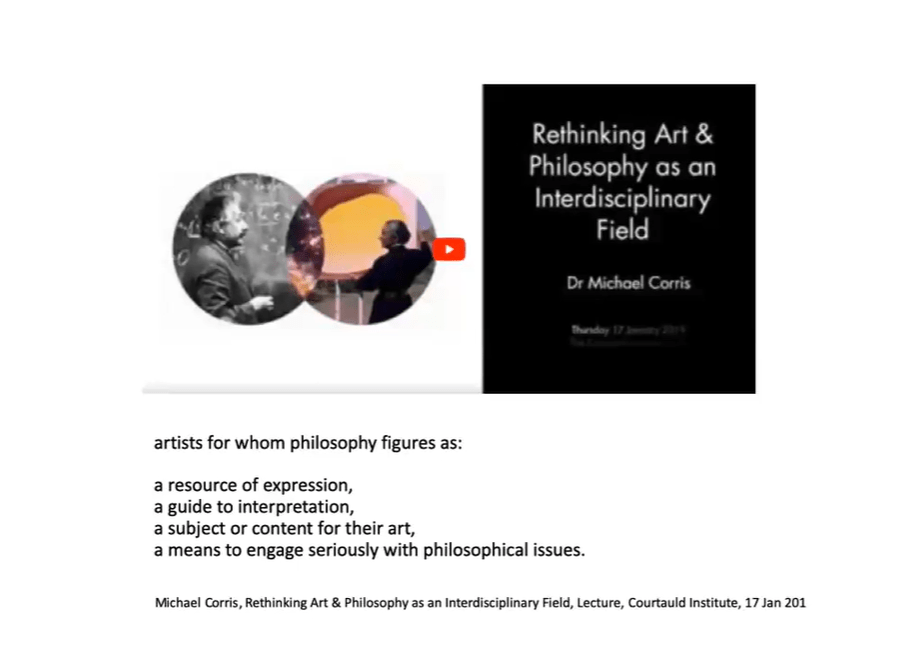
Philosophy starts as a riposte to religion asking existential questions of what it means to be human and what is the meaning of life and art.
All of these questions are subconsciously behind your art and your intention to create.
Mark gives us an example of an artist whose gender and race becomes a part of this philosophical question of who we are, our identity and how we represent that with Adrian Piper a female artist of African-American descent.
Rising to prominence as a pioneering Conceptual, Minimalist and Feminist artist in the New York art scene during the early 1970s, Piper’s work raises often uncomfortable questions about racial politics and identity, engages in social critique and deploys concepts from her parallel career as a philosopher.
Art is a philosophy in the sense of how an artist takes decisions in reflecting the world through their senses and representing them in a manifested form.
Mark gives examples of writers who expand on the notion of art and philosophy:
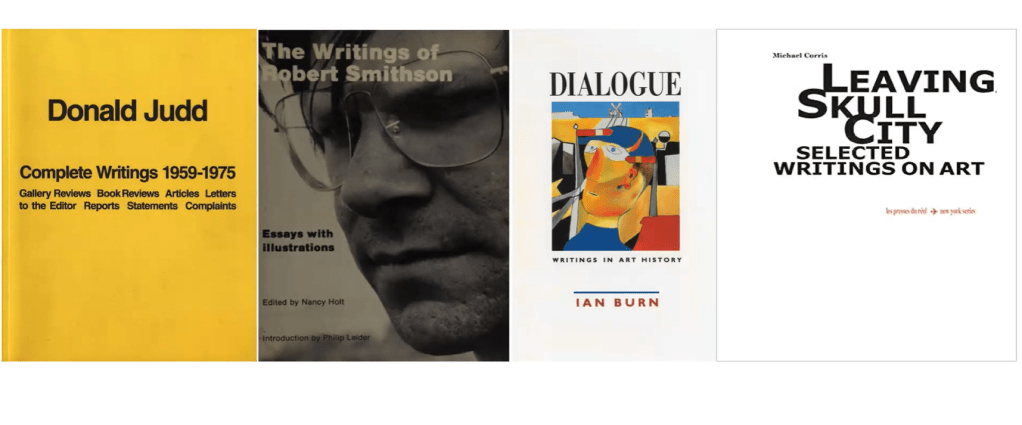
Clement Greenberg is mentioned in reference to American artists of the 40s, 50s and 60s primarily in the area of Abstract Expressionism.
Clement Greenberg was arguably the most influential American art critic of the second half of the twentieth century. Greenberg explained his concept of formalism–arguably what he is most famous for apart from being the primary champion of Jackson Pollock–in his 1960 essay “Modernist Painting.”
Mark goes onto explain how Formalism originated from the literary world and progressed into the art arena.
Russian formalism is a school of literary theory and criticism that flourished in Russia around 1915. It emerged in opposition to abstract literary theories with the goal to develop a scientific basis for the study of literature, especially poetry.

Jasper Johns’s playful, enigmatic paintings interrogate the very ways in which we see and interpret the world. Beginning in the mid-1950s, Johns deliberately avoided art cut off from everyday life and made common signs, such as flags and targets, the subject of his work. Riffing on the divergent examples of Dada and Abstract Expressionism, b Johns, along with his Neo-Dada collaborator Robert Rauschenberg, created a nuanced art that spoke to notions of autobiography, irreverence, and philosophical engagement.
The work measures 42.2 inches (107.3 cm) by 60.6 inches (153.8 cm). It is made using encaustic, oil paint, and newsprint collage on three separate canvases, mounted on a plywood board. The painting reflects the three colors of the US flag: red, white and blue; the flag is depicted in the form it took between 1912 and 1959, with 48 white stars on a blue canton representing the then-US states (excluding Alaska and Hawaii), and with thirteen red and white stripes. Newsprint is visible under the stripes. Reading the texts, it is clear that the newsprint was not selected at random: Johns steered clear of headlines, or national or political news, and used inconsequential articles or adverts. The painting has a rough-textured surface, and the 48 stars are not identical. It is dated 1954 on its reverse.
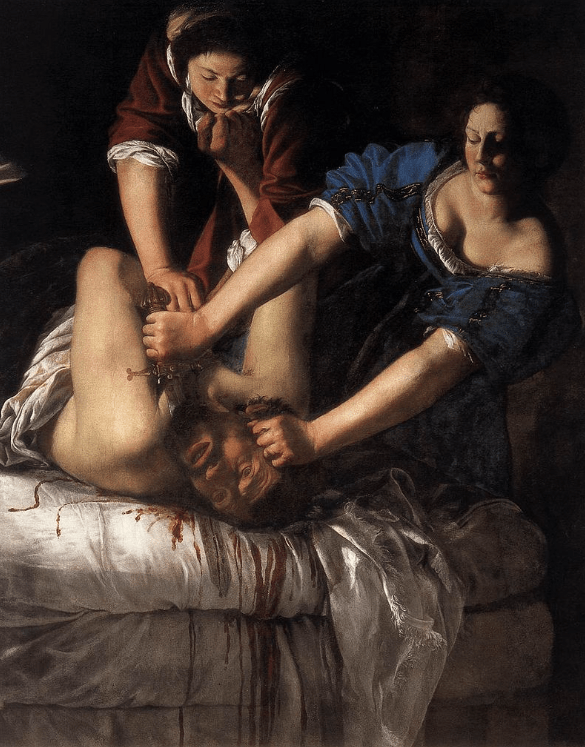
Artemisia Gentileschi, Judith Slaying Holofernes, 1620–21, oil on canvas, 162.5 x 199 cm (Uffizi Gallery, Florence; photo: Steven Zucker, CC BY-NC-SA 2.0)
“Lord God, to whom all strength belongs, prosper what my hands are now to do for the greater glory of Jerusalem; for now is the time to recover your heritage and to further my plans to crush the enemies arrayed against us.”
Judith’s prayer before beheading Holofernes (Judith 13:4-5)
The story of Judith
Rivulets of blood run down the white sheets, as Judith, a pious young widow from the Jewish city of Bethulia, beheads Holofernes, general of the Assyrian army that had besieged her city. Moved by the plight of her people and filled with trust in God, Judith took matters into her own hands. She coiffed her hair, donned her finest garments and entered the enemy camp under the pretense of bringing Holofernes information that would ensure his victory. Struck by her beauty, he invited her to dine, planning later to seduce her. As the biblical text recounts, “Holofernes was so enchanted with her that he drank far more wine than he had drunk on any other day in his life” (Judith 12:20). Judith saw her opportunity; with a prayer on her lips and a sword in her hand, she saved her people from destruction.
This type of renaissance art dominated for about 500 years until conceptual art and minimalist art in the 60s using Picasso as an example.
An example of conceptual art without the process of making or painting is one and three chairs.

Joseph Kosuth
One and Three Chairs 1965
A chair sits alongside a photograph of a chair and a dictionary definition of the word chair. Perhaps all three are chairs, or codes for one: a visual code, a verbal code, and a code in the language of objects, that is, a chair of wood. But isn’t this last chair simply . . . a chair? Or, as Marcel Duchamp asked in his Bicycle Wheel of 1913, does the inclusion of an object in an artwork somehow change it? If both photograph and words describe a chair, how is their functioning different from that of the real chair, and what is Kosuth’s artwork doing by adding these functions together? Prodded to ask such questions, the viewer embarks on the basic processes demanded by Conceptual art.
“The art I call conceptual is such because it is based on an inquiry into the nature of art,” Kosuth has written. “Thus, it is . . . a working out, a thinking out, of all the implications of all aspects of the concept ‘art,’ . . . Fundamental to this idea of art is the understanding of the linguistic nature of all art propositions, be they past or present, and regardless of the elements used in their construction.” Chasing a chair through three different registers, Kosuth asks us to try to decipher the subliminal sentences in which we phrase our experience of art.
Publication excerpt from The Museum of Modern Art,
MoMA Highlights, New York: The Museum of Modern
Art, revised 2004, originally published 1999, p. 257.
Other examples are air conditioning show with just an air conditioner in the corner of an exhibition space affecting the air immediately around the object.
A room full of radio waves, a steam sculpture, a vial of Parisian air are all unquantifiable and turned around the art market but the ideas became as valuable as a material object.
An artist choosing something as art becomes an art object challenging what an art object can be.
Ian Burn (29 December 1939 – 29 September 1993) was an Australian conceptual artist. He was a member of the Art and Language group that flourished in the 1970s. Ian Burn was also an art writer, curator, and scholar.
Mark goes into the idea of what is conceptual art in the modern world is it post-conceptual etc.
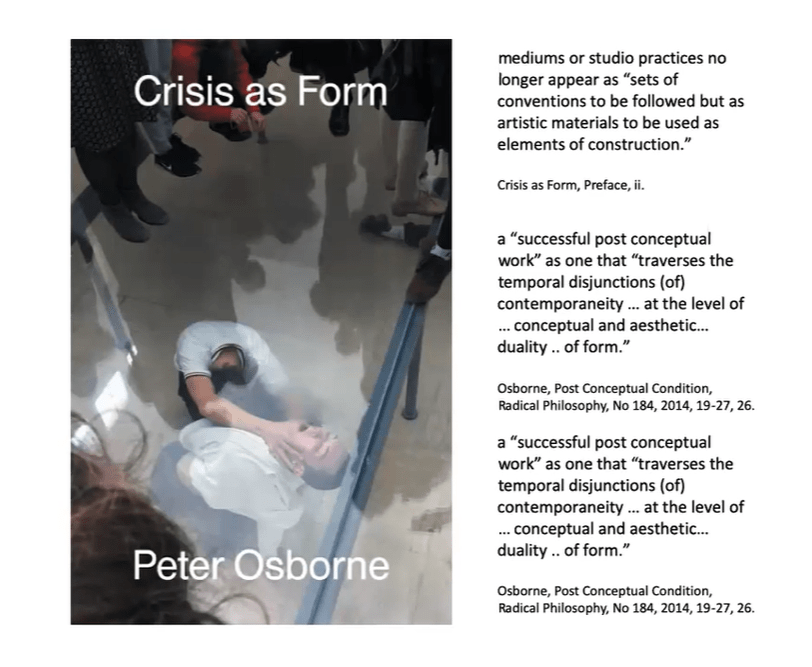
Mark explores the form of music and how it parallels art with the form of experimentation for expression for example the jazz improvisations.
Mark then mentions https://originforwardslash.com/
and the teaching tools which are the books on Art and philosophy
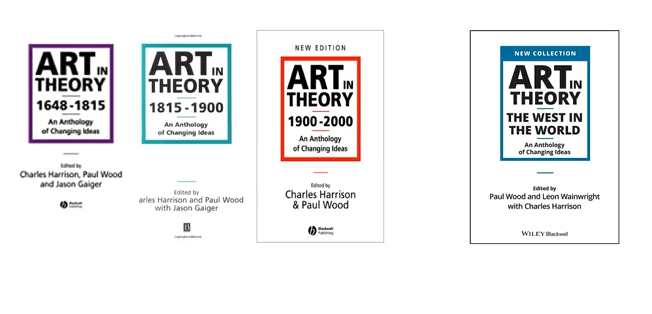
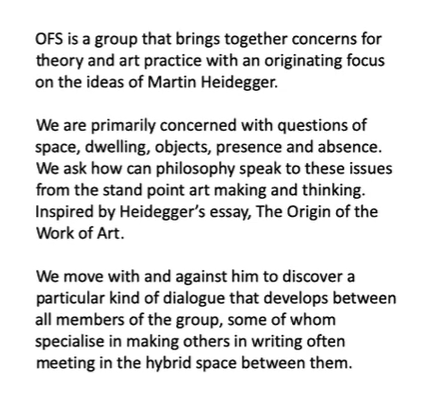
Mark mentions the post-colonial location of Australia and how that can affect his work, A.I., fashion as theatre and how the pandemic changed the face of the world and how we view ourselves as a collective.
As a summation of the talk I found it illuminating and enlightening and interesting how language and world events affect our appreciation and perception of our artistic vision.
The talk then goes into discussion of how the future can encapsulate the inclusivity and diversity of the world.
For example gender fluidity, East and the West, different beliefs and dialogues.
Artists to claim agency when they may have been marginalised or felt invisible.
For artists to challenge the status quo alongside the evolution of art and artists/philosophers that confront issues.
Philosophy helps us to deconstruct art and language and allows society to move forward and to question our society and mores.
 Rusty'sArtWerk