Wine tasting of Torres
The Wines of Torres – Wine Tasting – russellartblog (wordpress.com)
On the third of May I attended a talk & tasting session from Emma Llorens Brand Ambassador of Torres Wines, Torres is the most admired wine brand in Europe.
Ever since its origins in 1870, Bodegas Torres has combined tradition and innovation to become benchmark company in the quality wine and brandies sector.
Not only is Torres committed to the land but to the farmers who grow the grapes.
The event took place at Mitchell’s wine shop at Meadowhead a place that I work at.
Since working there I have learnt so much but wine is one of the drinks I have not drank that often and so these talks and tasting session are brilliant to develop my palate and expand my knowledge of wines.
Mitchell’s started as a family business in 1935 being the butchers for the new suburb emerging on the south side of Sheffield.
A move into wines and spirits in the early sixties was to be the start of 40 plus years in the trade, in that time they’ve come a long way from beer off-licence to fine wine merchants and encompassing everything in-between.
John Mitchell is the proprietor and his daughter Frankie help run the business and they are in attendance tonight to help with the proceedings.
Keith Richards taught me never to namedrop but Len Badger was in the audience last night.
Everyone was seated and treated to a sample of Mitchell’s home-brew before the tasting.
Sat opposite me is one of my ex-colleagues David who is enjoying retirement with his wife and offers me an insight into every wine we try.
Tonight’s tasting will be eight fabulous wines from Torres.
Before that though a little about Torres which I copied and pasted from Wikipedia:
“Founded in 1870 by Jaime Torres, Bodegas Torres (Miguel Torres SA) is a historical wine growing company located in Pacs, some 4 km from Vilafranca del Penedès, where the company has its head office. Torres is the family winery with the most extensive vineyards in the Denomination of Origin (DO) of Penedès and the largest winery in Spain.
They also run the Miguel Torres Chile winery in the Chilean Central Valley, and in the United States (California) where in 1986 Marimar Torres founded Marimar Estate. In Spain outside of the Torres family’s native Penedès region, they own vineyards in DO Conca de Barberà, DO Toro, DO Jumilla, DO Ribera del Duero, DOQ Priorat and most recently in DOC Rioja – in the last three areas with new wineries or wineries under construction. Likewise, Torres is also Spain’s largest producer of DO wines under its own label, exporting to more than 140 countries.
Under the Torres brand name they trade wine and brandy under on a range of different labels. Some of these are Viña Sol, Sangre de Toro, De Casta, Coronas, Atrium and Viña Esmeralda, with their best known brandies being Torres 5 and Torres 10. Many Torres wines are produced from international rather than traditional Spanish grape varieties and are varietally labelled. The company exports wines to over 140 countries. Torres made two significant contributions to the development of enology in Spain: firstly, the use of fermentation at controlled temperatures, and secondly, the maturing of the wine in small oak barrels during a scrupulously defined time, as has been a habitual practice in Bordeaux.
Torres is managed by the fourth generation of the Torres family; Miguel A. Torres is the company’s current President and Managing Director. The Torres family are founding members of the Primum Familiae Vini.”

Now let’s get to those wines the first of three whites is Pazo Das Bruxas:
Pazo das Bruxas is a wine that pays homages to the folklore and nature of Galicia, a land of immense forests inhabited by mystic and magical beings like the Galician witches who lived in old country houses (pazos) where they would connect with nature through dances and spells to obtain the best fruits from it. Just like the albariño stock that gives life to Pazo das Bruxas.
Appellation of Origin Rías Baixas is a territory of exceptional beaches, diverse landscapes, numerous vineyards and a rich cultural and historic heritage. Pazo das Bruxas is a noble wine that holds all of this Galician idiosyncrasy.
Tasting note
Brilliant, limpid, pale yellow. Fragrant on the nose, offering perfumed and citrus notes coupled with fruit aromas (white peach) over a touch of minerality characteristic of the terroir. Sweet upon entry, followed by a fresh, clean evolution across the palate and a long elegant finish.
All of the information above has been culled from their actual site including the tasting notes and that applies to every wine to come.
I found the wine very nice and pleasant, easy to drink and a great start to the tasting.
David informed me that this is a good wine to recommend somebody who likes Sauvignon Blanc and is looking for something different to the more well known grapes; the grape is Albarino. Perfect with white meats, seafood and Goat’s cheese.

Gran Vina Sol
Chardonnay and Parellada are harmoniously blended after careful fermentation of a percentage in Limousin oak barrels, thus retaining the character of each variety. The result is a magnificent, intense wine.
Gran Viña Sol was a pioneer in the production of cask-fermented Chardonnay in Spain. Its name is very apt as it’s a wine of greater complexity and presence than the traditional Viña Sol.
Tasting note
Pale, brilliant golden colour. Floral (honeysuckle) with vegetable and fruit notes (pineapple, peach). Intense in the mouth, full bodied and spicy (vanilla), revealing its time in oak.
I found this a logical step up from the last wine you can taste that intensity, oakiness and body too. I really enjoyed this wine.

Fransola
Sauvignon Blanc forms the basis of this unique wine, partially fermented and aged in new oak.
The Fransola Estate is found among the high vineyards of the Penedès in the municipality of Santa María de Miralles. This Fransola Estate is where we grow 25 hectares of Sauvignon Blanc used to produce our Fransola, one of our most elegant white wines. This wine is unique because it is enriched with new oak barrel fermentation followed by four months of ageing.
Tasting note
The wine has a brilliant gold color. Fragrant and exquisitely fine floral (verbena) and fruit (pineapple, mango) aroma with a vegetative note (fennel). The palate is silky, intense, very luscious, culminating in a smoky, elegant finish.
This is a lovely wine not much difference to my palate from the previous but that’s no criticism as they’re both of great quality. The next two wines were presented together.
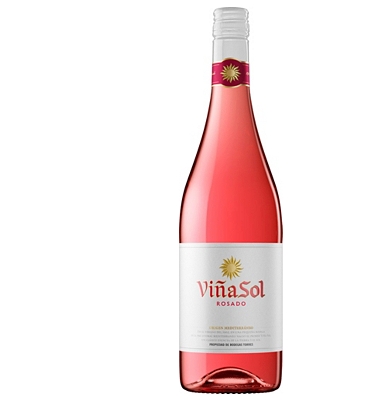
Vina Sol Rose
A delicate rosé from Catalunya offering strawberry, raspberry and pear fruit flavours with just a touch of almond on the finish. Citrus notes and a mouthwatering crispness of flavour keep the wine fresh and balanced.
Great to drink on a warm summer’s day.

Altos Ibericos Crianza
Altos Ibéricos takes its name from Alto Otero, a beautiful place where the winery is situated in the town of Labastida, north of the Iberian Peninsula.
This noble wine from the Torres family, made with the tempranillo varietal, is aged for 12 months in oak barrels and for a long time in the bottle.
The Rose wine is very light and is in stark contrast to the Velvety, smoky red (first of the evening). This red wine is so oaky it feels as though I’m chewing on a table but in a good way.
I often find red wines oppressive but this red builds up a good appetite and the bowls of Olives, bread and Spanish meats kindly provided are swiftly demolished.
Last but not least Gran Coronas and Salmos the last two red wines of the night.

Gran Coronas
Cabernet Sauvignon and Tempranillo are the grapes that bestow their nobility on Gran Coronas, a wine of a deep red hue, with ochre and brick-red touches from its ageing.
This arose from the innovative drive of Miguel A. Torres, who planted the French variety of Cabernet Sauvignon in the Penedès at the end of the 1960s and early 1970s, when normal practice was to plant local white varieties. Thanks to this, Gran Coronas has become a benchmark for reserva red wines.
Tasting note
Opaque cherry red wine. Fruity (jammy strawberry and raspberry) with lovely spicy (black pepper) and balsamic notes. Intense, deep, with very ripe, velvety tannins from ageing in wood (toasted oak).
At this point the red wines have had an impact and I am feeling merry these reds are very earthy and nice.

Salmos
This Wine is a homage to the monks of the courageous carthusian order, who arrived in ‘Priorat’, in 1095, where they cultivated vines. In 1835 a violent crowd destroyed the work of a lifetime and sacked the monastery, events which later culminated in the auctioning of church lands known as the “Desamortización de Mendizábal”. In 1996 the Torres Family began work on the planting of vineyards on the slopes strewn with the hard, black slate-like “Licorella” stone.
Grape Types – Cariñena- Syrah- Garnacha tinta
Tasting note
Dark ruby red. Rich, ripe wine with floral (confected rose) and fruit (dark cherries, prunes) aromas. Beautifully framed by French oak. Elegant, subtle midpalate, very finely structured tannins and a slight touch of toast (cocoa).
So in conclusion a truly entertaining night with a great talk from someone who loves and knows her subject; her warm smile and pronunciation of words gave the atmosphere that Spanish feel.
I felt I learnt a lot from the experience undoubtedly and would recommend anyone to try these wine tasting events.
 Rusty'sArtWerk