Earthbound 28/10

I popped to Millennium galleries with Nick a fellow university student in Sheffield which is displaying Earthbound (taken from the Sheffield Museum site)

The earth is many things. Its vastness is often difficult to grasp, yet it is fundamental to our lives. It is our home and provides us with sustenance; it drives and is exploited by our labour and our economies. We are dependent on it for our survival; over the past year, many of us have found a renewed connection with it that has sustained us and brought us comfort.

Curated in partnership with the Roberts Institute of Art, Earthbound brings together works from the David and Indrė Roberts Collection, alongside examples from Sheffield’s own visual art collection, to investigate our relationship with our environment. The works on display span land art, landscape paintings, video installation, sculpture and photography, by contemporary artists including Helen Chadwick, Richard Long, Dan Holdsworth, Miroslaw Balka, Theaster Gates and Berlinde De Bruyckere.

Earthbound is framed by Sheffield’s long history of working with the natural environment and the impact the landscape has had on the life of the city; from the geography that gave rise to the 18th century steel industry to the social housing that populated the skyline during the 50s and 60s. Today, with the current climate emergency, our relationship to the ground beneath our feet and the fabric of our landscape is changing, making this a timely moment to think more deeply about what the earth is and how we live with it.

The exhibition is in a rectangular room with some exhibits on the floor, fixed to the walls or some which are video installations within their own spaces.
As you walk in I started to look at the exhibits starting on my left:

Desert Strip 1-1V Bridget Smith 1999

Desert Strip 1 and 1V is a series of photos enlarged in sequence of a side view of the desert giving the feeling of looking out of a side window on a car journey.
The sense of scale and the open landscape gives a feeling of escape and fluidity.
The work conjures up feelings of car journeys as a child when you could let your imagination wander just looking at the landscape unfolding in a blur.
My initial response to the title is that we are indeed earthbound and part of the planet’s laws of gravity and laws of motion and how they help make us feel free when we are not sat still on this planet always looking for new vistas and horizons.

The next picture as you walk past that exhibit is on the furthest wall The New Picturesque (Johnstone Castle) 2008.
Cyprien Gaillard has erased or covered up visible signs of human architecture thus creating a new landscape in this case it looks like a waterfall or indeed some kind of purposeful graffiti.
Cyprien Gaillard is reinventing the idea of a new picturesque by choosing what is worth painting.
Cyprien also created this video installation as pictured below which illustrates the juxtapositon of natural or manmade destruction/ruins:

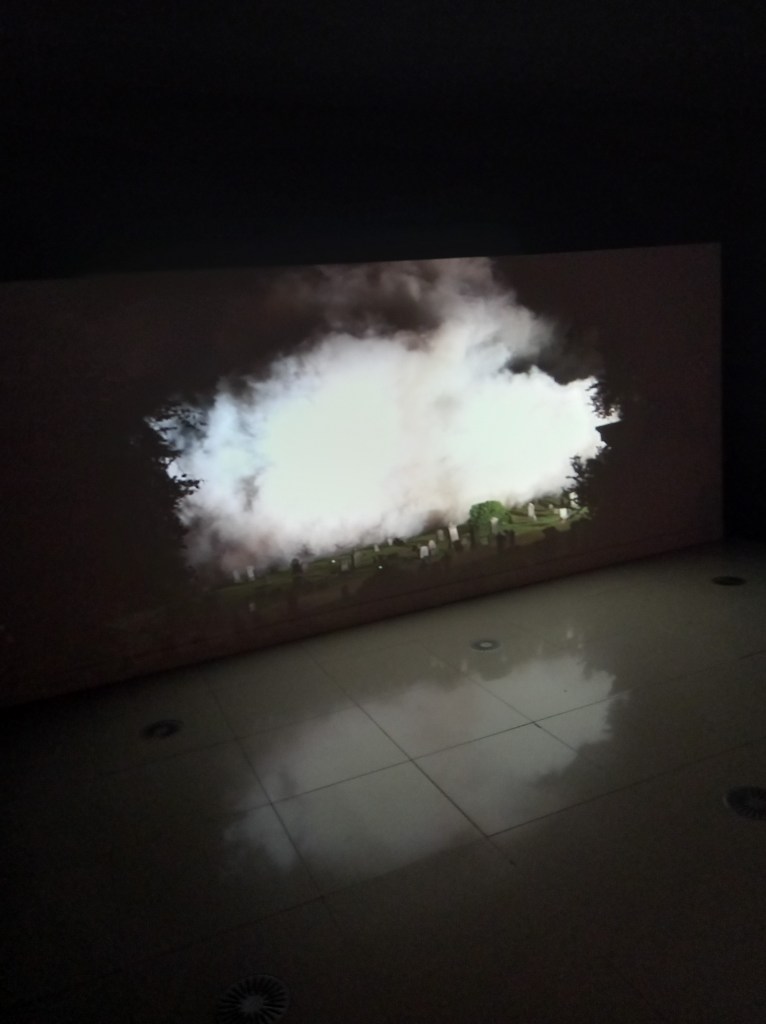
Opposite the The New Picturesque is a table with a dead horse on there.
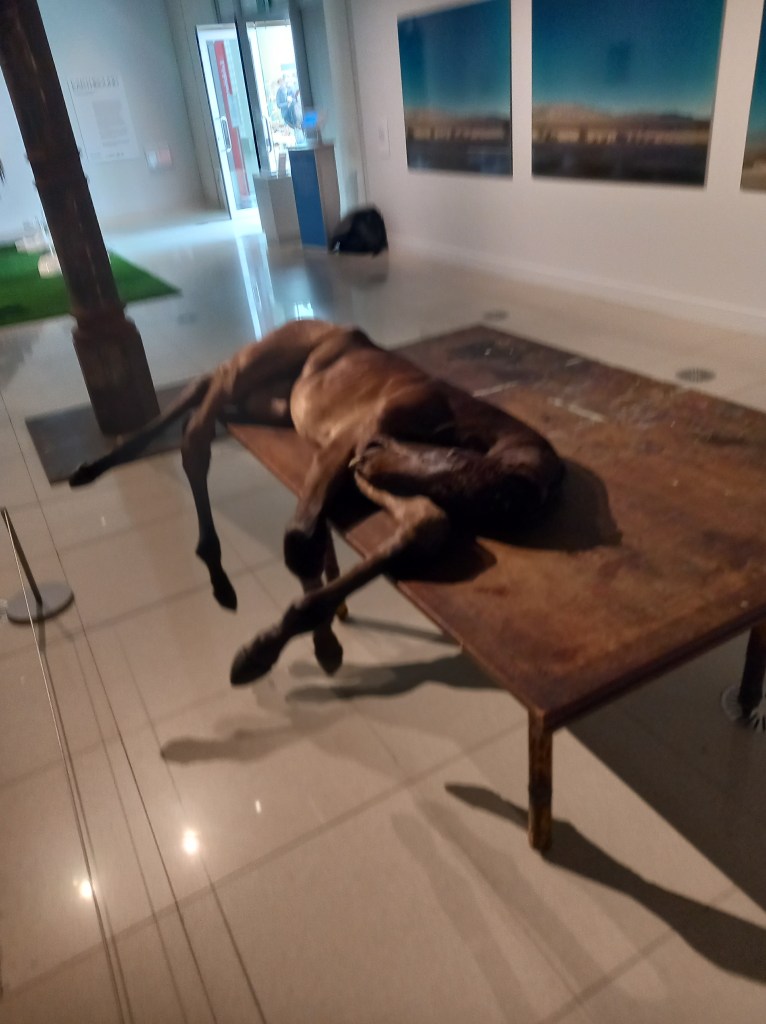
I really like this piece which illustrates the futility of war and the casualties incurred by animal or human.
This is a stark reminder to the horses that lost their lives during these conflicts that plague human history.
I think this piece compliments another artists work in this gallery:
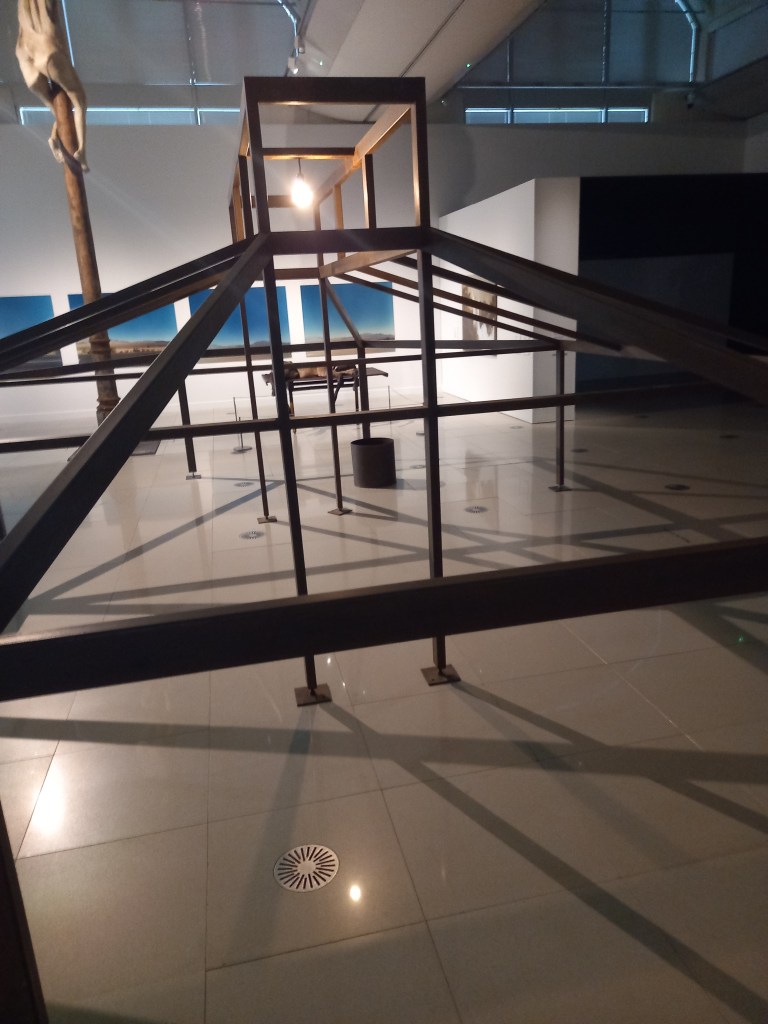
An interesting piece to say the least a zoo rescaled to a human scale used to entertain SS troops.
The irony that animals are an entertainment to the SS but are also treated better than their human prisoners.
The Nazis used terminology to sugarcoat their intent such as the final solution and labelling Jewish prostitutes as Joy division (used as inspiration for the seminal Manchester band).
There is something heinous about both these installations and somehow they compliment each other (the dead horse and zoo).
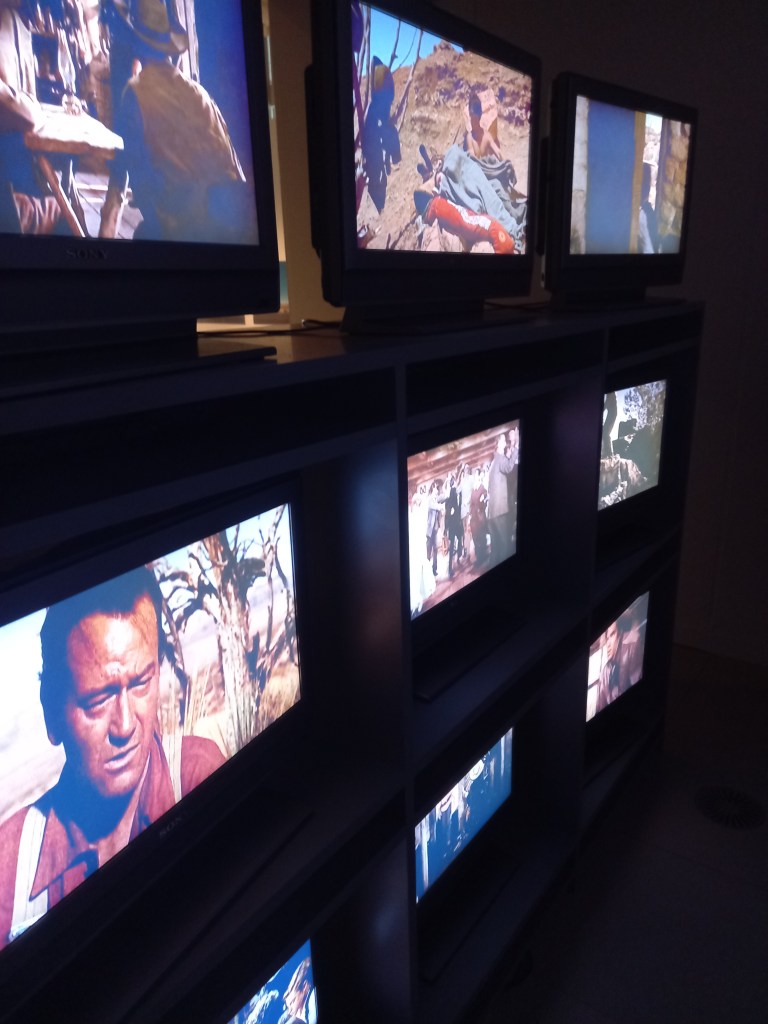
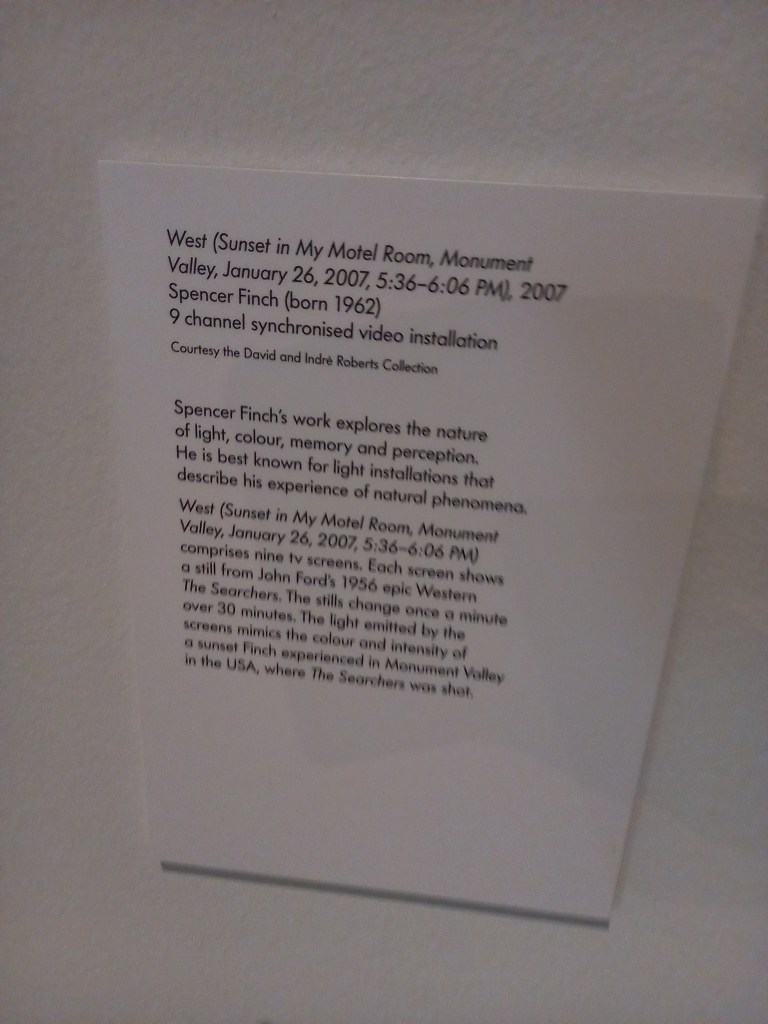
West (sunset in my motel room…) is an interesting installation the TVs are facing the wall creating this orange glow.
When we have the lights turned off the light from our favourite shows are comforting and that applies to watching films at the cinema.
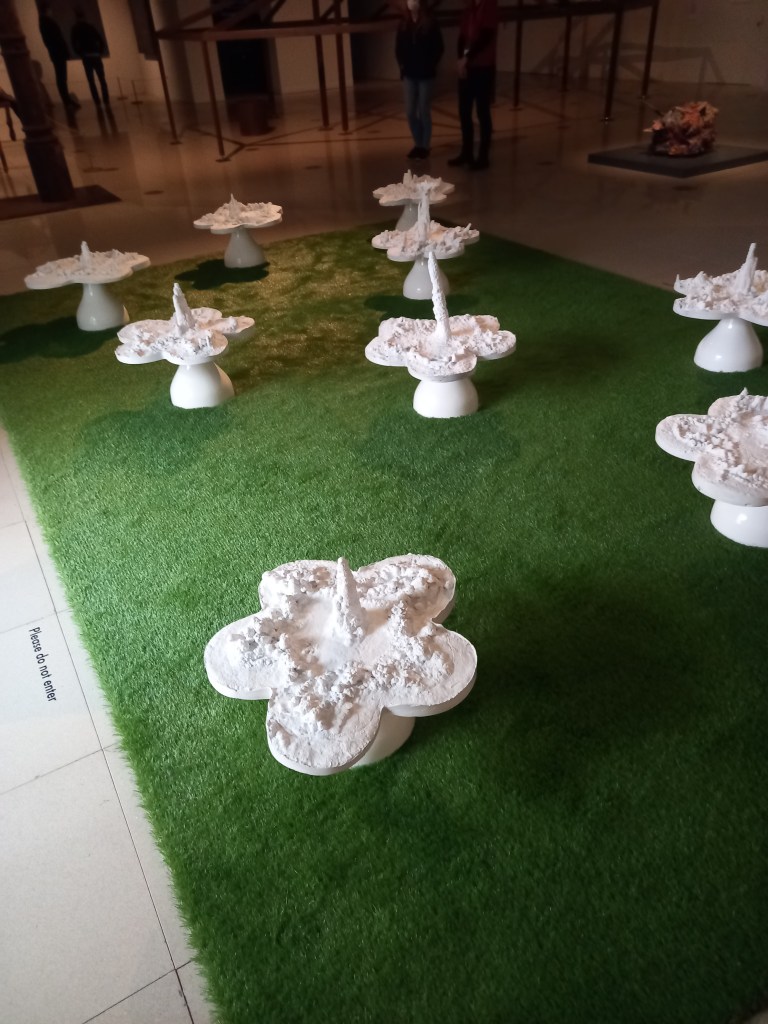
Piss Flowers Helen Chadwick

Helen Chadwick was known for “challenging stereotypical perceptions of the body in elegant yet unconventional forms.”
This installation are casts taken from the different streams that Helen and her partner created whilst urinating in snow and the patterns forming these flowers.

Yto Barrada, Wallpaper – Tangier, 2001.

Barrada came across the image of this Alpine landscape in a café in Tangier where it had been installed as a wallpaper, hence the title of the workTranslating the original materiality of the peeling wallpaper into a two-dimensional composition, Barrada deceives the viewer with an image that draws on the clichés of landscape photography as a genre with defined characteristics. In this way the mountain scene looses its own connotations to become a place with no particular identity, suggesting a general idea of escapism towards exotic destinations. By bringing a landscape that originally decorated the interiors of a Moroccan café to either an art gallery, a museum or the house of a collector, Barrada is able to question how the displacement of an image might affect its meaning and change the way we look at it.

therobertsinstituteofart.com

I think it’s clever that Barrada uses the materiality of the image he is photographing to create a different narrative to the one that is offered of just an exotic locale.
The decay of the paper suggests these ideas of escape are fanciful.
This contrasts with the idyllic nature of Desert strip I to IV and it’s pursuit of freedom.
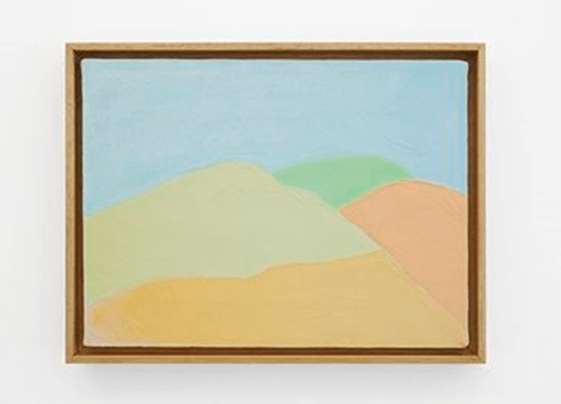
Etel Adnan, Untitled, 2000

Untitled is part of Adnan’s series of thousands of works depicting Mount Tamalpais. From her home she has a view over this ancient peak, which has resulted in its presence in her work from the 1960s onwards.

‘Here her language is colour, creating abstract pastel shapes with a pallet knife that together render the natural body and its surroundings on her small canvasses. Looking at the mountain again and again involves a certain attention to nature, noticing all the slight changes with each new day. Adnan argues that lack of attention can lead to ecological catastrophe’

(Harry Burke, ‘Collection Study – Etel Adnan, Untitled’, 2015).
This diptych by Dirk Bell has an ethereal image painted over a traditional image to give the impression that some ghostly presence is taking precedence over the original narrative as both forms are breaking the frame.
A frame not dissimilar to that of the earthly plain.

Other exhibits include a piece of debris made to look like an asteroid, an aerial view of mountains and pieces of clay sorted into a manmade pattern.
Overall I enjoyed the experience of looking at different exhibits that were curated with the title earthbound in mind and our link to the environment we live in and how it shapes and informs our lives.
The exhibition made me aware of how I can utilise space in an exhibition by using the floor, installations and using concepts to convey meaning.
Rafaël Rozendaal

Permanent Distraction is the first solo exhibition of Rafaël Rozendaal’s work in the UK and his most expansive installation to date. Rafaël is a Dutch-Brazilian visual artist who makes abstract art for a digital age.

From the bio provided by the Site Gallery:

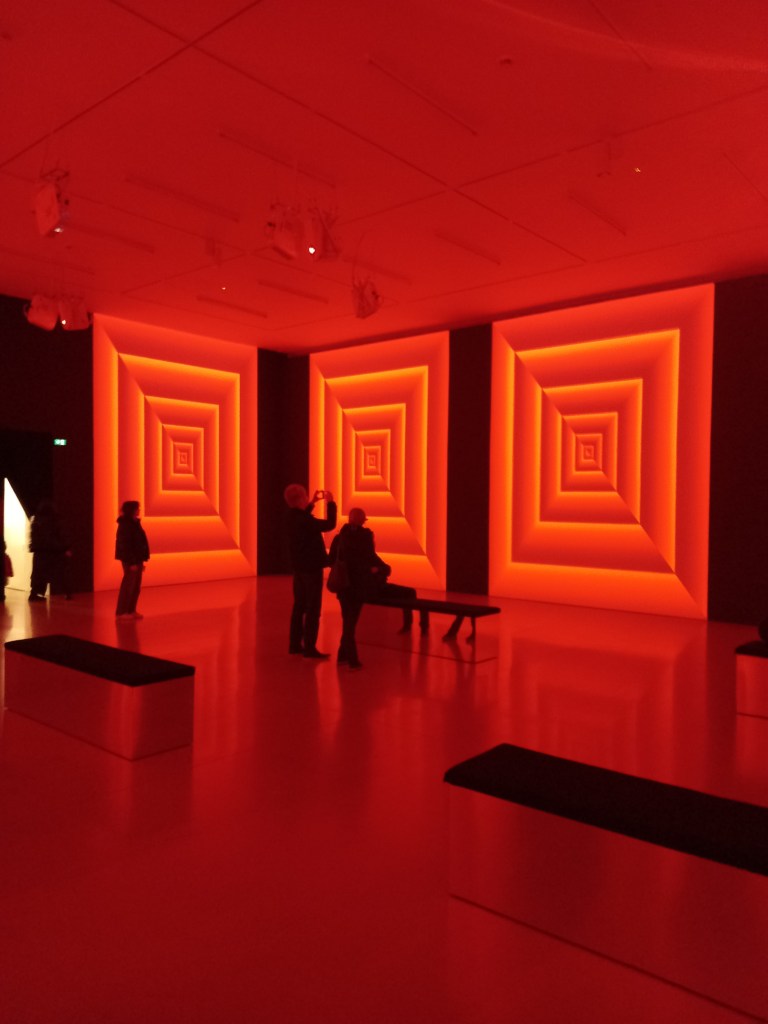
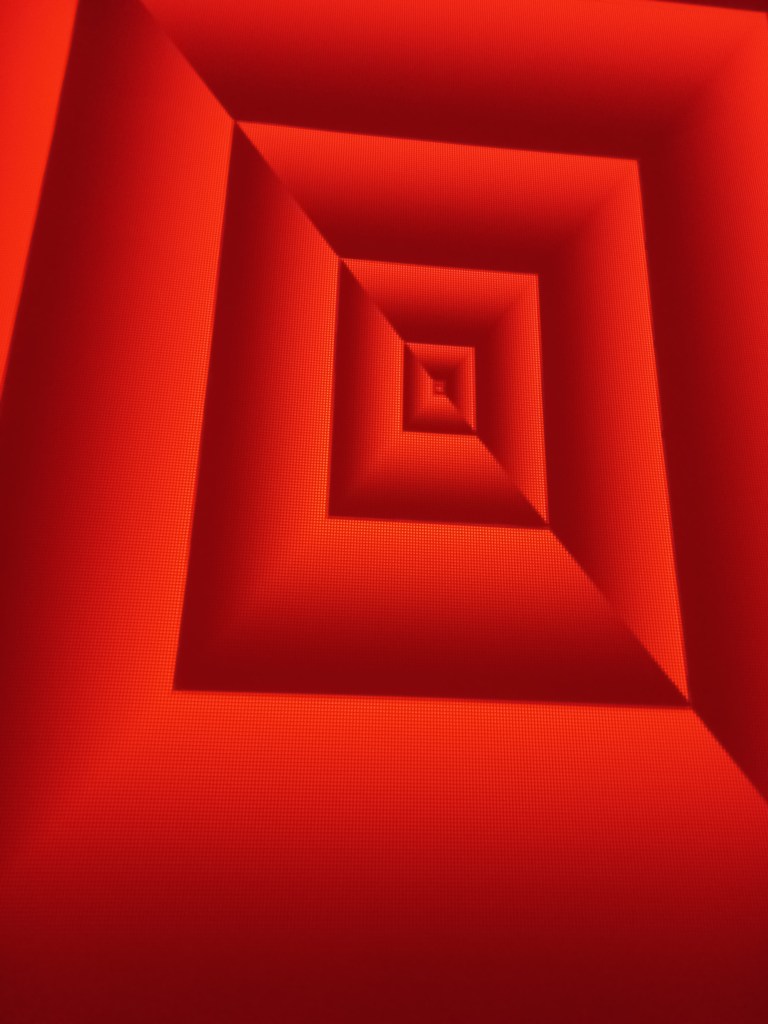
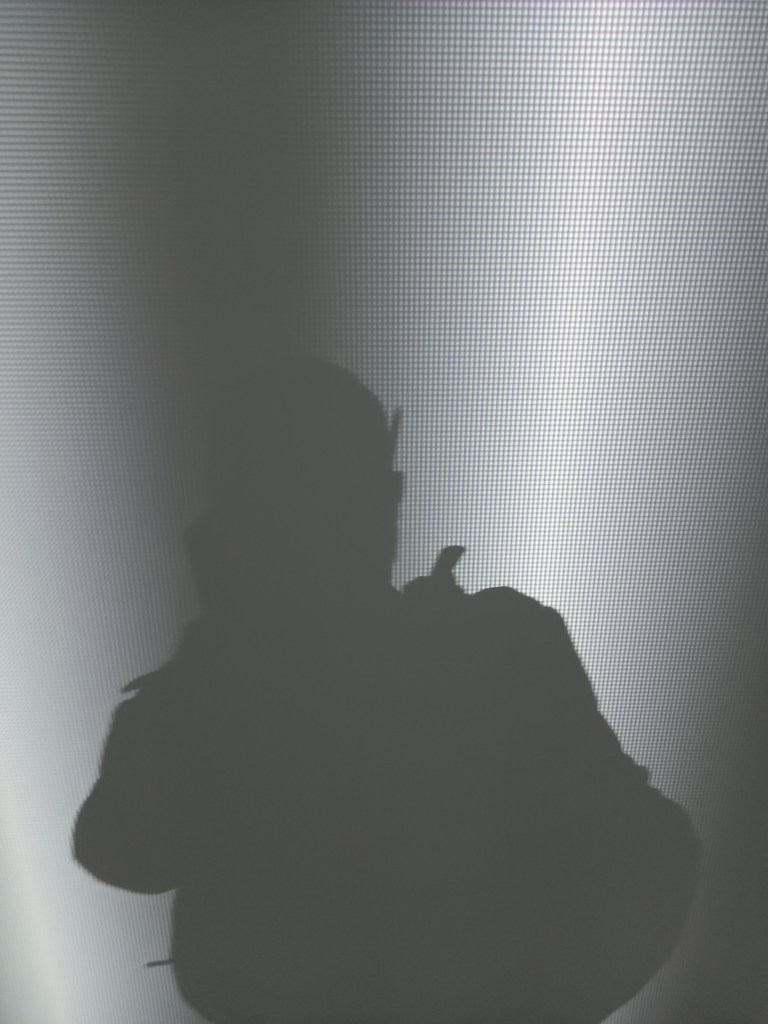
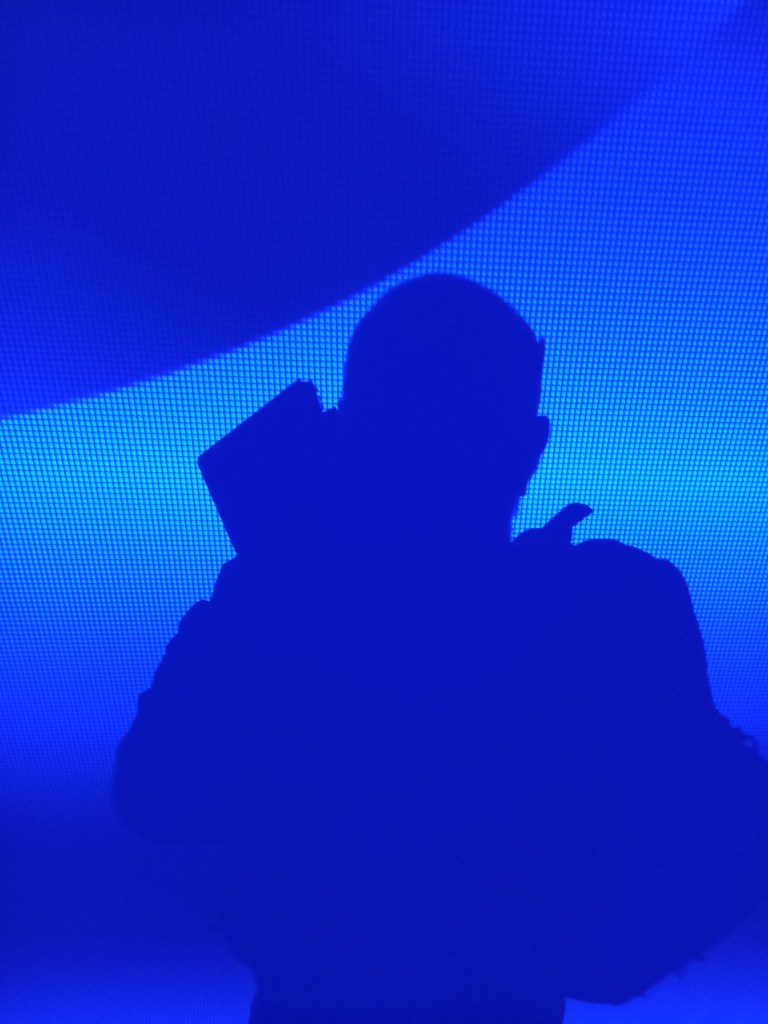
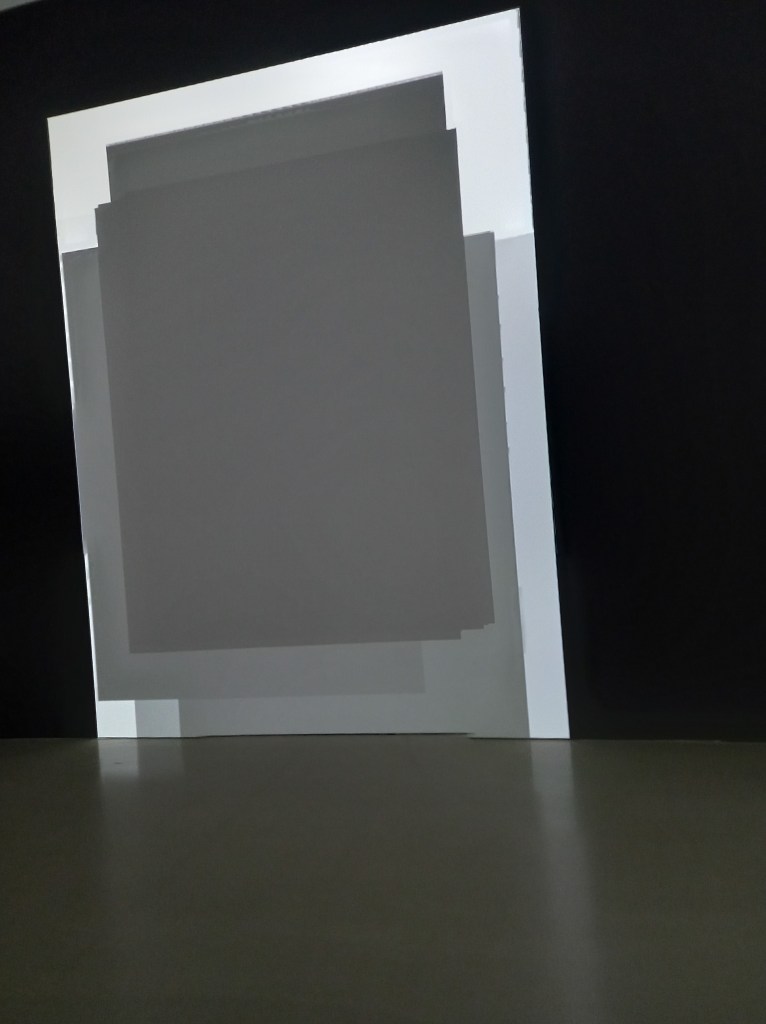
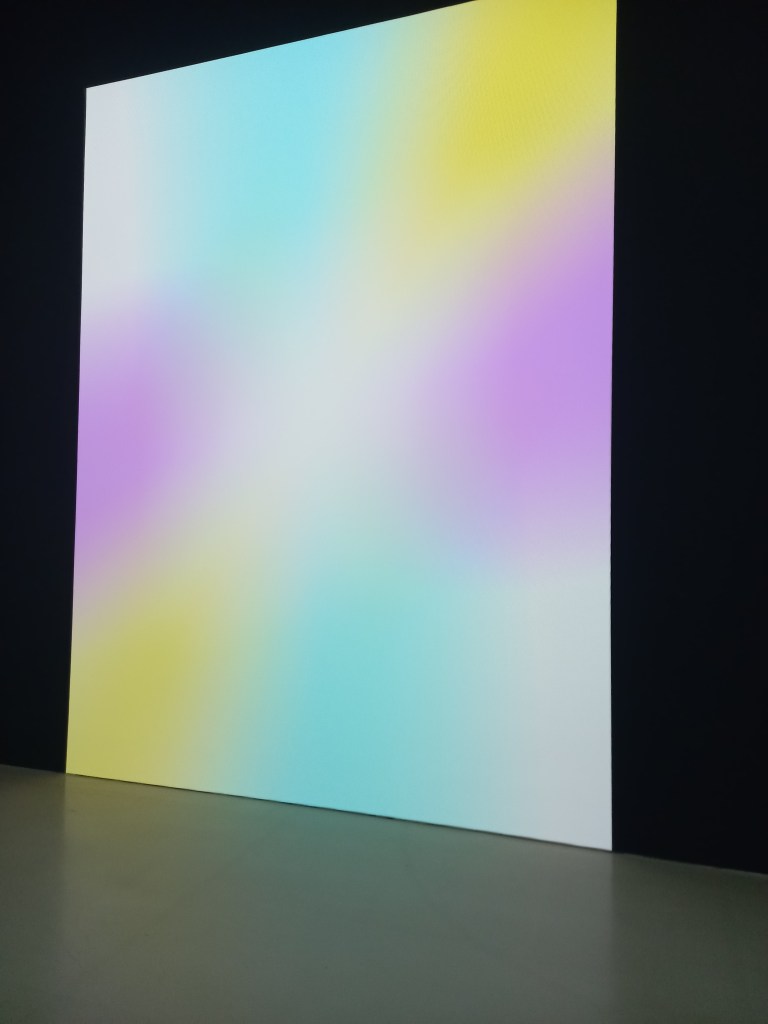
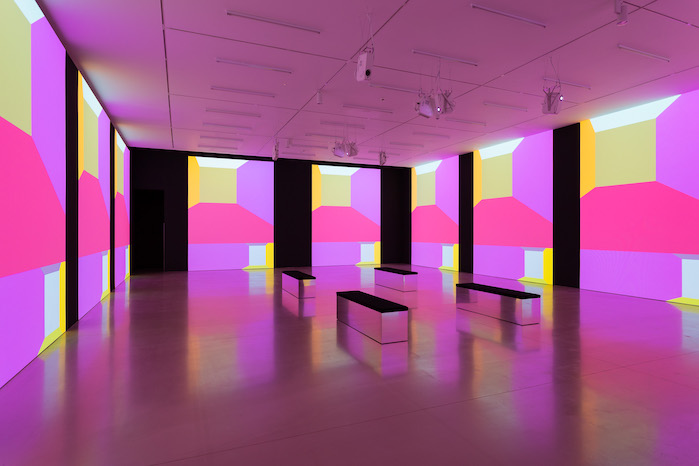
The exhibition presents the most extensive installation of Rozendaal’s websites series in a new immersive environment. Existing and newly produced websites have come together in a commissioned, site-specific installation. The websites are shown as twelve, floor to ceiling projections, filling the space with constantly generating abstract colour, movement and gesture.

Permanent Distraction forces us to confront the slippage between our physical and digital realities, bringing bodies physically into the space of the internet. Rozendaal pushes us to think about physical interaction with the internet, confronting what we think of as real, and what IRL (in real life) means when we now spend so much of our lives online.

Rozendaal’s websites have distinctive qualities unlike any other art medium, they are publicly accessible, unique objects that exist all over the world simultaneously. In the gallery or on an iPhone screen, they are one and the same, websites ever changing and generating, sometimes featuring and projecting out large in the gallery.

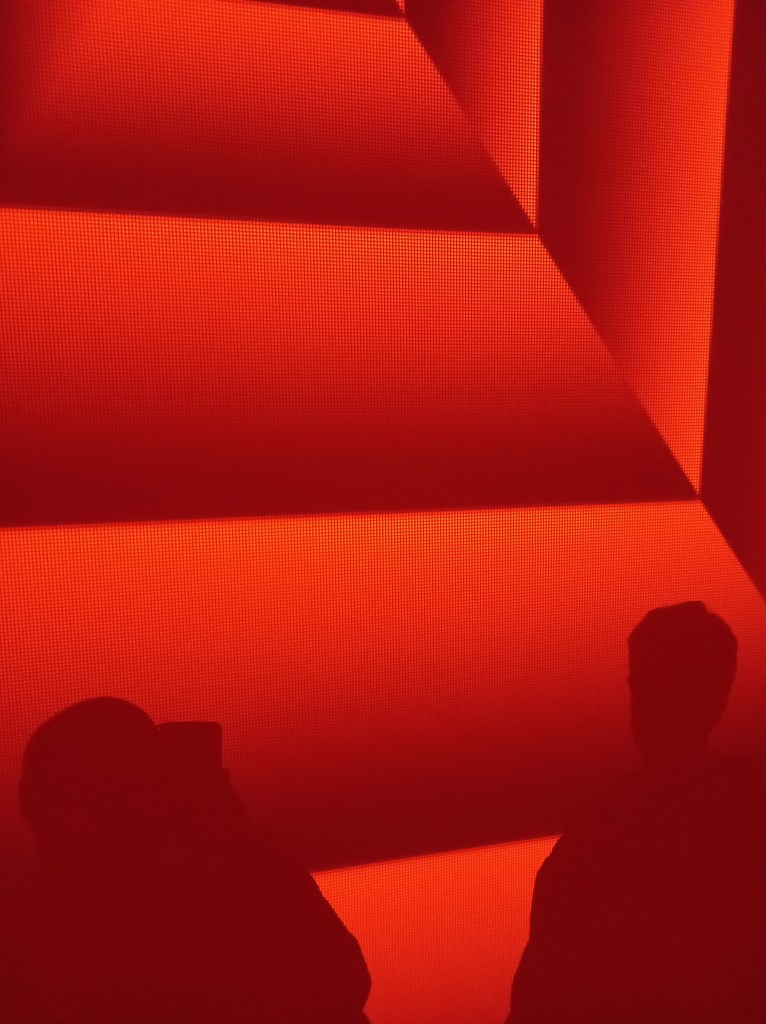
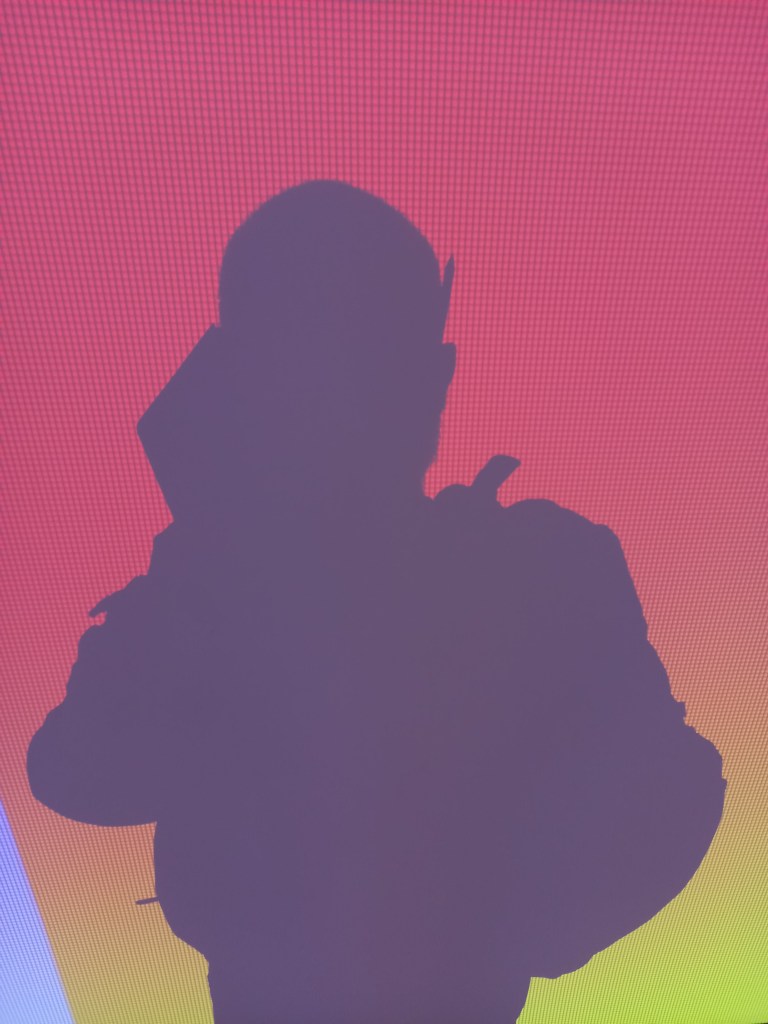
I popped to the exhibition on the 28th with Nick and it was quite crowded but once I got a seat it felt quite serene and tranquil. The space had four seats in the middle where I felt compelled to sit down and soak in the ambience.
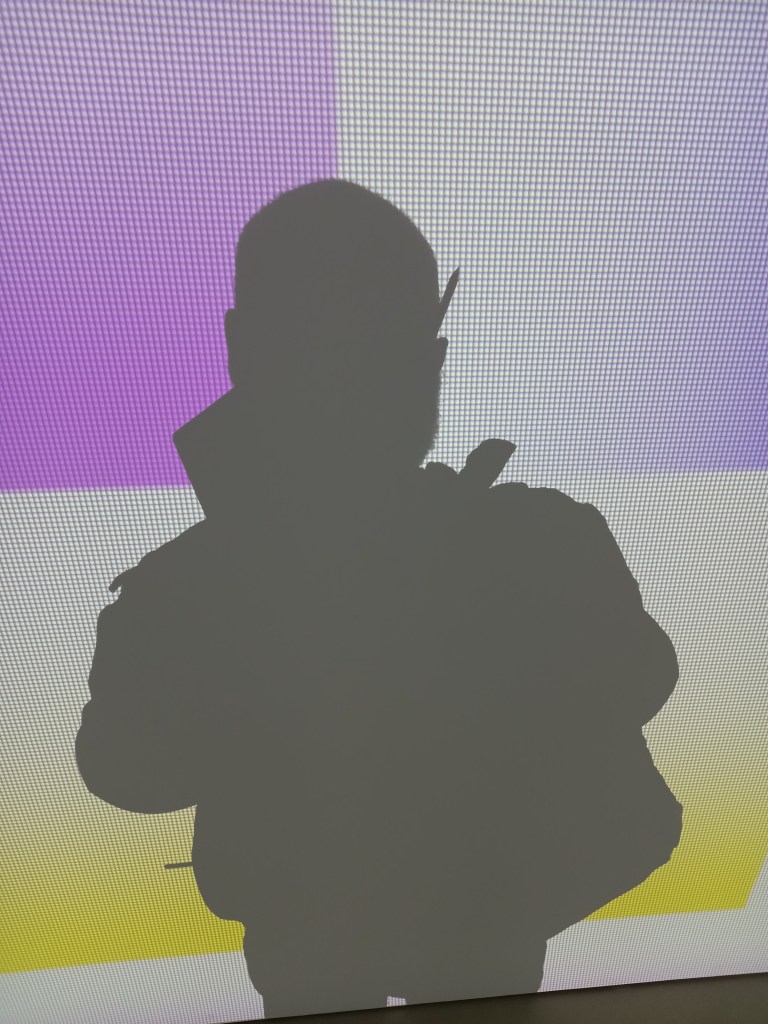
Sat there watching the different images coalesce and it felt like I was part of a screen saver.

Photo by Jules Lister

Some of the pictures took by yours truly:

Conclusion: Permanent distractions is a misleading title for me because despite the exhibitions infinite possibilities for distraction human beings are not permanent and have to confront their realities on a daily basis.
If distractions cannot be permanent they can however be more prevalent in today’s society, now that we live in a world of screens.
Is our internal monologue just a newsfeed to be scrolled through with notifications regarding the right course of action taking precedent over abstraction of thought?
Instead of gazing at the heavens and feeling insignificant we gaze into the abstraction of a monumental digital image engulfing our entire way of life and being.
Do we panic and resist or do we welcome this digital salve to soothe our fleshly wounds.
When you look into infinity does infinity look back at you?
Sat there with just questions in my mind on the crest of a digital wave of technology are we gazing into the horizon of our own demise or embracing a future where technology will provide a warm embrace.
Time will tell whatever happens there will always be distractions to guide us there permanent or otherwise.

Weston Park 27/10

I arrived at Weston Park Museum to meet my friend Natalie with her four children to gain a child’s perspective. They’re all 9 or under not an easy feat to keep everybody occupied.
I met fellow students Nick and Tom later, the venue was rammed because of half-term.
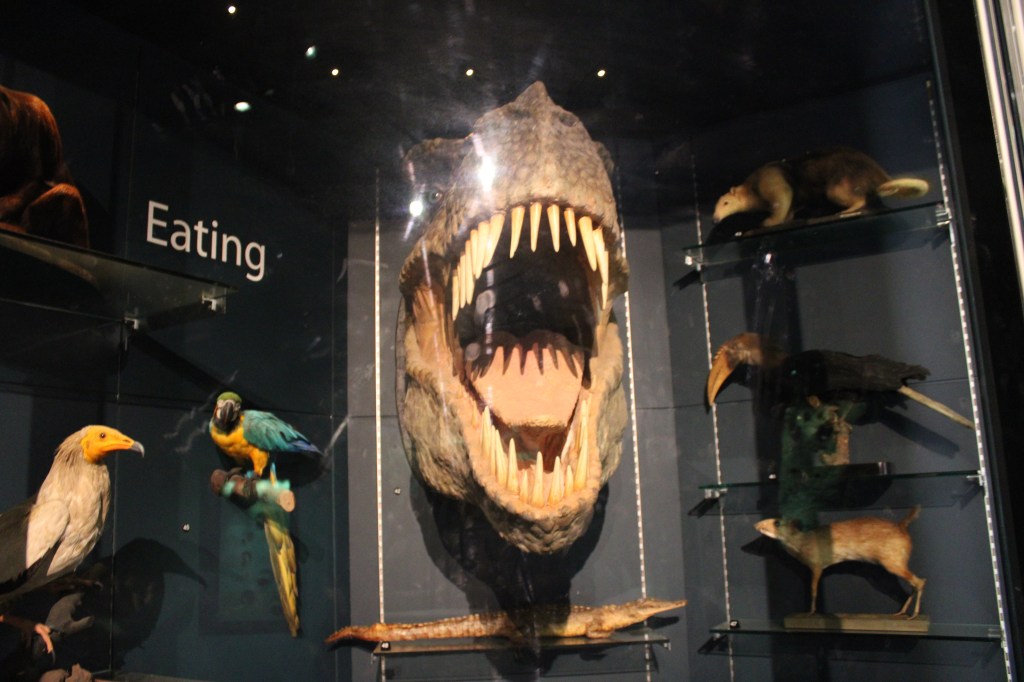
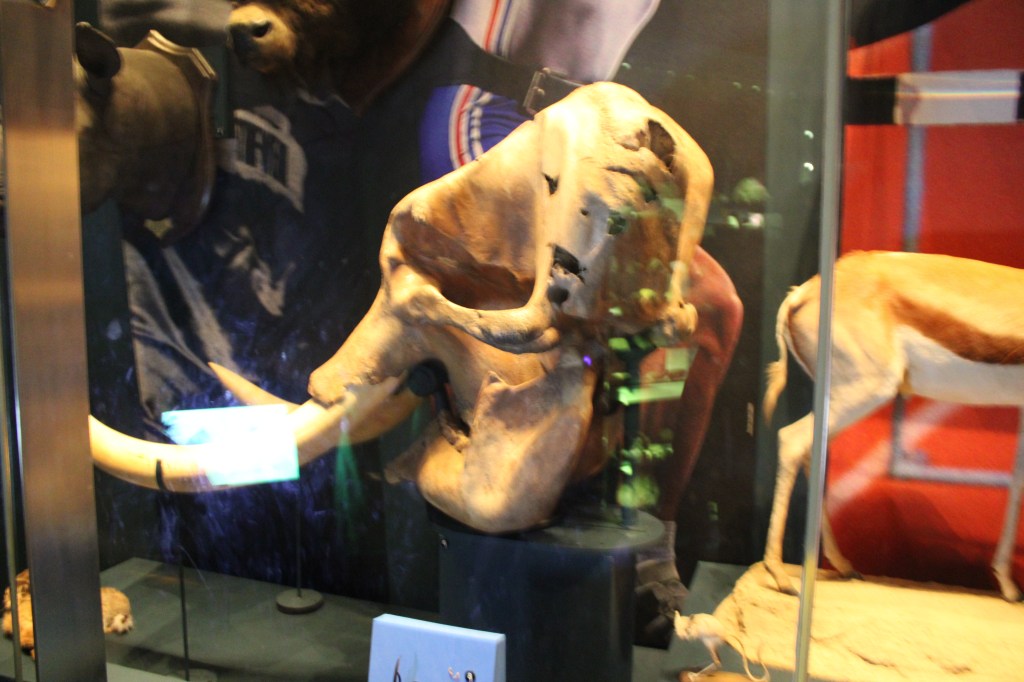
Lovely venue I have not been since I was a child and had great fun looking at all the galleries from ancient Egypt, history of animals and other histories.
I’m going to concentrate on the histories of Sheffield as these were the galleries that interested me more with my own fascination with nostalgia etc.

Annie, Russ, Natalie, Stella and Charlotte
Picture by Rose.

I got the bus into town and walked to the venue in the opposite direction of students with their mobiles in their hands whilst walking. After a refreshing coffee I met Natalie and others and we began our tour.

Sheffield history was the first exhibition we navigated through.
There is a small section dedicated to LGBT+ history in Sheffield.
In one of the cabinets was an array of badges, cards, leaflets, booklets on gay rights etc.
Interesting footnote on one of the placards:

Before the rainbow flag became a universal symbol, pink and black triangles were used as symbols of LGBT identity reclaimed from their use in Nazi concentration camps.

There was also information that in the 1980’s it was still possible for people to be sacked from their jobs because of their LGBT+ identity which is unthinkable now.
I lived through the eighties and I remember the hysteria concerning AIDS crisis and the adverts of that era.

There are cabinets that have items that concern themselves with same-sex marriage and gay icons mentioning Beth Ditto from The Gossip.
One of my favourite bands of the nineties are Faith no more which among their lineup is keyboardist called Roddy Bottum who happens to be a gay man and wrote the song “Be aggressive” about male on male fellatio.
At a time when rock music was male-orientated and sexist these bands along with Nirvana were a breath of fresh air.

There is some mention of non-binary and Trans within the context of movies. I love movies and shifts in attitudes are constantly evolving and changing to reflect that.
What was once seen as progressive can seem anything but these days; just check out this review of Pedro Almodavar’s-All about my mother (1999) on Letterboxd for evidence of that.
https://letterboxd.com/fuchsiadyke/film/all-about-my-mother/

Some images are framed upon the wall of Tank Girl etc. who is a lesbian icon and a weaved fabric of Edward Carpenter.

Around the exhibition were displays of Sheffield protests such as the Miners’ strike, household interiors with appliances and mock-ups of butcher shops.

A focus on Sheffield sport teams such as SUFC and SWFC and sportsmen such as the black boxer Lloyd Stewart.

The spaces within this exhibition are inclusive and informative and represent everybody’s walk of life.
There is even a section which is dedicated to the homeless charity Ben’s charity.

The section on park Hill at 60 was a series of photographs from the residents which was interesting and I visited Park Hill S1 Artspace for a painting workshop it still has the old brutalist architecture on half the building that needs to be modernised.

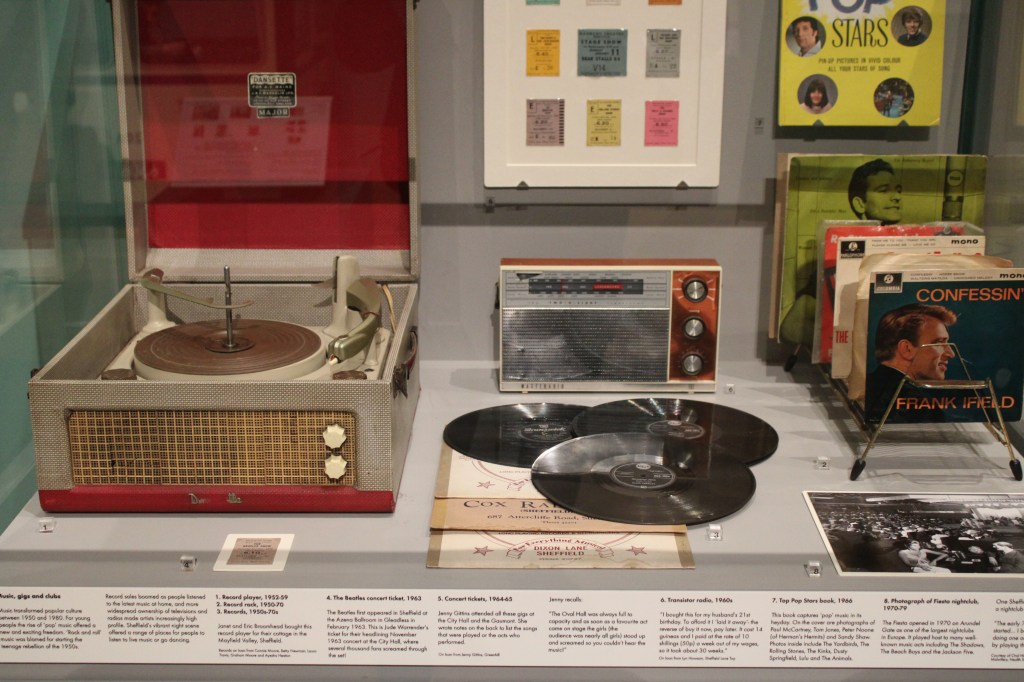
The next room concerned itself with stories of the 50’s, 60’s and 70’s so pictures of old nightclubs, nightlife, buses, record players etc.
There was a mock up of a living room which Natalie et al. kindly offered to demonstrate:

Modern family back in time
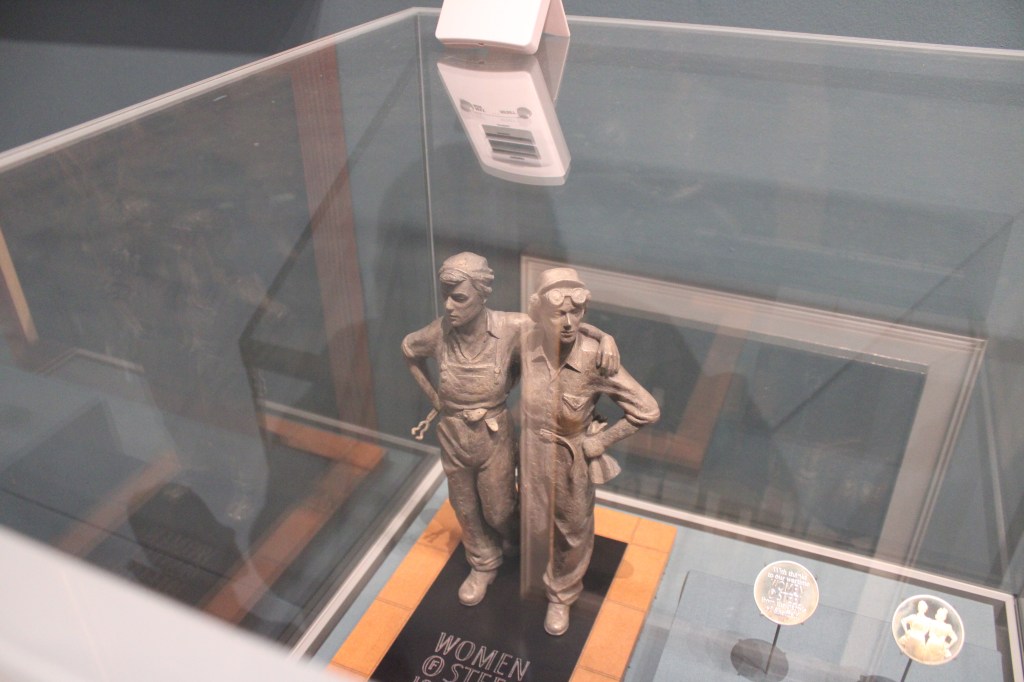
Women of steel sculpture

Joe Scarborough’s Sheffield through the ages is an ambitious city panorama chronicling some of Sheffield’s iconic landmarks throughout the decades. Spanning an incredible 30 feet, the work took six years to complete and celebrates many familiar city sites, from the Tinsley Towers to the Town Hall. What a painting it is something to look at all the time.

See the source image
Joe Scarborough- Sheffield through the ages

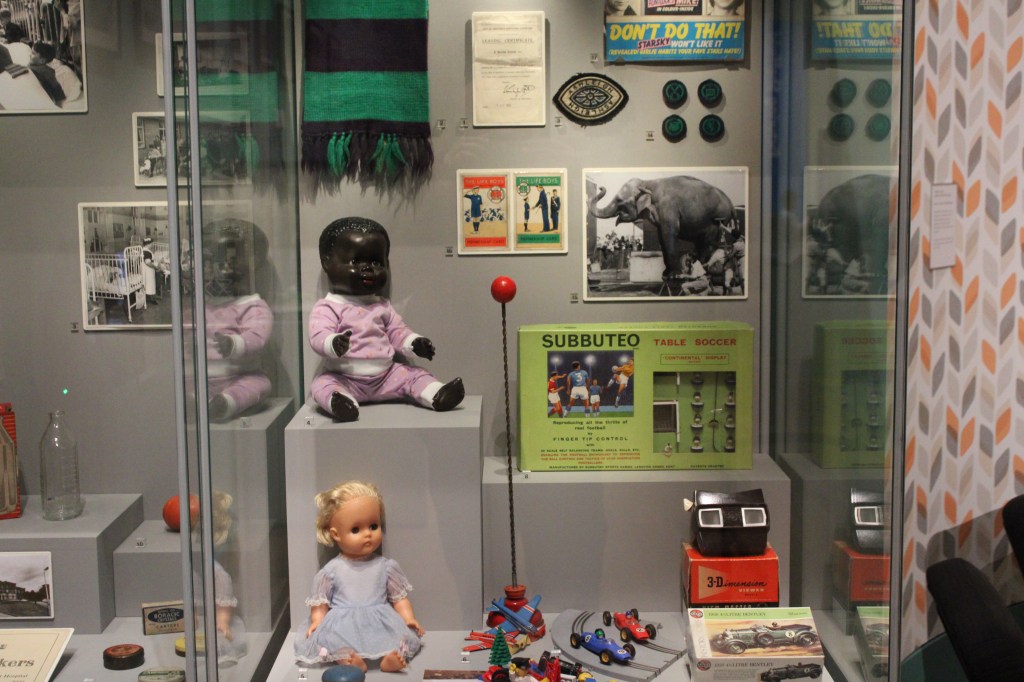
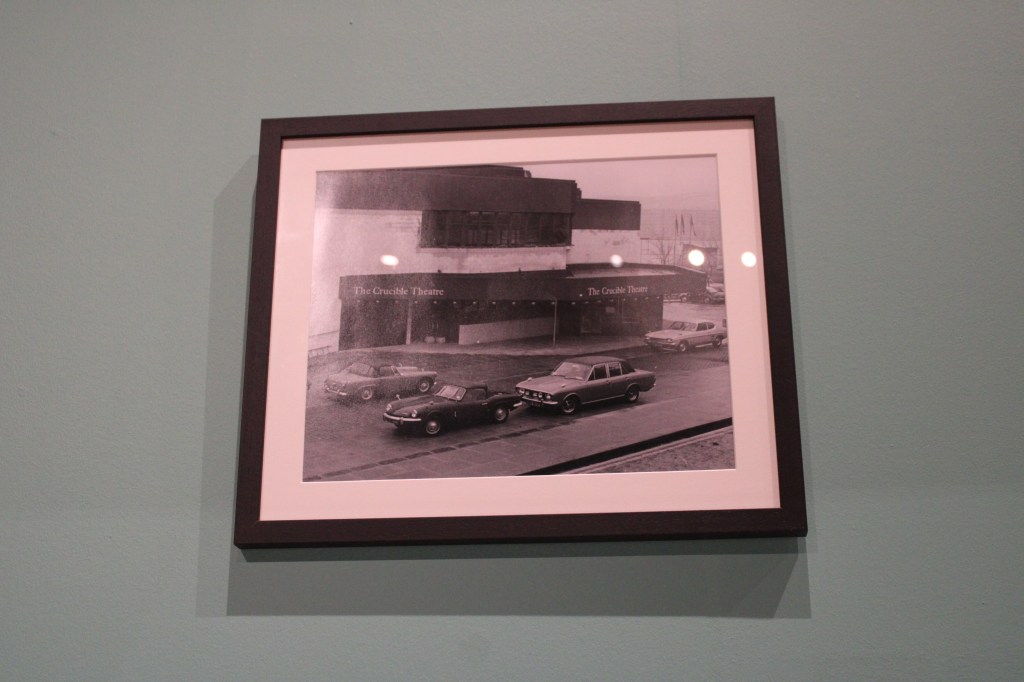
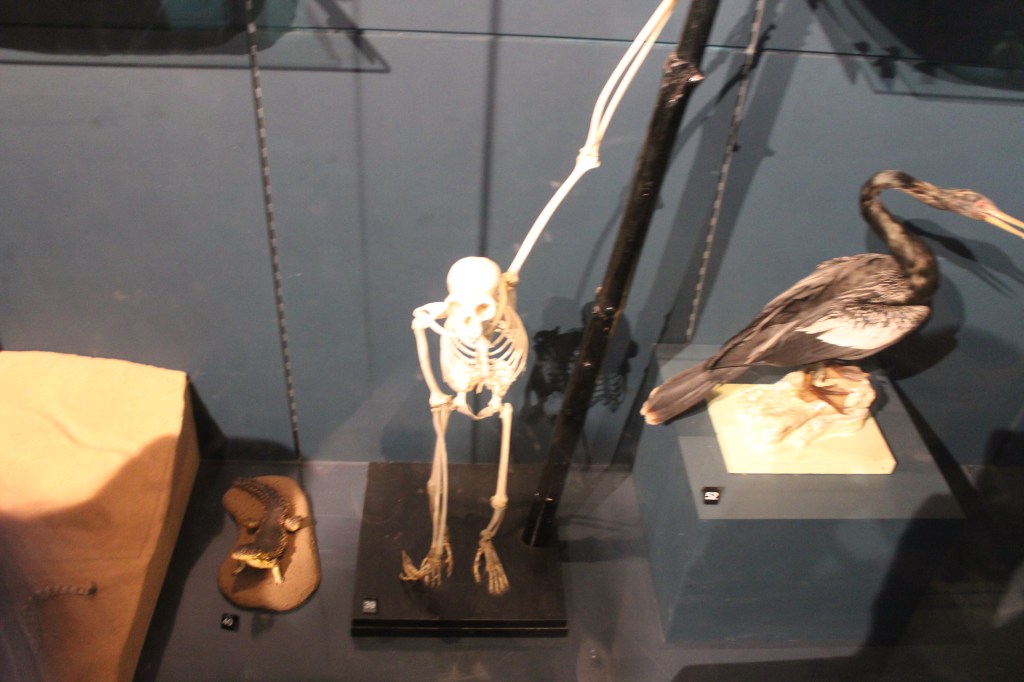
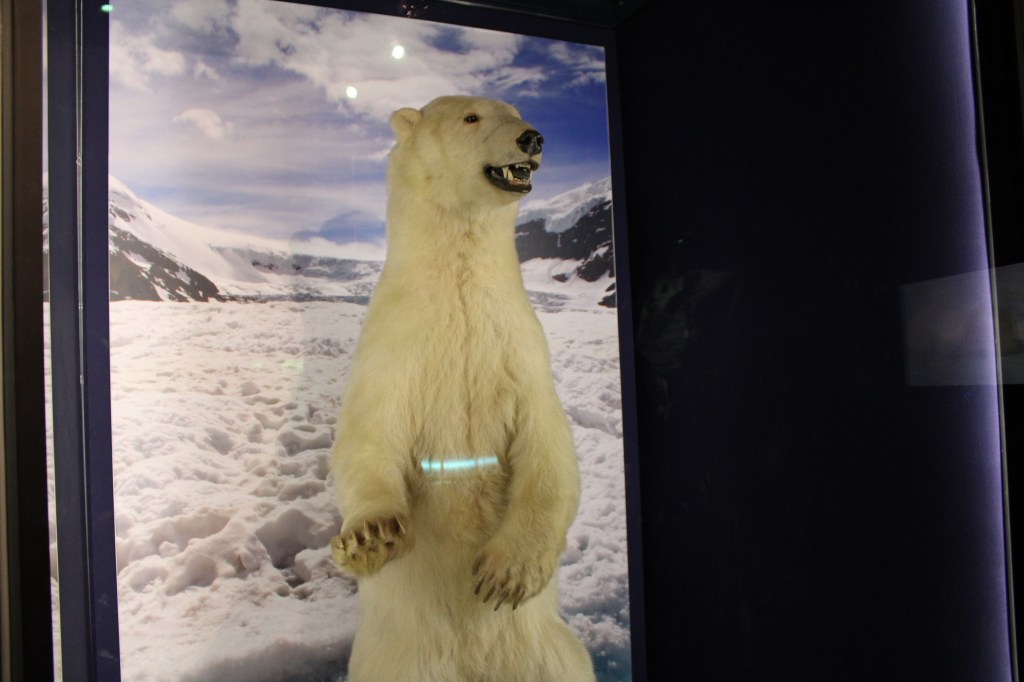
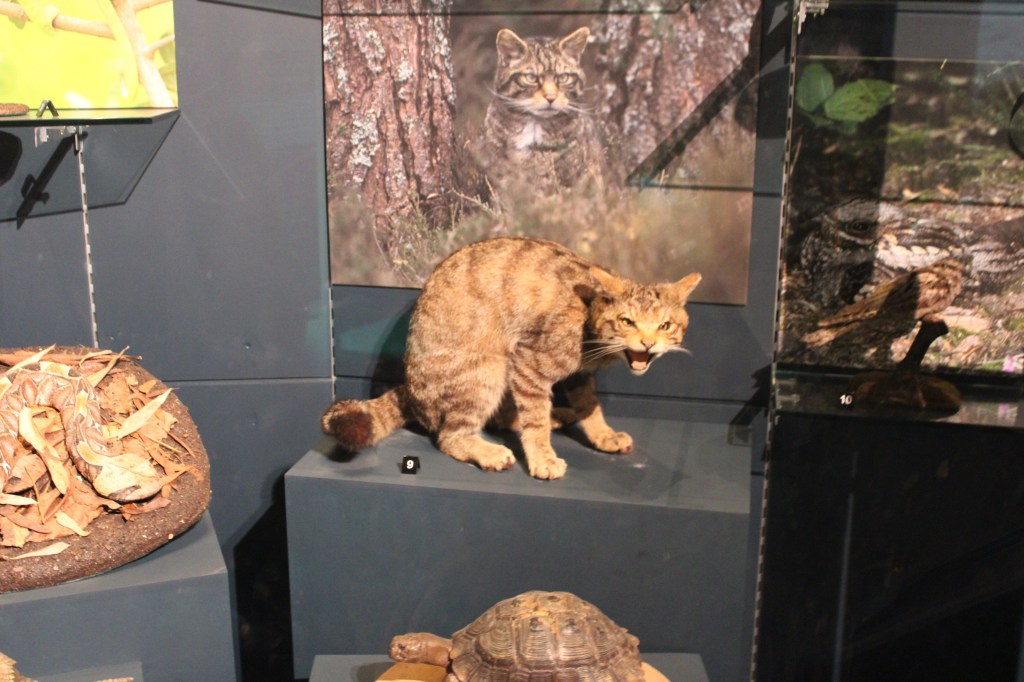
Overall a lovely gallery with lots to offer here are some other pictures I took at the exhibition:

Crit/tutorial wrap up 10/10/2021

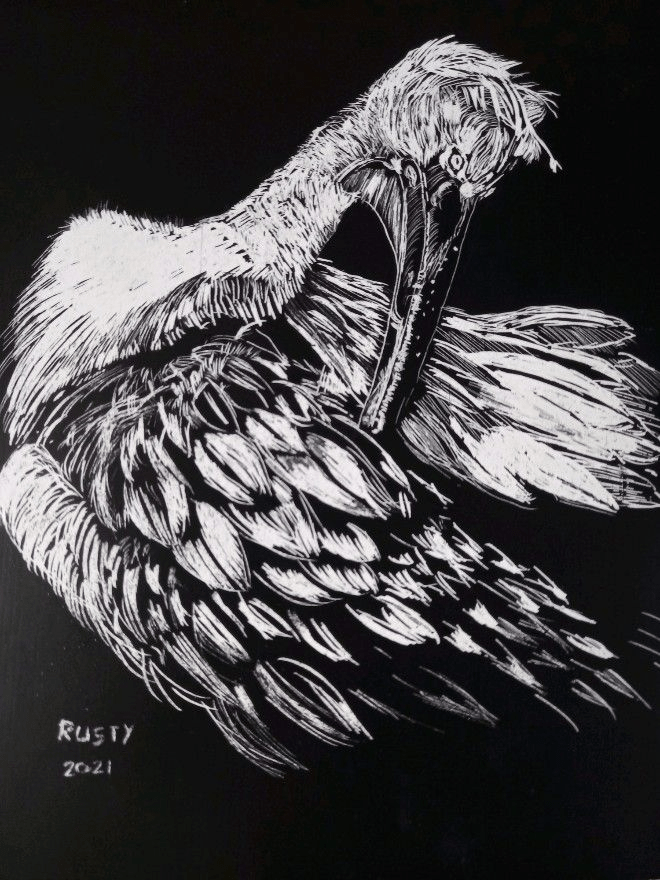
For my Crit I didn’t really have any work to show other than some scraperboard which I drew a pelican on.
Not much to report other than it’s a medium I’m not confident with.
Here’s the result:

Pelican Scraperboard A4 2021

I had a one to one tutorial with my Crit tutor who was very supportive and stated that I have lots of concepts I could go down including narratives of my mum’s memoirs and so on.

He said don’t be afraid of using pastels if I feel comfortable with them and try not to change my style for Uni and let University accept what my art practices are.

I explained about how pop culture references and modern art interlink such as Herge’s use of Malevich in Tintin in the land of the Soviets for example.

Herge’s use of Malevich

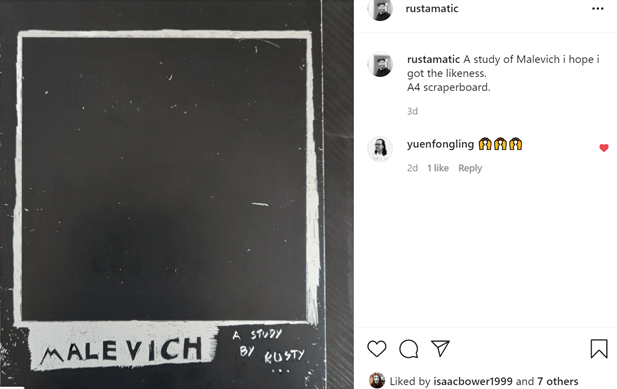
Talking to my Crit tutor inspired me to use my scraperboard to draw my own version of Malevich which came out really well.

Scraperboard homage to Malevich A4 2021

Transmission 5th October JJ Chan

TRANSMISSION
Fine Art lecture series
2021
Semester 1
Transmission is the passing of information via a channel, and this is the
intention of the Transmission project, started in 2001. We enquire about
the aesthetic and discursive forms required by practices in the field of
contemporary art and theory that address sociality and subjectivity.
Rooks, notoriously gregarious birds, nest communally at night in
the tops of trees. During the day they can be seen to congregate
in fields, arranging themselves in a circle they listen in turn to one
another’s calls. The collective noun humans use to describe this
activity is a parliament.
In an essay in Artforum, published in May 2020, entitled ‘Learning from the Virus’, Paul B. Preciado argues that care comes from a process of political transformation. He says that the closing of community (as experienced under confinement) must be challenged, if we are to stay alive. The matter is one of recollectivisation, beyond the sovereignty of identity and border politics.
He speaks (again) of ‘a parliament of (vulnerable) bodies living on planet Earth’. Parliament of Bodies was originally conceived as the public programme of dOCUMENTA 14, arising from the need for a counter-parliament of living bodies after the OXI vote of Greek citizens in 2016. This developed into the Bergen Assembly’s various ‘assemblies’, commending somatic dissonance and
transfeminist critique, and into other manifestations, such as an open session in the Department of Presence programme, in the context of the then current situation in Poland.
From this, Transmission takes its title and its theme: parliament, but one that is a counter-parliament in which all may speak, in which bodies are implicated and recognised as subjects: humans, non-human, objects, arrangements; fictional and physical, flesh and spirit; the building of alliances and ‘the exercise of liberty and the celebration of struggle’, as Kryzsztof Kosciuczuk writes.

This week’s Transmission was introduced by Michelle Atherton who researches particular moments conditions in collective histories. Her remix aesthetic, incorporating sound, image, text, and lighting effects, produces fragmented
narratives. Her images are hooks to explore slippery perceptions of the world, looking again where inherent instability opens into other questions of material states, refusals, politics, and new imaginaries. She is currently researching the arts of transience through the new audio work Live from the Rowan Tree and International Space Station for Borrowed Time Symposium 2021, and developing a residence with Phytology, London. Michelle introduced JJ Chan:

JJ CHAN https://www.jjchan.co.uk/
JJ Chan works across and amid sculpture, moving image, and writing, drawing from lived experience and stories stolen from eavesdropped conversations, exploring the edges of everyday realities and how we construct our identities. Through storytelling and world-building, their work (re)searches for an alternative space beyond aggressively progressive capitalist time, seeking new worlds from the ashes of the present. JJ Chan’s works have been presented at galleries, film festivals, nightclubs, house parties and academic conferences. Their writing has
been published in glossy magazines, illicit newsletters, academic journals, and artist publications. Previous projects have been in partnership with neighbours, friends, colleagues and students across differing but mutually implicating social contexts. Currently Blueprints for the Otherwise artist in residence at Bloc Projects, JJ Chan presented a series of rhetorical questions, notes from practice, and ideas from eavesdropped conversations, addressing the practice of filibustering.
A filibuster is a tactical approach to debate that delays or entirely prevents
a decision being made on a given proposal, usually so that policy remains unchanged. Chan considered how our work as artists might be confronted and affected by such practice, what forms it might take and how, or if as artists we might affect change by shape-shifting, mimicking, subverting, and restaging the filibuster through rhetorical (and not so rhetorical) questions. The talk revolved around two short films made in 2019, before the outbreak of Covid-19, revisiting concerns of racism, capitalism, surveillance, and the urgency of the arts as we
re-emerge from lockdown, asking to what kind of normalities we might hope to return.

Yuen Fong Ling was recipient of Site Gallery’s Platform 2018–20 artist development programme; part of the ‘Making Our Way’ strategic planning for the visual arts led by Sheffield Culture Consortium, and recently appointed a commissioner for the Race Equality Commission supported by Sheffield City Council focussing on decolonising street names, statues and monuments in Sheffield. Ling’s recent project Towards Memorial (2018-ongoing) explores the making, gifting and wearing of sandals once designed and made by gay socialist activist writer Edward Carpenter (1844–1929) as an alternative form of public memorial-making.
Yuen is a good friend of JJ Chan’s and talked about Yuen being born in Doncaster and working in London and also for his admiration for JJ Chan calling out an art institution describing JJ Chan as an activist and a legend. https://www.jjchan.co.uk/cfcca This is the link to that open letter.

J J Chan’s Instagram also sheds a lot of light on their process and mindset I would recommend wholeheartedly to look through. https://www.instagram.com/jjchan.co.uk/

One of the videos JJ Chan showed was Birdwatching which is described on JJ Chan’s Instagram as: ” a 10 minute film which follows a convoluted and confused reflection, retold in various Chinese and English dialects formed from found footage and moments of record television. Through three short verses, multiple narratives of technological advancement, freedom, ambition, migration, and experiences of diaspora emerge from the juxtaposition of recognizable voices and accents lifted from their original contexts. Reflecting on systems of power within both personal and global contexts JJ attempts to locate themselves in the world. The film eventually converges on a community of parakeets in Danson Park in South East London overlaid with soundbites referring to coexistence.”

I cannot find this video but the other video is on JJ Chan’s main site entitled: Unbecoming boy: becoming Taylor Swift (2019). You can watch it in its entirety here: https://www.jjchan.co.uk/unbecoming-boy

JJ Chan also posited the question What does a parliament do and to whom. JJ Chan also reading an excerpt from Karan Brand “Meeting the universe halfway.”
There were also references to Sharon Posts, Latour, Rancierre, Braidotti, Vinciane Desprets on articulation.
Links to Cathy Park Hong’s Minor feelings https://profilebooks.com/wp-content/uploads/wpallimport/files/PDFs/9781782837244_preview.pdf and The Undercommons https://www.minorcompositions.info/wp-content/uploads/2013/04/undercommons-web.pdf

Conclusion: I found JJ Chan to be an interesting, articulate and thoughtful orator with clear, concise ideas.
I loved the idea of the fact that JJ Chan’s talent in using and understanding art jargon and representing those who are marginalised and may not know how to express themselves against the institutions that use such language to contain people. In the context of a filibuster it is language that can delay because dialogue isn’t brought forward to propel that change within an institution or policy.


Artist research 25/09/2021 Raymond Pettibon

Taken from Wikipedia:

Raymond Pettibon (born Raymond Ginn; June 16, 1957 in Tucson, Arizona) is an American artist who lives and works in New York City. Pettibon came to prominence in the early 1980s in the southern California punk rock scene, creating posters and album art mainly for groups on SST Records, owned and operated by his older brother, Greg Ginn. He has subsequently become widely recognized in the fine art world for using American iconography variously pulled from literature, art history, philosophy, and religion to politics, sport, and sexuality…Known for his comic-like drawings with disturbing, ironic or ambiguous text, Pettibon’s subject matter is sometimes violent and anti-authoritarian…Pettibon works primarily with India ink on paper and many of his early drawings are black and white, although he sometimes introduces color through the use of pencil, watercolor, collage, gouache or acrylic paint. He has stated that his interest in this technique is a result of the influence of artists such as William Blake and Goya, and the style of political editorial cartoons.”

See the source image
Police story
This image has an empty alt attribute; its file name is 75a6441437de786db9e9d49e53208259.jpg
Family man

I really like Raymond’s artwork. I love the punk aesthetic and the nihilistic satire behind his images.
I have seen his art on Black Flag album covers, Sonic Youth and even Foo Fighters.
Raymond came up with the band name Black Flag and the iconic logo.

http://www.artzines.info/raymond-pettibon/

Raymond also inspired this RHCP video:

Youtube the art of Black Flag

Pete McKee new exhibition 09/09/2021

https://www.petemckee.com/news/eight-new-paintings-is-back

Originally intended to be exhibited at Sheffield’s Millennium Gallery back in 2020, Eight New Paintings had to be displayed online due to restrictions. The online show was still a huge success, however, Pete always wanted the work to be seen in person. Now, after seventeen months of waiting, Eight New Paintings will be shown at the McKee gallery in Sheffield from Saturday 4th September – Sunday 17th October.

This small but powerful exhibition allows visitors to view paintings which mark Pete’s experimentation in style; a seismic moment in the artist’s fifteen year career. If you are unable to view the show in person then you can still visit the online version of the Eight New Paintings exhibition here.

https://www.eightnewpaintings.com/gallery-3-1

My thoughts on the new paintings:
“I love these paintings. I do miss that minimalistic quality of previous McKee paintings that are illustrative and it’s no surprise McKee was brought up with comics such as Tintin.
It’s time for Pete McKee to branch out and try new styles. One quality I will say that the new paintings have is a more of a grounding in reality.
I love the pathos in Pete’s work such as the old lady in a home which has a feeling of yearning and a sadness.
The all too relevant racism of Social Media which now hides behind a tweet or an anonymous comment instead of a brick wall.
Pete McKee has a talent for not just being great at painting but picking moments from time that are often overlooked but are a fabric of our existence.
If a photo captures a split second and preserves it for all eternity then Pete McKee’s pictures do the same but have a warmth and empathy that comes from Pete himself.”

Thoughts on Vivian Maier 03/09/2021

Vivian Maier was a street photographer in Chicago. She was mostly active in the 50s, and she took over 150,000 photos in her lifetime. Despite this, she went largely undiscovered.

According to James Dean Bradfield in 2018:

Nick has written outside of himself about Vivian Maier, the photographer. She didn’t have much of a personal life, but she just took photographs all the time. And somebody discovered these hundreds of thousands of negatives in a clearance sale in New York, and he just discovered that she was probably one of the best casual journalistic photographers that have ever lived but never been recognized. Nick became obsessed with Vivian Maier as a photographer, because I think he sees it as a true representation of just an artist working and having no feedback from the outside world. Just doing something in isolation, not wanting any credit. No motive except for just she wanted to do it and she loved it.

https://genius.com/Manic-street-preachers-vivian-lyrics

You work these streets with a camera round your neck
It’s your weapon of choice, it’s your ultimate defence
I’ve seen your face but I’ve really seen your smile
Did you leave the ruins or did you build a life?


I discovered Vivian through the lyrics of Manic Street Preachers as I have with a lot of artists such as kevin Carter et al.
I looked into her history which is fascinating just as much as her photography.

http://findingvivianmaier.com/
“Finding Vivian Maier is the critically acclaimed documentary about a mysterious nanny, who secretly took over 100,000 photographs that were hidden in storage lockers and, discovered decades later, is now among the 20th century’s greatest photographers. Directed by John Maloof and Charlie Siskel, Maier’s strange and riveting life and art are revealed through never before seen photographs, films, and interviews with dozens who thought they knew her.

Maier’s massive body of work would come to light when in 2007 her work was discovered at a local thrift auction house on Chicago’s Northwest Side. From there, it would eventually impact the world over and change the life of the man who championed her work and brought it to the public eye, John Maloof.

Currently, Vivian Maier’s body of work is being archived and cataloged for the enjoyment of others and for future generations. John Maloof is at the core of this project after reconstructing most of the archive, having been previously dispersed to the various buyers attending that auction. Now, with roughly 90% of her archive reconstructed, Vivian’s work is part of a renaissance in interest in the art of Street Photography.”

http://www.vivianmaier.com/ to view her site and photos