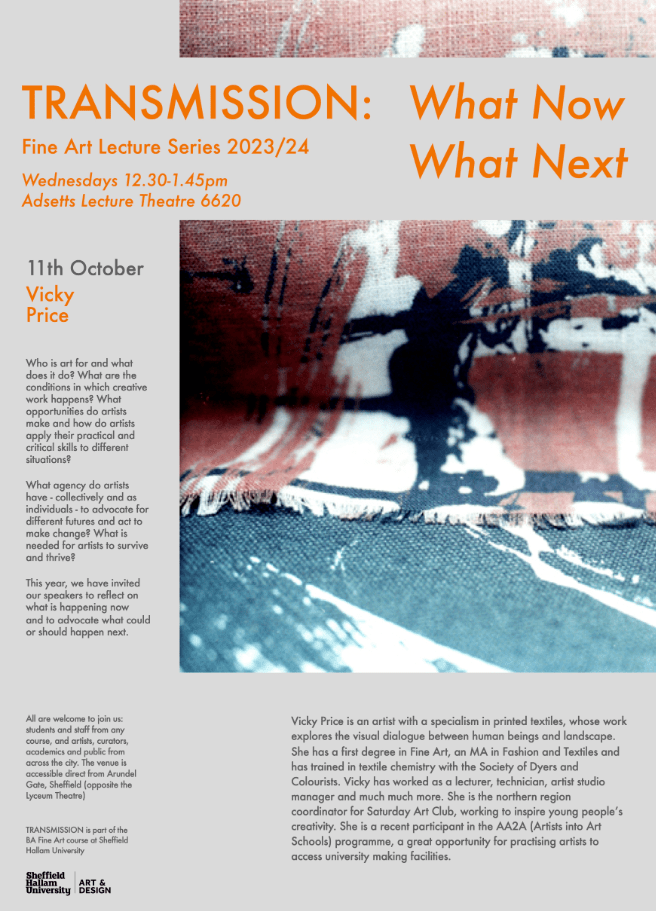
Vicky Price is an artist with a specialism in printed textiles, whose work explores the visual dialogue between human beings and landscape. She has a first degree in Fine Art, an MA in Fashion and Textiles and has trained in textile chemistry with the Society of Dyers and Colourists. Vicky has worked as a lecturer, technician, artist studio manager and much much more. She is the northern region coordinator for Saturday Art Club, working to inspire young people’s creativity. She is a recent participant in the AA2A (Artists into Art Schools) programme, a great opportunity for practising artists to access university making facilities. https://vickyprice.com/ @studiovickyprice
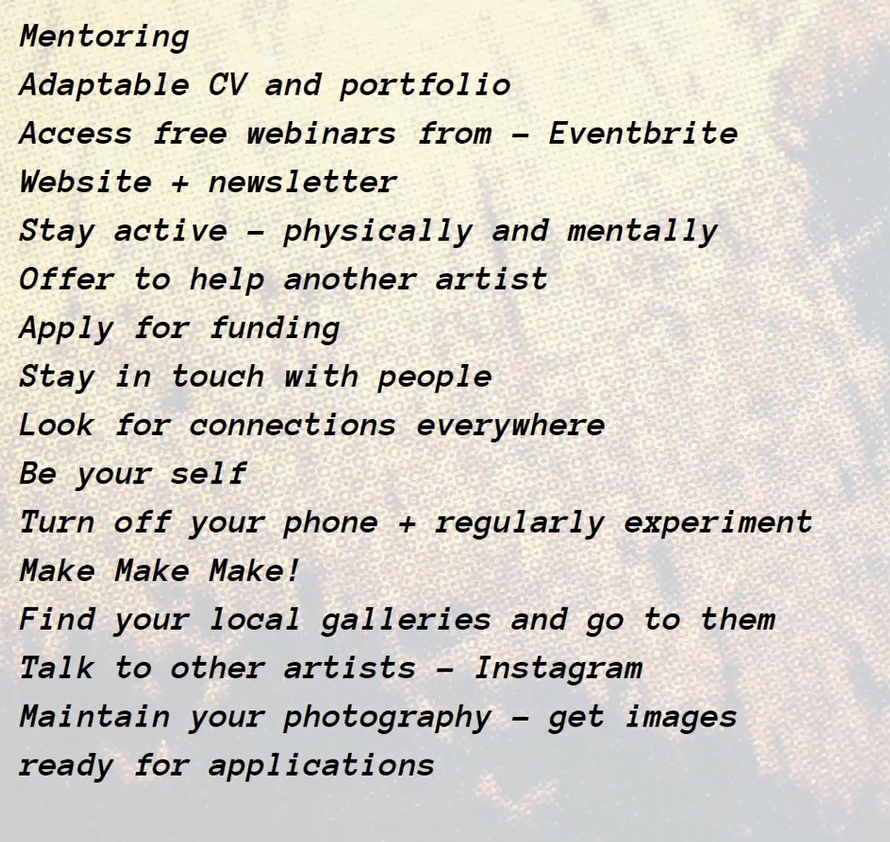
Vicky kindly shared a fantastic list of useful resources:
Jo introduces Vicky as an alumni from Sheffield and that she graduated in 1999.
Jo introduces the concept of the presentation’s themes and of how the artist is to thrive and not just survive.
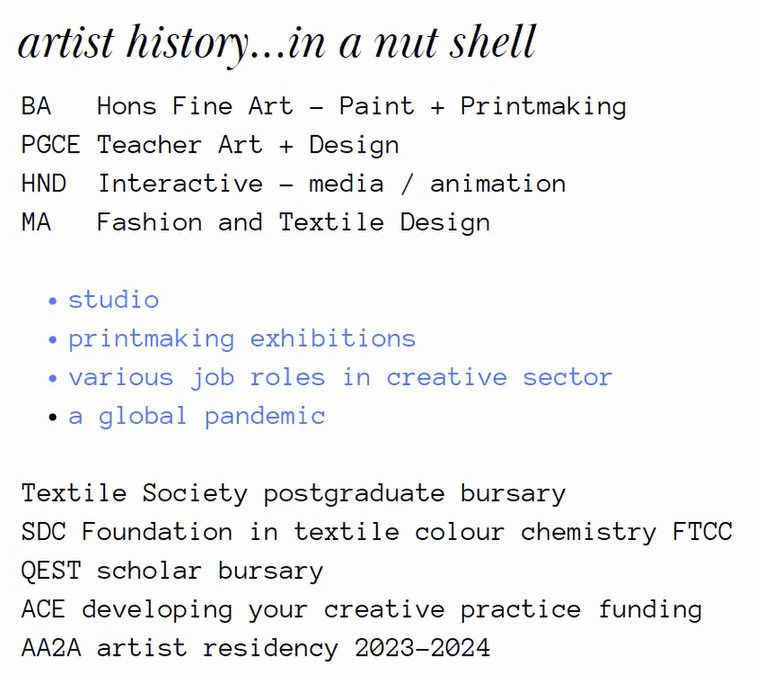
Vicky goes into detail regarding her history in art.
Born in North Yorkshire, she spent many years as an outdoor kid, training and competing in high-level cross-country running, gig rowing and team sports, until she attended art college in 1991. After studying fine art printmaking in Sheffield 1997, she left for a travelling life in Europe. She continued to keep sketchbooks and enjoyed a transient existence, accompanied by friends, dogs, a collection of mountain bikes and a kayak – with many interesting stories to recall.
During this time, she absorbed changing localities, developing a cross-fertilisation of ideas around culture, heritage and architecture and geological surroundings, with further spatial influences of natural gorges and valleys. She was influenced by the enormity of human endeavour to carve dwellings from the rock face of Siurana, a tiny town located in a high region of Tarragona Province and the gestural works of Antoni Tàpies in Barcelona, that searches for traces of human gesture.
Since 2016 she has produced large-scale print works for research, projects and clients, using screen print for immediacy and the flexibility to adapt between surfaces and printed colour. She has developed co-created works with other makers and artists in upholstery and fashion, showcasing exhibits at The National Centre for Craft. In 2018 she was awarded a UK Textile Society Postgraduate Bursary for her eco-print developments using recovered large-format digital inks and landfill silk. Vicky continues to develop her project ‘drawing in a three-dimensional world’ through Arts Council England funding and a QEST scholarship.
She is most productive when drawing and the textile print intertwines with science-like processes as a means to re-rendering textile design, working with ancient process technologies and investigating how these can be revived as a new promotion of eco-sustainable developments. Through print she uses physical making and movement, Vicky endeavours with rigour and play to create the next best innovation in new surface design and material matter. With a constant search for pre-consumer waste textiles – often destined for landfill, Vicky’s over-arching aim is to hand-print onto waste fabrics to produce beautiful prints, that look digital but are skillfully hand manufactured.
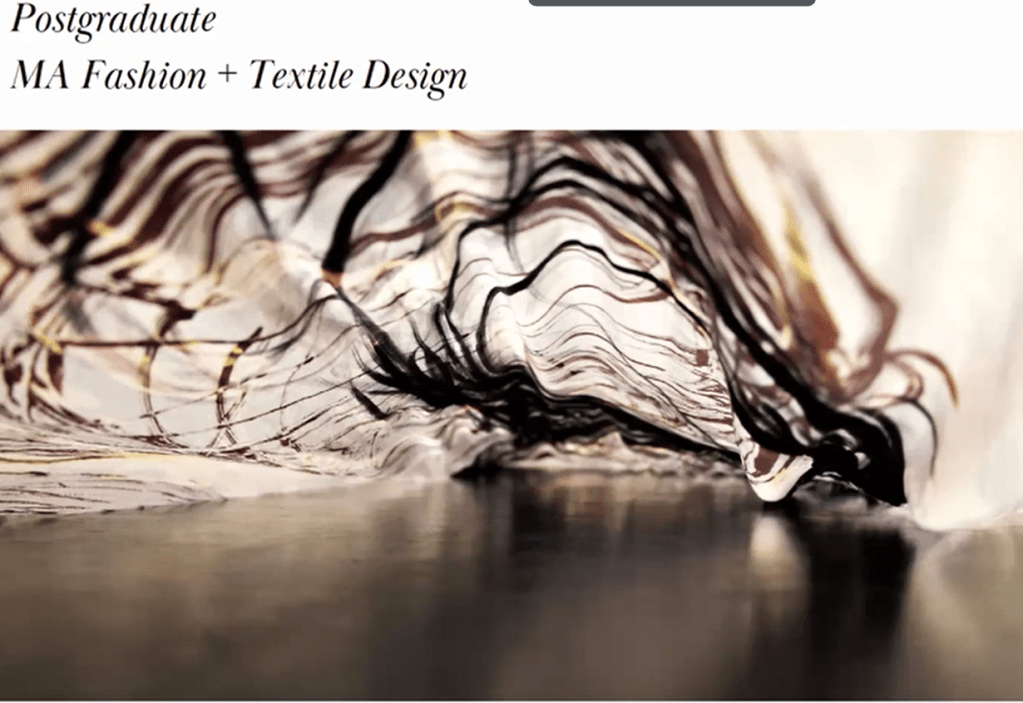
Flow / silk
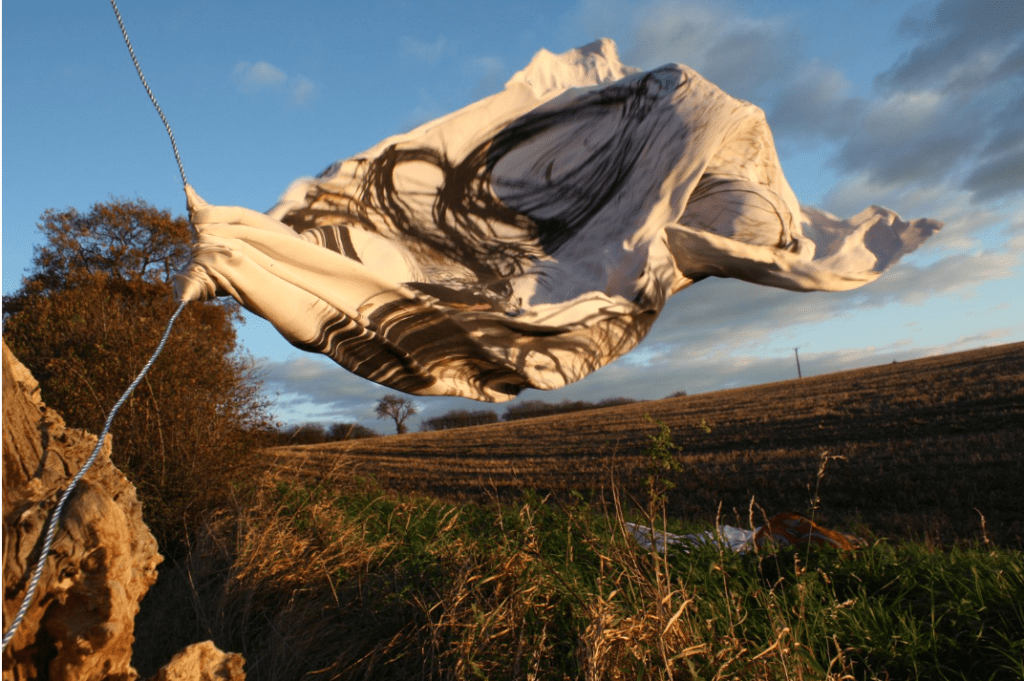
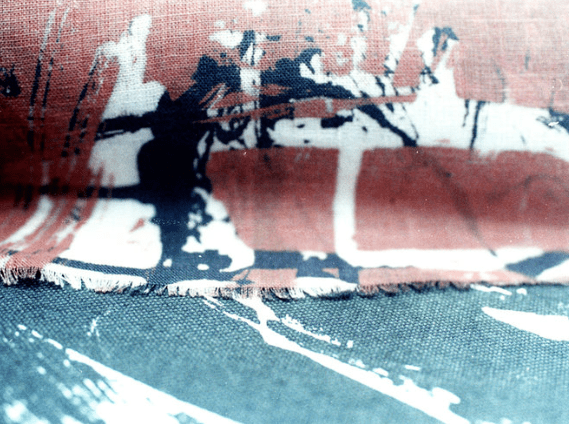
Inspired by automatic drawing, this is a collection of purely waste product installations, using Satin Silk KD515 and Fuji Silk Natural that was damaged or end roll, destined for landfill. The dye is applied using drawing bottles in repetitive physical movements, similar to a human Spirograph. One-off pieces are intended as sustainable research into re-use, used in installations and developed into the series of Flow images, released in the landscape in high wind.
The Wasteland Collection / Research
An eclectic innovation of hand screen-printed imagery on silks, cottons and linens, based on the concept of drawing in a three-dimensional world. The collection developed initially on a disused jet engine testing site, using waste digital inkjet ink on end rolls of coated fabrics, sourced as unfit for purpose and due for landfill. Bringing her large scale works back into the studio, Vicky continues to re-work the images with found minerals, iron ore, red oxide and metal powders.
Vicky then finishes her “Then” section empthasising the timeline split into education, personal projects and work highlighting that personal projects is more heavily weighted.
Vicky is now engaged in regaling the “now” section.
The pandemic affected Vicky as she was furloughed, no access to a studio.
2022 – 2023 Stone lithography with master lithographer Serena Smith at Leicester Print Workshop.

Driving on the M62 towards Rochdale, look north to the surrounding moorland and you will see a track, sometimes called the yellow brick road, winding its way up the moor.
Vicky explores the Cotton Famine Road, a reminder of the harsh times cotton millworkers had to endure during the Cotton Famine. The road provides a unique link to the American Civil War, at a time when the Rochdale Pioneer Movement influenced social thinking and Rochdale millworkers supported the struggle against slavery. The poor of Rochdale laid about a third of a million stone setts by hand into the fabric of the moor, which we believe is of international importance and worthy of recognition! The road features in BBC Black and British: A Forgotten History, where David Olusoga, the Honorary President of our Neighbourhood Forum, explores the enduring relationship between Britain and people whose origins lie in Africa. The known history of the area also predates the Cotton Famine with evidence of bronze age settlements, cairns and links to Whalley Abbey and the 13th century wool trade.
Vicky has created a frottage drawing of the Cotton Famine Road.
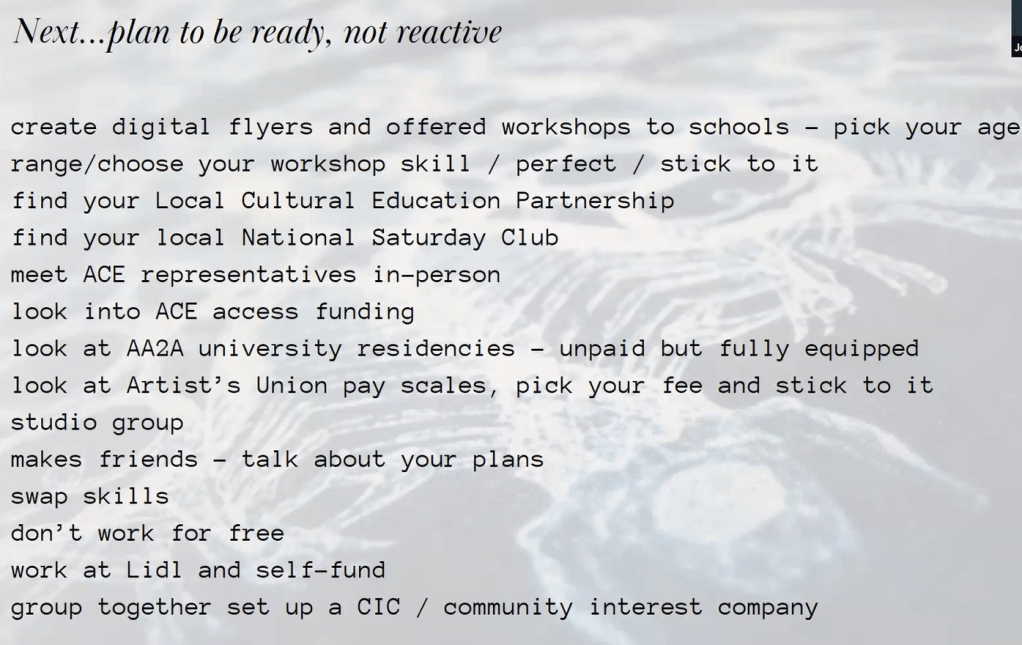
Vicky offers advice on how to plan for the future:

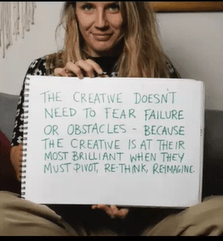
An enjoyable talk from a versatile artist who adapts to their landscape primarily the pandemic and lack of funding.
 Rusty'sArtWerk