Artists I have researched 09/08/2021
Hannah hoch
https://www.moma.org/artists/2675?=undefined&page=&direction=
Taken from the above site: “Known for her incisively political collages and photomontages (a form she helped pioneer), Hannah Höch appropriated and recombined images and text from mass media to critique popular culture, the failings of the Weimar Republic, and the socially constructed roles of women. After meeting artist and writer Raoul Hausmann in 1917, Höch became associated with the Berlin Dada group, a circle of mostly male artists who satirized and critiqued German culture and society following World War I. She exhibited in their exhibitions, including the First International Dada Fair in Berlin in 1920, and her photomontages received critical acclaim despite the patronizing views of her male peers. She reflected, “Most of our male colleagues continued for a long while to look upon us as charming and gifted amateurs, denying us implicitly any real professional status.”
The technical proficiency and symbolic significance of Höch’s compositions refute any notion that she was an “amateur.” She astutely spliced together photographs or photographic reproductions she cut from popular magazines, illustrated journals, and fashion publications, recontextualizing them in a dynamic and layered style. She noted that “there are no limits to the materials available for pictorial collages—above all they can be found in photography, but also in writing and printed matter, even in waste products.”
Höch explored gender and identity in her work, and in particular she humorously criticized the concept of the “New Woman” in Weimar Germany, a vision of a woman who was purportedly man’s equal. In Indian Dancer: From an Ethnographic Museum she combined images of a Cameroonian mask and the face of silent film star Maria Falconetti, topped with a headdress comprised of kitchen utensils. Höch’s amalgamation of a traditional African mask, an iconic female celebrity, and tools of domesticity references the style of 1920s avant-garde theater and fashion and offers an evocative commentary on feminist symbols of the time.
Although the Berlin Dada group fractured in the early 1920s, Höch continued to create socially critical work. She was banned from exhibiting during the Nazi regime, but she remained in Germany during World War II, retreating to a house outside Berlin where she continued to make work. In 1945, after the end of the war, she began exhibiting again. Before her death in 1978, her significant contribution to the German avant-garde was recognized through retrospectives of her work in Paris and Berlin in 1976.
Höch’s bold collisions and combinations of fragments of widely circulated images connected her work to the world and captured the rebellious, critical spirit of the interwar period, which felt to many like a new age. Through her radical experimentations, she developed an essential artistic language of the avant-garde that reverberates to this day.”
I really like her work especially the untitled piece below this text.

Cut-and-pasted printed
and colored paper on board
Artists I have researched 04/08/2021
Untitled Document (a-r-t.com) Goya an essay by Robert Flynn Johnson
http://loscaprichos.org/index.php
Los caprichos
Los caprichos is a set of 80 prints in aquatint and etching created by the Spanish artist Francisco Goya in 1797-1798, and published as an album in 1799. The prints were an artistic experiment: a medium for Goya’s condemnation of the universal follies and foolishness in the Spanish society in which he lived. The criticisms are far-ranging and acidic; the images expose the predominance of superstition, the ignorance and inabilities of the various members of the ruling class, pedagogical short-comings, marital mistakes and the decline of rationality. Some of the prints have anticlerical themes. Goya described the series as depicting “the innumerable foibles and follies to be found in any civilized society, and from the common prejudices and deceitful practices which custom, ignorance or self-interest have made usual”.
_-_Google_Art_Project.jpg)
A Visual Protest
https://www.parkwestgallery.com/francisco-goya-disasters-of-war/
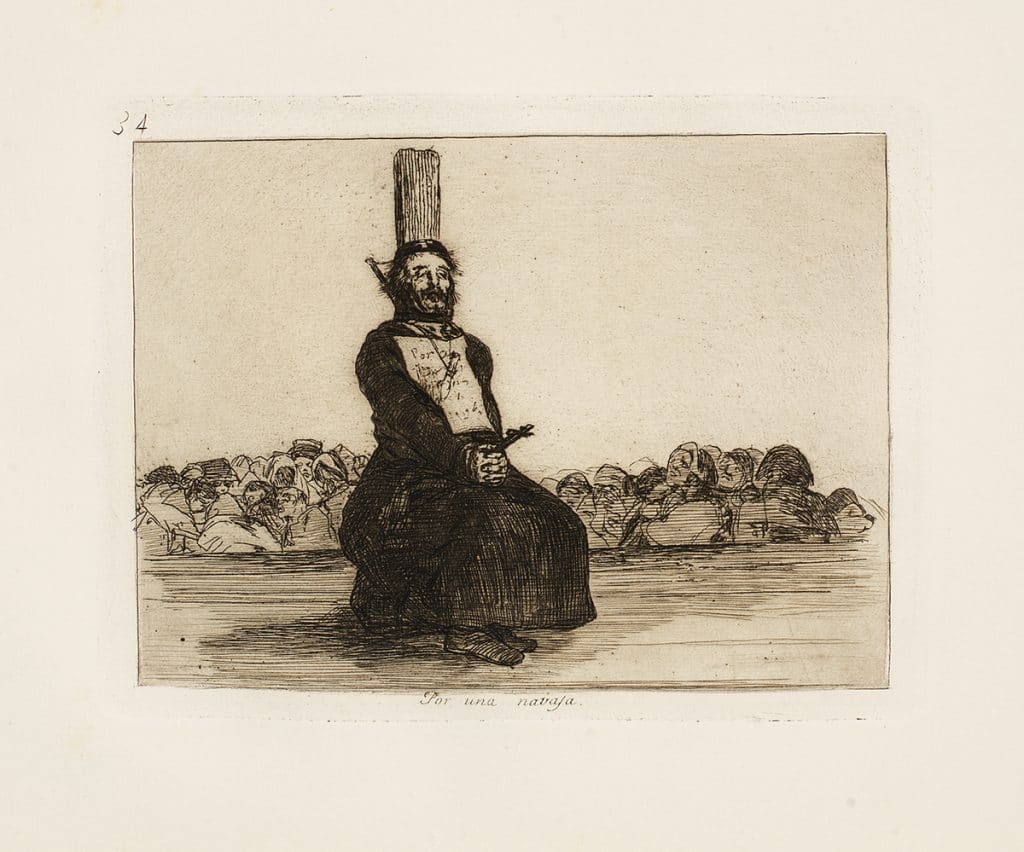
Goya began working on “The Disasters of War” in 1810. At the age of 62, Goya was suffering from poor health and deafness, but eventually completed a series of 85 etchings in 1820. Three small etchings called prisioneros (prisoners) are not included in the final “Disasters of War” series.
Despite the fact that Goya worked on many of the plates during the actual war, “The Disasters of War” wouldn’t be published until 1863, 35 years after Goya’s death. The series was finally printed by the Royal Academy of Fine Arts of San Fernando, where Goya had served as director. The plates had been passed along from Goya’s son, Javier, to the academy.
Rachel Maclean
Rachel Maclean is a multi-media artist born in 1987 in Edinburgh. Using film and photography, she creates outlandish characters and fantasy worlds which she uses to delve into politics, society and identity. Wearing colourful costumes and make-up, Maclean takes on every role in her films herself.
I enjoy her work immensely.
Joey Holder I Make Dildos Out of Insect Penises – Thinking Port
Joey Holder
Born 1986, London
Lives and works in Nottingham, UK
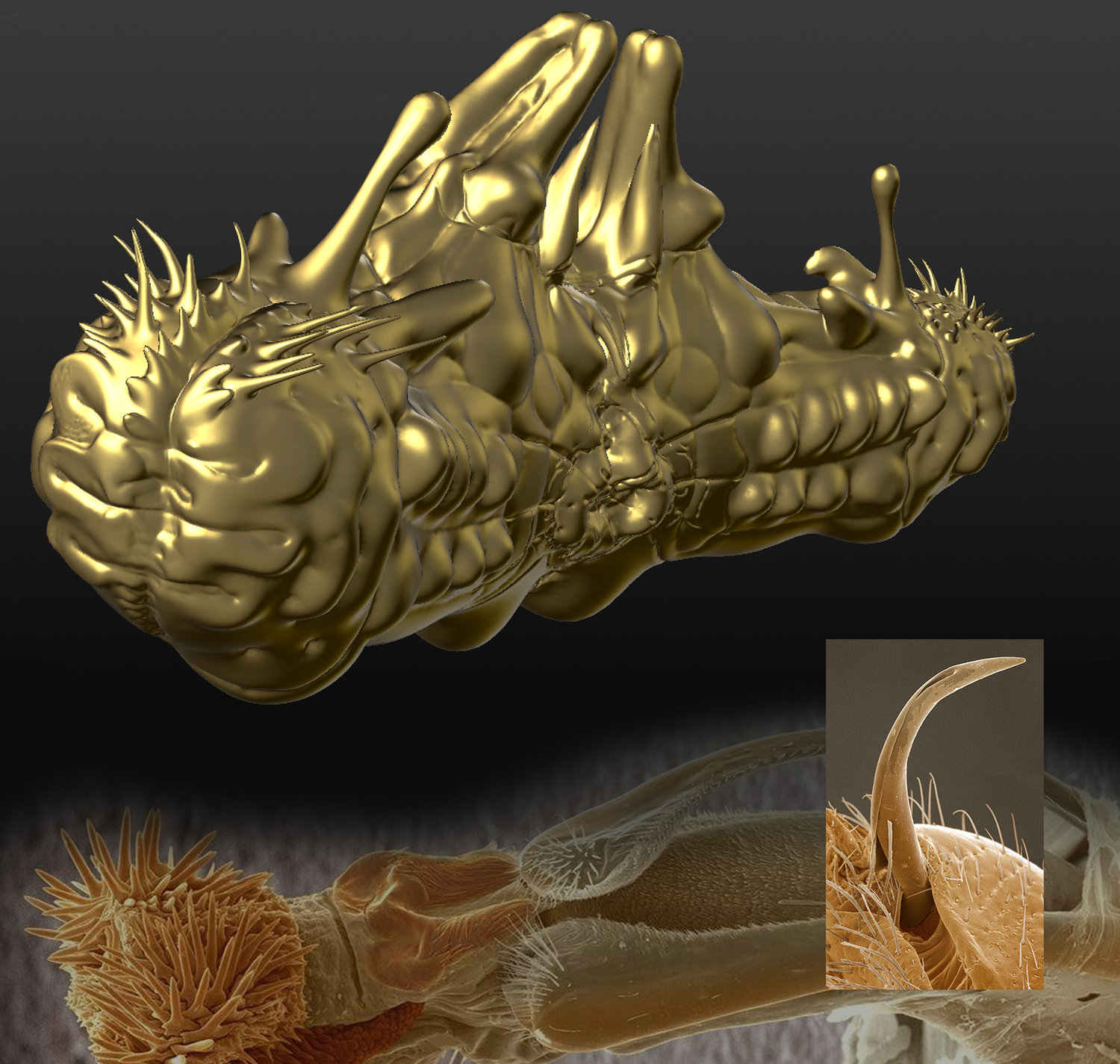
Joey Holder‘s work raises questions about our understanding of the world, the future of science, medicine, biology
and human-machine interactions. Working with scientific and technical experts she makes immersive, multimedia
installations that explore the limits of the human and how we experience non-human, natural and technological
forms.
I get a Cronenbergian vibe from her especially from the film eXistenZ.
William Blake (28 November 1757 – 12 August 1827) was an English poet, painter, and printmaker. Largely unrecognised during his lifetime, Blake is now considered a seminal figure in the history of the poetry and visual arts of the Romantic Age.
Blake abhorred slavery and believed in racial and sexual equality. Several of his poems and paintings express a notion of universal humanity: “As all men are alike (tho’ infinitely various)”. In one poem, narrated by a black child, white and black bodies alike are described as shaded groves or clouds, which exist only until one learns “to bear the beams of love”:
When I from black and he from white cloud free,
And round the tent of God like lambs we joy:
Ill shade him from the heat till he can bear,
To lean in joy upon our fathers knee.
And then I’ll stand and stroke his silver hair,
And be like him and he will then love me.

Blake had an enormous influence on the beat poets of the 1950s and the counterculture of the 1960s, frequently being cited by such seminal figures as beat poet Allen Ginsberg, songwriters Bob Dylan, Jim Morrison, Van Morrison and English writer Aldous Huxley.
 Rusty'sArtWerk